
Nara Day Trip from Osaka: The Ultimate 2026 Travel Guide
Why Take a Day Trip to Nara from Osaka?
Nara is one of the easiest and most rewarding day trips you can take from Osaka. Located less than an hour away by train, Japan’s first permanent capital is home to ancient temples, peaceful gardens, friendly free-roaming deer, and a relaxed atmosphere that feels worlds away from Osaka’s bustling streets.
Despite its compact size, Nara is packed with iconic attractions. You can visit the impressive Todai-ji Temple, home to one of the world’s largest bronze Buddha statues, stroll through Nara Park alongside hundreds of sacred deer, and admire the beautiful lantern-lined pathways leading to Kasuga Taisha Shrine. History lovers, nature enthusiasts, and families alike will find plenty to enjoy.
One of the best things about visiting Nara is how walkable it is. Many of the city’s top attractions are located within walking distance of each other, making it easy to explore without needing additional transport. Whether you’re interested in Japanese history, traditional architecture, or simply want to experience a slower pace of travel, Nara offers the perfect escape.
If you’re spending several days in Osaka, adding a Nara day trip to your itinerary is highly recommended. With convenient train connections, unforgettable cultural landmarks, and the chance to meet Nara’s famous bowing deer, it’s a destination that deserves a place on every Japan itinerary.
How to Get to Nara from Osaka
Getting from Osaka to Nara is quick, affordable, and straightforward, making it one of the easiest day trips in Japan. Two major railway companies operate direct services, and both offer frequent departures throughout the day.
Kintetsu Railway (Recommended)
For most travellers, the Kintetsu Nara Line is the best option. Trains depart from Osaka-Namba Station and arrive at Kintetsu Nara Station in around 35–40 minutes on the Limited Express or Rapid Express services.
Kintetsu Nara Station is just a 5-minute walk from Nara Park, making it the most convenient choice for sightseeing. You’ll be within easy walking distance of Todai-ji Temple, Kofuku-ji Temple, and many of Nara’s other top attractions.
JR Yamatoji Line
If you have a Japan Rail Pass, the JR Yamatoji Line is an excellent alternative. Direct trains run from JR Osaka Station to JR Nara Station, with a journey time of approximately 50–60 minutes.
JR Nara Station is around a 20-minute walk from Nara Park, although local buses are available if you prefer not to walk.
Which Train Should You Choose?
- Kintetsu Railway: Fastest and most convenient, especially for first-time visitors.
- JR Yamatoji Line: Best if you’re using a JR Pass or staying close to JR Osaka Station.
Getting Around Nara
Once you arrive, most of Nara’s major attractions can be explored on foot. Nara Park, Todai-ji Temple, Kasuga Taisha Shrine, Kofuku-ji Temple, and Naramachi are all within comfortable walking distance of one another. If you want to save time or visit attractions further afield, local buses operate throughout the city and are easy to use.
Travel Tip: Arrive before 9:00 am to enjoy Nara Park and Todai-ji Temple before the largest crowds arrive. Early mornings are also the best time to see the famous deer when the park is quieter and cooler.
Best Things to Do on a Nara Day Trip
Although Nara is small enough to explore in a day, it’s packed with historic landmarks, beautiful gardens, and unique cultural experiences. From meeting the city’s famous bowing deer to visiting some of Japan’s oldest temples, there’s no shortage of things to see. Here are the must-visit attractions to include on your Nara day trip from Osaka.
Visit Nara Park and Meet the Famous Deer
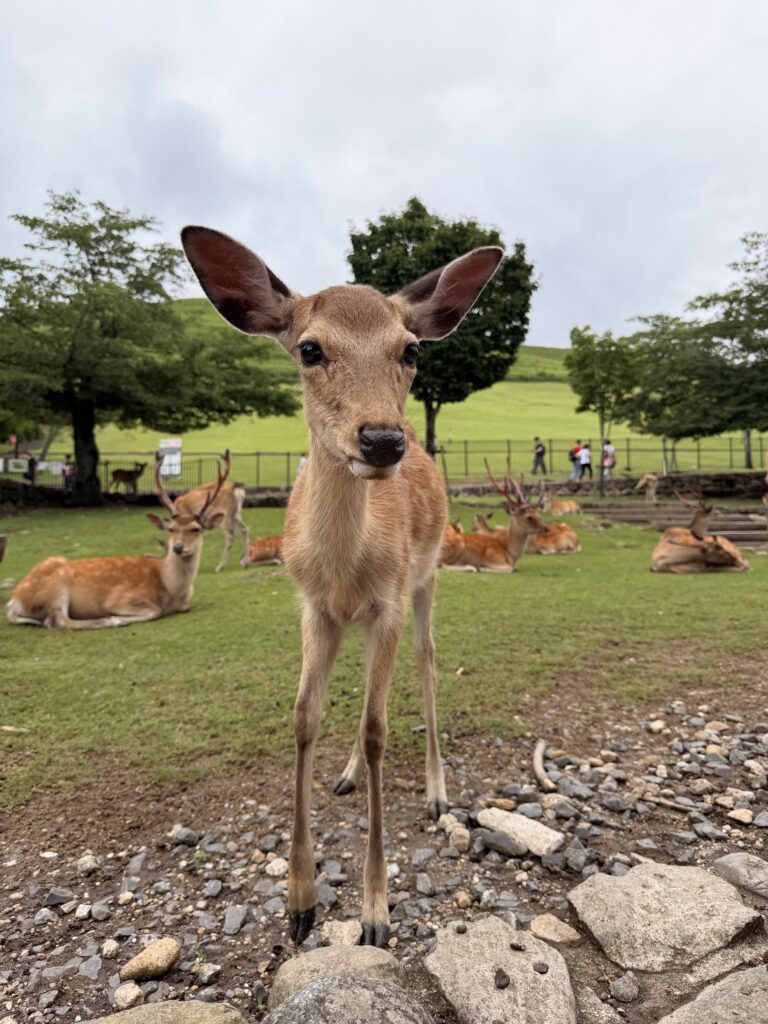
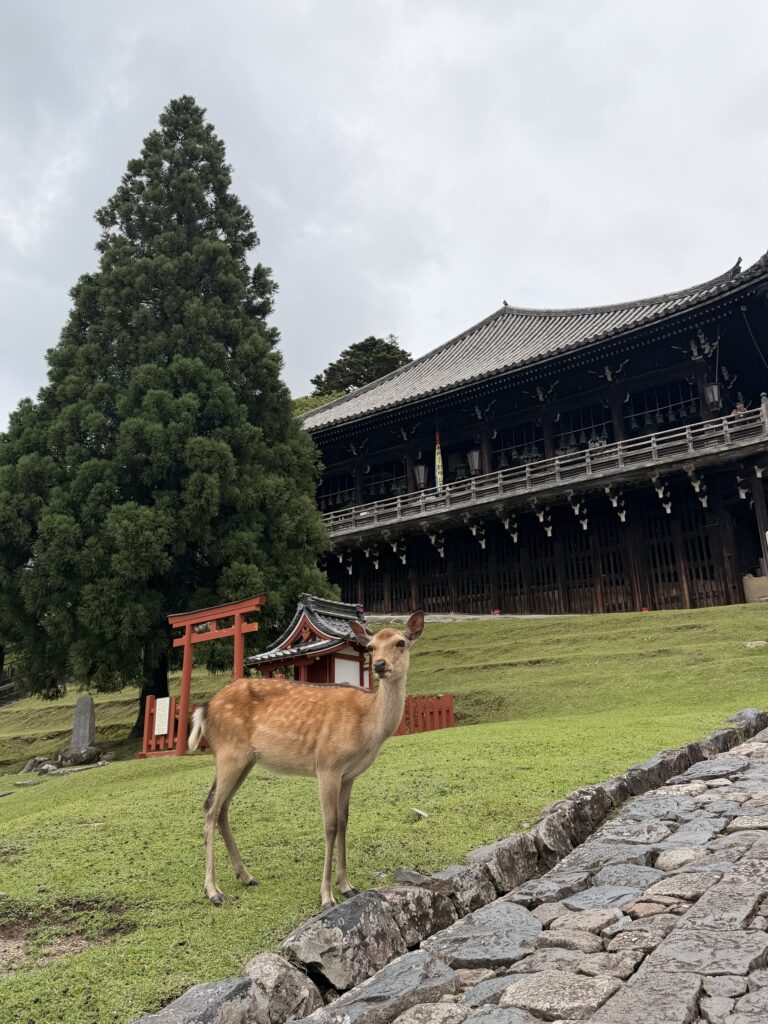
No trip to Nara is complete without visiting Nara Park, home to over 1,000 free-roaming deer that are considered sacred messengers in Shinto tradition. The deer are surprisingly friendly and have become one of Japan’s most iconic attractions.
You can purchase special deer crackers (shika senbei) from vendors around the park to feed them. Many of the deer have even learned to bow before receiving a treat, making for a fun and memorable experience. Just be sure to keep hold of your crackers, as the deer can become quite eager once they spot them!
Beyond the deer, Nara Park offers wide open green spaces, peaceful walking paths, ponds, and beautiful seasonal scenery, especially during cherry blossom season and autumn when the leaves change colour.
Top Tip: Wait until further into the deer park to feed the deer. The deer at the entrance are more bold and the entrance is very busy with other visitors.
Explore Todai-ji Temple
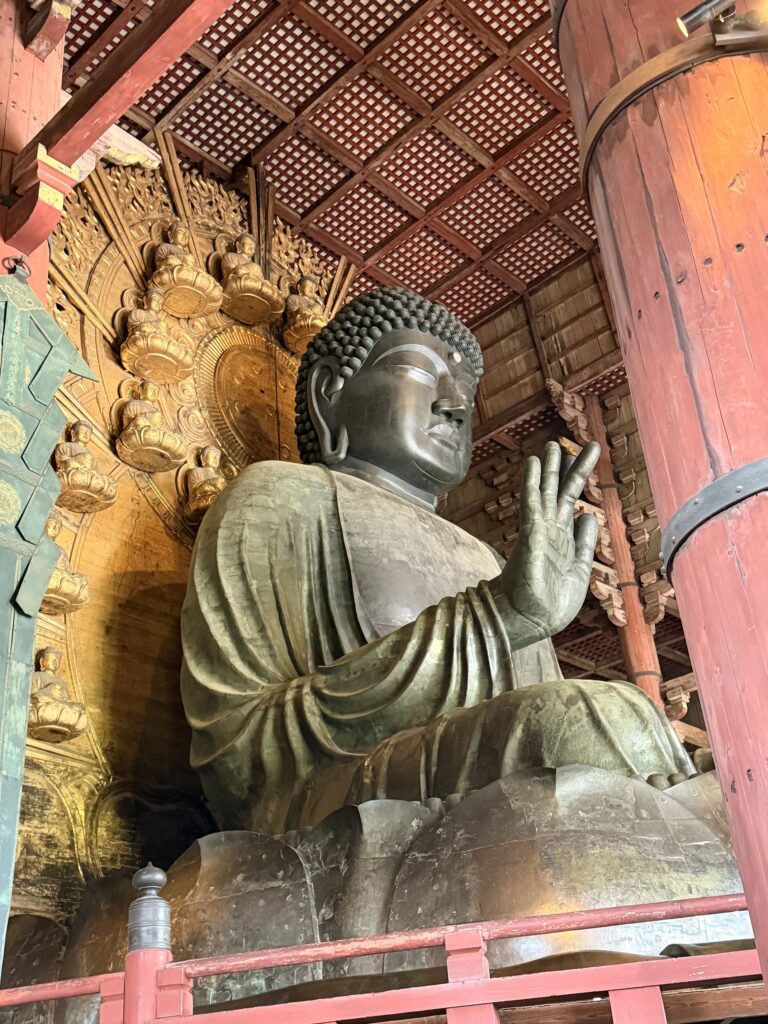
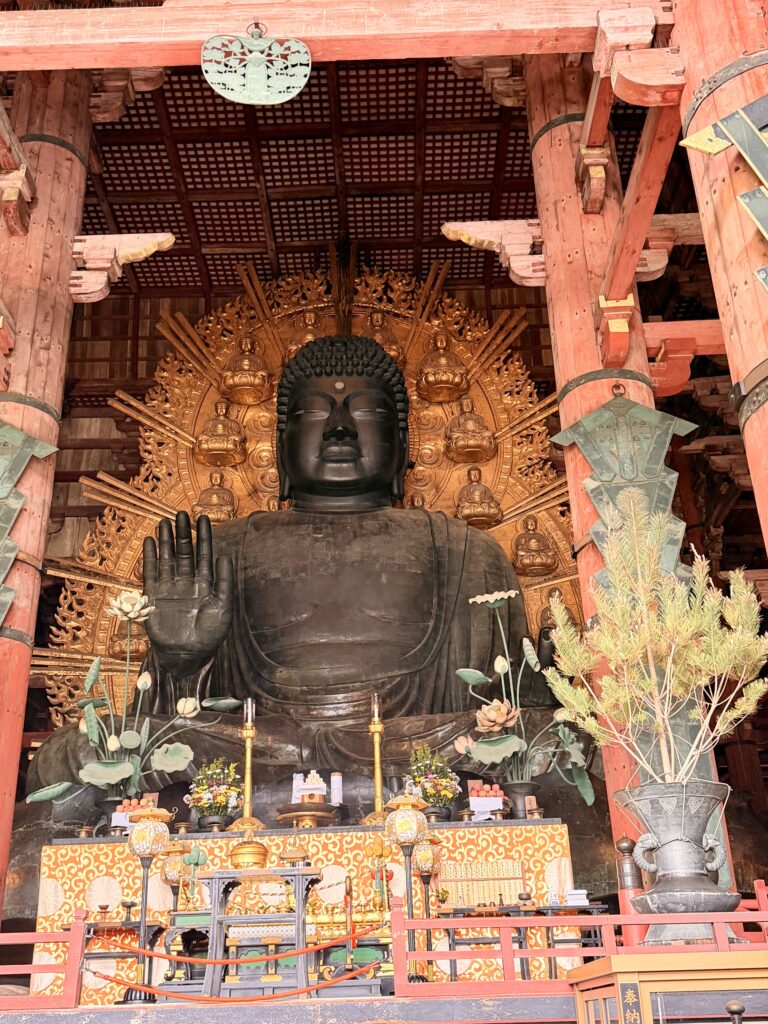
One of Japan’s most famous temples, Todai-ji Temple is an absolute highlight of any visit to Nara. Designated a UNESCO World Heritage Site, the temple houses the enormous Great Buddha (Daibutsu), one of the largest bronze Buddha statues in the world, standing approximately 15 metres tall.
The temple’s Great Buddha Hall (Daibutsuden) is equally impressive and was once the largest wooden building on Earth. Inside, visitors can admire the intricate architecture, explore the vast hall, and even try squeezing through the famous pillar with a hole said to bring good luck to those who can fit through.
Wander Through Kasuga Taisha Shrine
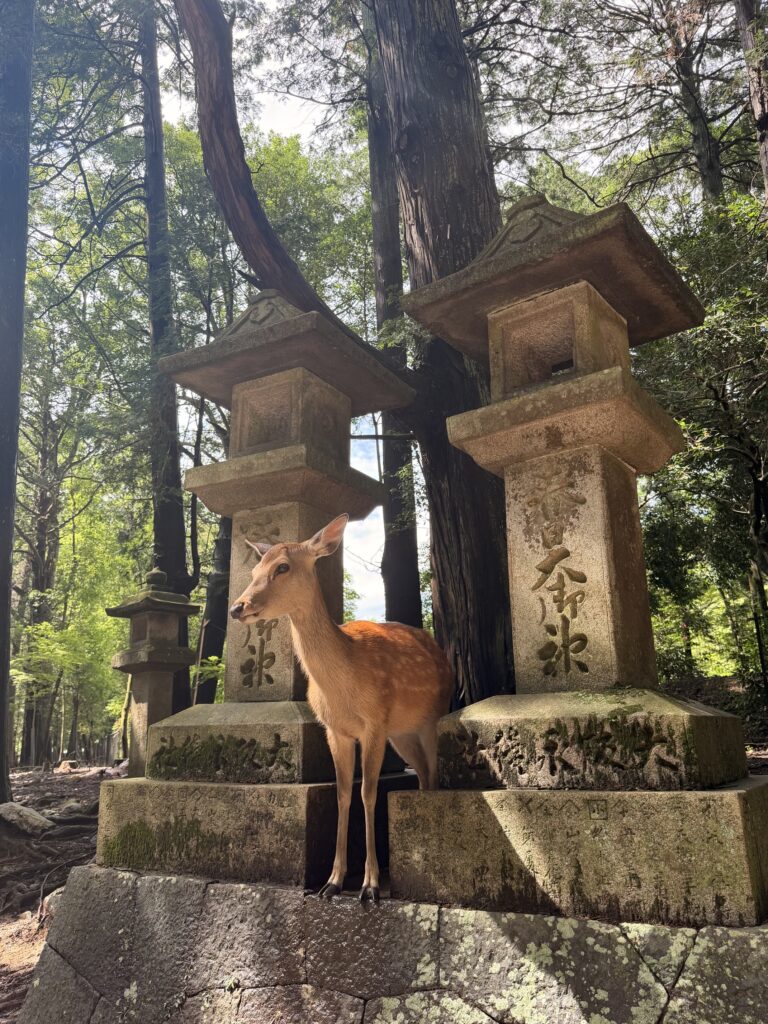
Nestled within a forest on the eastern edge of Nara Park, Kasuga Taisha Shrine is one of Nara’s most beautiful and peaceful attractions. Founded in 768 AD, the shrine is famous for its thousands of bronze and stone lanterns, many of which are lit during special festivals each year.
The walk to the shrine is just as enjoyable as the destination itself, with tree-lined paths, moss-covered stone lanterns, and occasional encounters with the park’s resident deer creating a tranquil atmosphere.
Discover Kofuku-ji Temple
Located just a short walk from Kintetsu Nara Station, Kofuku-ji Temple is one of the city’s oldest and most historically significant temples. Its elegant five-storey pagoda, currently undergoing restoration, has long been one of Nara’s most recognisable landmarks.
The temple complex also includes several historic halls and the National Treasure Museum, where visitors can admire an impressive collection of Buddhist sculptures and artefacts.
Stroll Around Isuien Garden
If you’re looking for a quieter escape from the crowds, Isuien Garden is well worth a visit. This beautifully landscaped Japanese garden features peaceful ponds, stone pathways, traditional teahouses, and carefully manicured plants that change with the seasons.
Designed to incorporate the surrounding mountains and nearby Todai-ji Temple into its scenery, the garden is a perfect place to slow down and enjoy a more tranquil side of Nara.
Explore Naramachi
Finish your day by wandering through Naramachi, Nara’s charming old merchant district. Its narrow streets are lined with beautifully preserved wooden townhouses, boutique shops, cosy cafés, galleries, and small museums.
It’s also one of the best places to sample local cuisine, browse for handmade souvenirs, or simply enjoy a slower pace after exploring the city’s famous temples. Naramachi offers a glimpse into Nara’s past while providing plenty of hidden gems for curious travellers.
Tips for Visiting Nara
A little planning can make your Nara day trip from Osaka even more enjoyable. Here are a few practical tips to help you make the most of your visit.
Arrive Early
Nara is a popular destination, especially on weekends and during cherry blossom and autumn foliage seasons. Arriving before 9:00 am gives you the chance to explore Nara Park and Todai-ji Temple before the largest crowds arrive.
Wear Comfortable Shoes
You’ll spend much of the day walking between attractions. Although most of Nara’s highlights are close together, it’s easy to walk 10–15 km over the course of a day.
Respect the Deer
Nara’s deer may look gentle, but they are still wild animals. Feed them only the official shika senbei (deer crackers) sold throughout the park, and avoid giving them human food. Keep maps or paper items tucked away, as curious deer are known to nibble on anything they can reach.
Bring Cash
While many restaurants, cafés, and attractions now accept credit cards, some smaller shops, street food vendors, and souvenir stalls still prefer cash. Having a small amount of Japanese yen on hand is always useful.
Check Temple Opening Hours
Most temples and gardens open around 8:30–9:00 am and close between 4:30–5:00 pm, with last admission often 30 minutes before closing. Visit your must-see attractions earlier in the day to avoid missing out.
Stay Hydrated
Nara can become very hot and humid during the summer months. Carry a reusable water bottle and take advantage of the vending machines located throughout the city.
Allow Time for Lunch
Nara has plenty of excellent local restaurants serving regional specialities such as kakinoha-zushi, fresh mochi, and traditional Japanese set meals. Rather than rushing back to Osaka, set aside time to enjoy the local food.
Watch for Seasonal Events
Nara is beautiful year-round, but spring cherry blossoms and autumn foliage make the city especially picturesque. If you’re visiting in summer or winter, check whether any festivals or special illuminations are taking place during your trip, as they can add an extra highlight to your visit.
With its compact layout, rich history, and relaxed atmosphere, Nara is one of Japan’s easiest cities to explore. Follow these tips, take your time, and you’ll have a memorable day discovering one of the country’s most historic destinations.
Frequently Asked Questions About a Nara Day Trip from Osaka
Is Nara worth a day trip from Osaka?
Yes! Nara is one of the best day trips from Osaka. Less than an hour away by train, it offers a unique mix of history, culture, and nature. From feeding the famous deer in Nara Park to exploring ancient temples like Todai-ji, there’s plenty to see and do in a single day.
How long does it take to get from Osaka to Nara?
The journey takes 35–60 minutes, depending on which train you take. The Kintetsu Nara Line is the fastest and most convenient option, while the JR Yamatoji Line is ideal for travellers using a Japan Rail Pass.
Can you see Nara in one day?
Absolutely. Most of Nara’s top attractions, including Nara Park, Todai-ji Temple, Kasuga Taisha Shrine, Kofuku-ji Temple, and Naramachi, can comfortably be explored in one full day.
Is Nara free to visit?
Many of Nara’s attractions are free, including Nara Park and the grounds of several temples and shrines. However, some sites, such as Todai-ji Temple, Isuien Garden, and museum areas, charge a small admission fee.
What is Nara famous for?
Nara is best known for its free-roaming deer, which are considered sacred in Shinto tradition. The city is also famous for Todai-ji Temple, home to one of the world’s largest bronze Buddha statues, as well as its UNESCO World Heritage Sites, historic shrines, beautiful gardens, and traditional old town.
Is Nara or Kyoto better for a day trip?
Both destinations are excellent, but they offer different experiences. Nara is quieter, more compact, and famous for its deer and historic temples, making it easy to explore on foot. Kyoto has a larger number of attractions and neighbourhoods, making it better suited to two or more days if your schedule allows.
What should I not miss in Nara?
The highlights include feeding the deer in Nara Park, visiting Todai-ji Temple, walking through Kasuga Taisha Shrine, exploring Naramachi, and trying freshly pounded mochi at Nakatanidou. These attractions showcase the best of Nara’s history, culture, and local food.
Can I combine Nara with another destination in one day?
While it’s possible to combine Nara with nearby cities such as Uji or Osaka, it’s best to dedicate a full day to Nara if it’s your first visit. This gives you enough time to explore the city’s major attractions without feeling rushed.


2 Comments