
3-Day Kanchanaburi Itinerary: The Perfect Thailand Trip
Kanchanaburi was one of our favourite stops during our wider trip around Thailand. While the town is best known for the famous Bridge over the River Kwai, we quickly discovered that there is much more to see and do here than just the railway bridge.
We spent three days in Kanchanaburi, using each day to explore a different side of the area. On our first day, we visited the famous railway bridge before heading out to explore some of the area’s beautiful temples, including the impressive Tiger Cave Temple. Day two was all about history, with a visit to the Mueang Sing Historical Park, while our final day took us into nature at the spectacular Erawan Waterfalls.
If you’re planning a trip to this part of Thailand, this 3-day Kanchanaburi itinerary covers how we spent our time, what we loved, and the places we’d recommend adding to your own trip.
Day 1: River Kwai Bridge & Temple Hopping
We started our first day in Kanchanaburi with an early morning walk across the famous Bridge over the River Kwai. Getting there early meant it was relatively quiet, and it was a great way to start exploring the area before the heat of the day set in.
While walking across the railway bridge, we spotted Wihan Phra Phothisat Kuan Im Temple nearby. We hadn’t originally planned to visit, but the temple caught our attention, so naturally we had to go and explore! This ended up being one of those unexpected stops that we probably wouldn’t have found if we had stuck rigidly to an itinerary.
A Spontaneous Songthaew Tour
As we were travelling during Thailand’s rainy season, we’d been keeping an eye on the weather forecast, which wasn’t looking particularly promising. However, when lunchtime arrived and we were still enjoying beautiful sunshine, we decided we had to make the most of it.
We hired a songthaew taxi to take us around some of Kanchanaburi’s main sights. Rather than planning every stop ourselves, we asked the driver for recommendations, and he suggested four places that worked perfectly for an afternoon of exploring:
- Giant Monkey Pod Tree
- Meena Cafe
- Tiger Cave Temple
- Wat Ban Tham Temple
The songthaew made getting between the sights easy, especially as they are spread out around the surrounding countryside.
Giant Monkey Pod Tree
Our first stop was the enormous Giant Monkey Pod Tree, which is an impressive sight in itself. The huge canopy makes it particularly striking when you stand underneath it, and it was a nice quick stop before continuing on to the temples.
Meena Cafe
Next, we stopped at Meena Cafe, which turned out to be one of the highlights of the afternoon. The cafe has beautiful views across the surrounding rice fields towards Tiger Cave Temple, making it a great place to stop for a drink and take in the scenery.
If you’re visiting Tiger Cave Temple, we’d definitely recommend adding Meena Cafe to your itinerary. The views alone make it worth the stop.
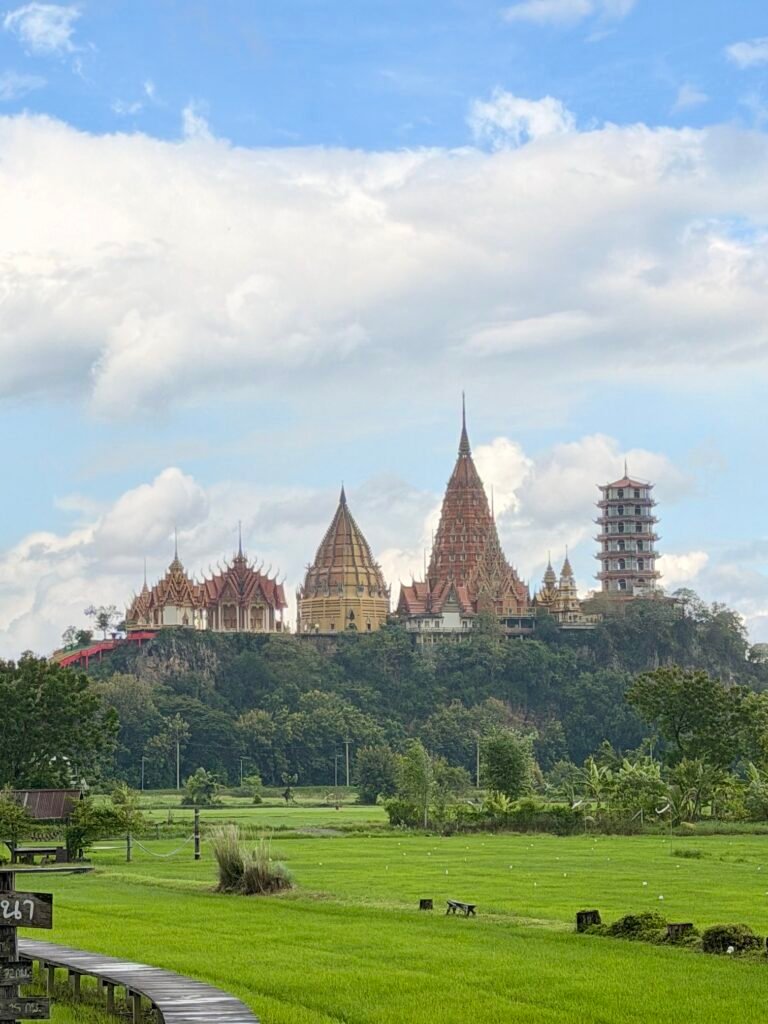
Tiger Cave Temple
From Meena Cafe, we headed to Tiger Cave Temple (Wat Tham Sua). The temple is one of the most impressive sights around Kanchanaburi, with its huge Buddha statue and spectacular views over the surrounding countryside.
After seeing it from a distance at Meena Cafe, it was great to get closer and explore the temple itself.
Wat Ban Tham Temple
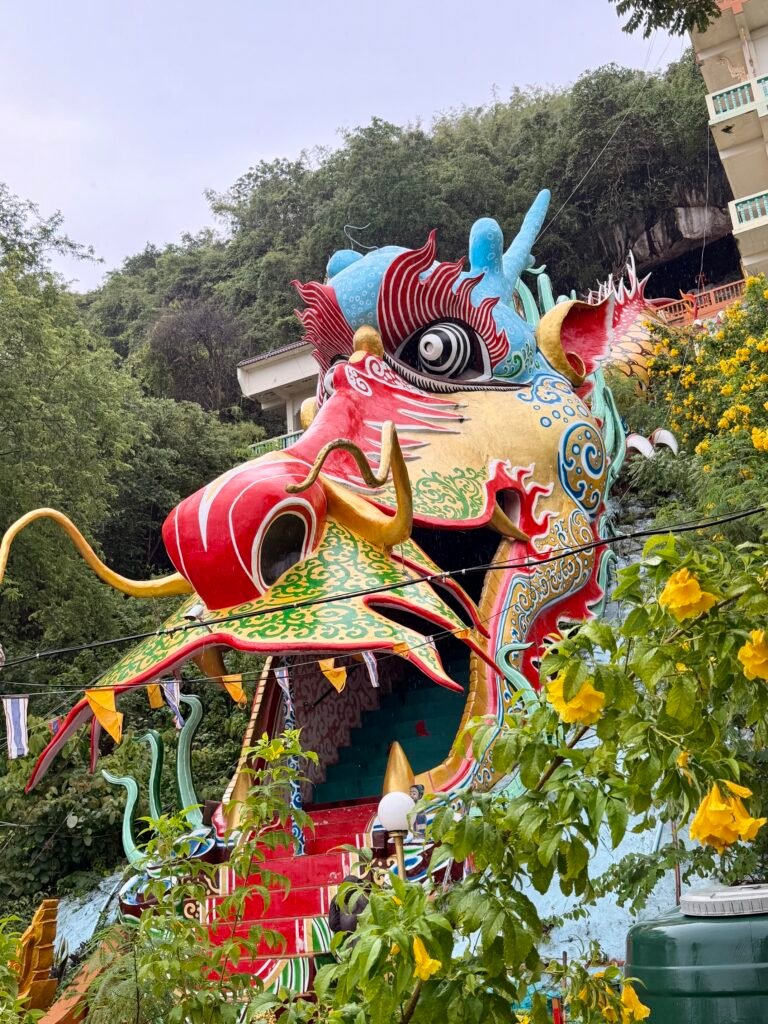
Our final stop of the day was Wat Ban Tham, another fascinating temple complex built around a cave. The entrance itself makes this temple particularly memorable, and climbing up through the cave and temple complex felt very different from the other temples we’d visited that day.
After a busy afternoon of temple hopping, we headed back towards Kanchanaburi. What had started as a simple morning visiting the River Kwai Bridge had turned into a full day of exploring some of the area’s temples and countryside.
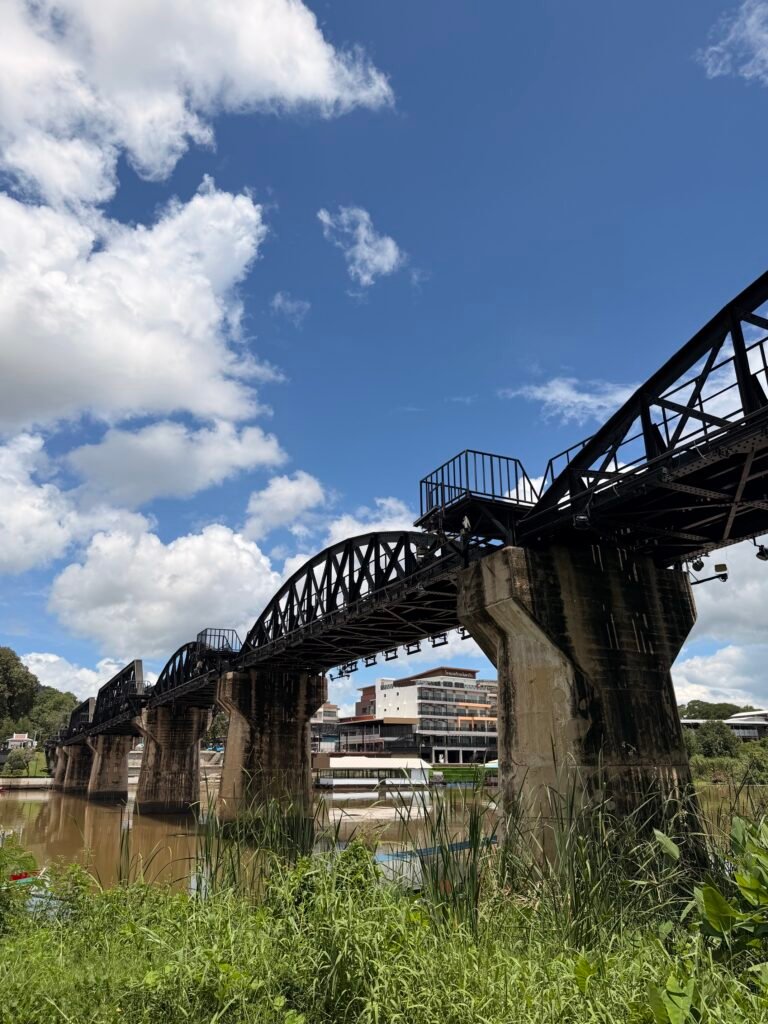
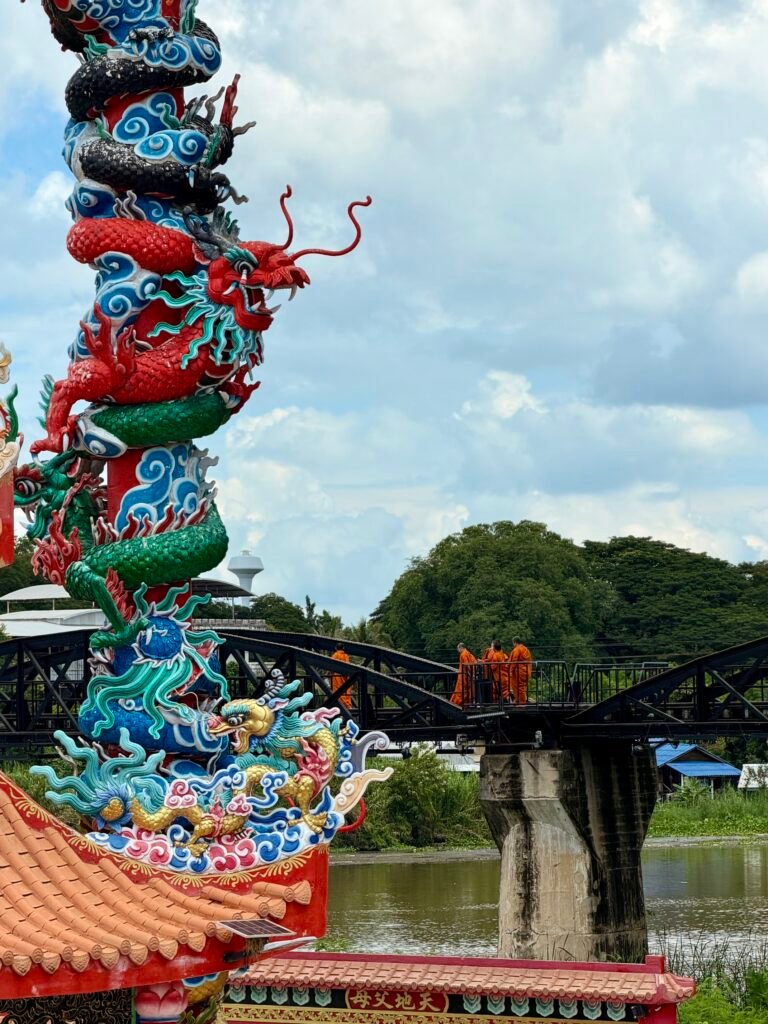
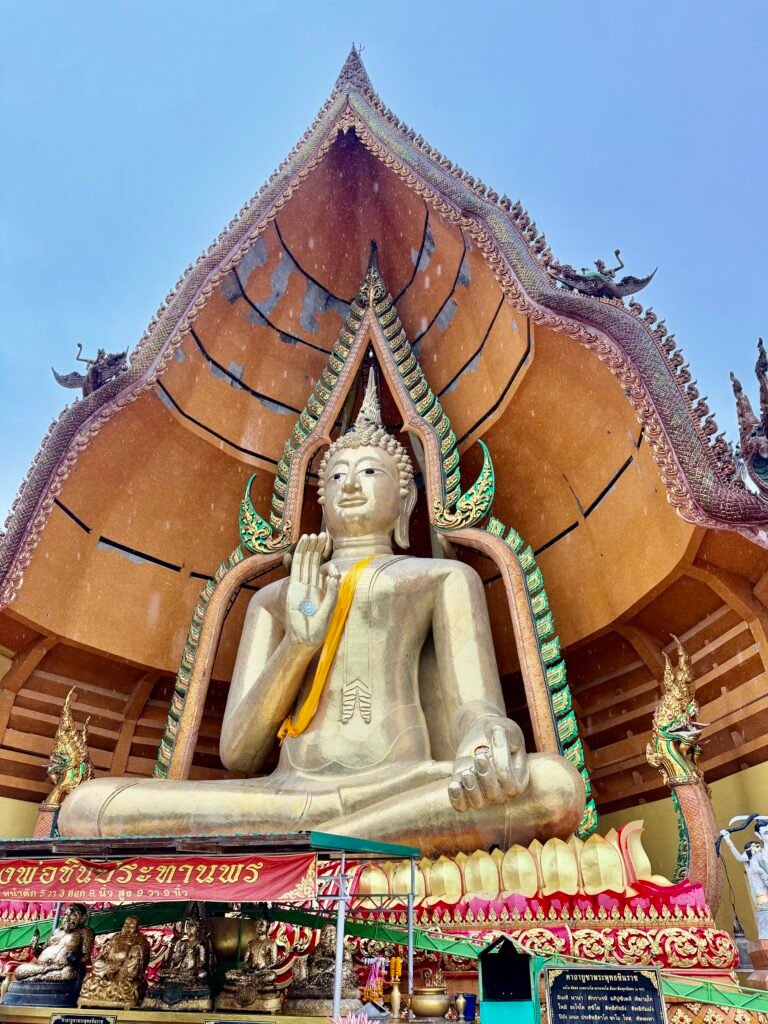
Day 2: Mueang Sing Historical Park
After a busy first day exploring the River Kwai Bridge and temple hopping, we decided to make day two of our Kanchanaburi itinerary a little more focused on the area’s history. We headed out to Mueang Sing Historical Park, an ancient Khmer archaeological site located around 40km from Kanchanaburi town.
The journey out of Kanchanaburi takes you away from the busier parts of the town and into much more rural surroundings, which made the trip feel like a completely different side of the area.
Exploring Mueang Sing Historical Park
Mueang Sing Historical Park is home to the remains of an ancient Khmer settlement, with the main temple complex dating back to around the 12th–13th centuries.
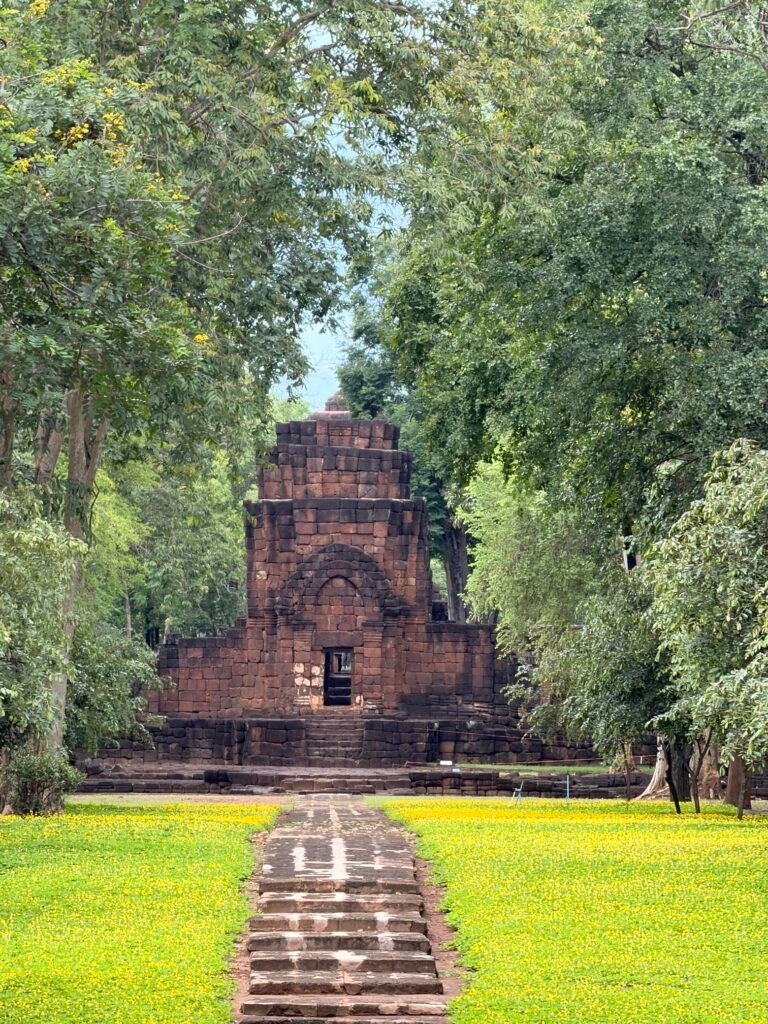
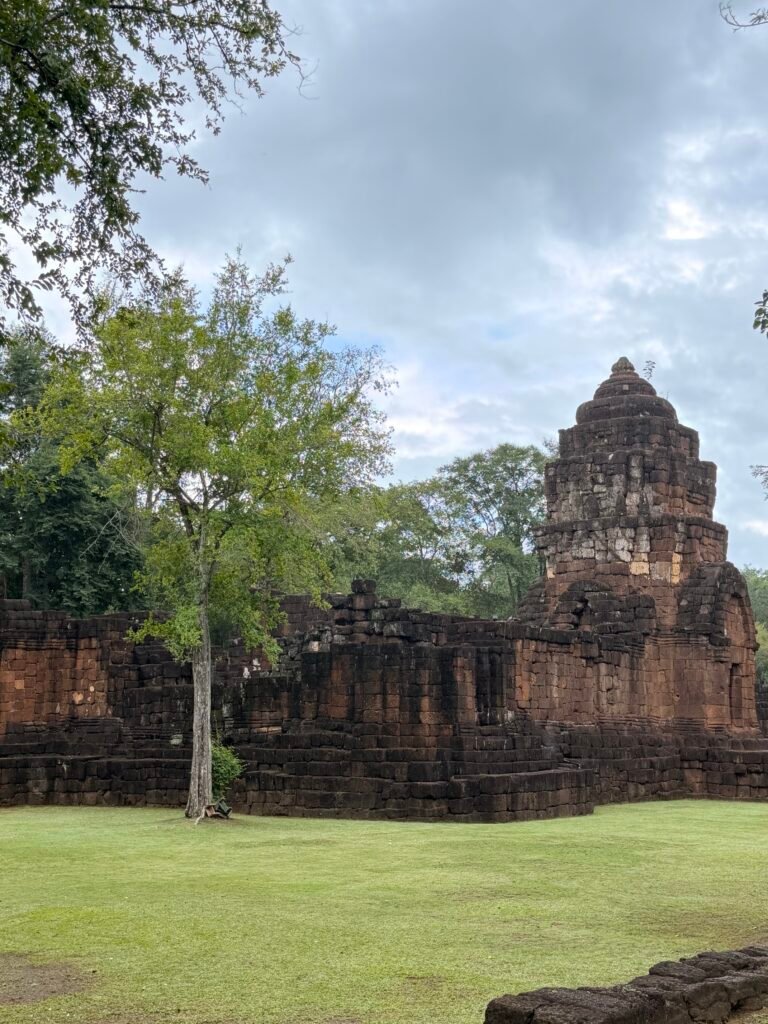
The central attraction is Prasat Mueang Sing, an impressive Khmer-style temple surrounded by large areas of grass and trees. Having previously visited Ayutthaya, we were surprised by just how quiet Mueang Sing was in comparison. In fact, we practically had the entire site to ourselves during our visit.
This made exploring the ruins feel incredibly peaceful. We could wander around at our own pace, stop to take photos and take our time looking at the different structures without having to navigate around crowds of other visitors.
The contrast with some of Thailand’s more popular historical sites was one of our favourite things about visiting Mueang Sing. While Ayutthaya is undoubtedly impressive, Mueang Sing offered a much more relaxed experience.
Is Mueang Sing Historical Park Worth Visiting?
If you’re interested in history or ancient architecture, we’d definitely recommend adding Mueang Sing Historical Park to a 3-day Kanchanaburi itinerary.
It isn’t one of Kanchanaburi’s most famous attractions, which may explain why it felt so quiet when we visited. For us, having almost the entire archaeological site to ourselves made the experience even more enjoyable.
We’d allow a couple of hours to explore the park properly, although you could spend longer if you’re particularly interested in the history and archaeology.
After spending the morning exploring Mueang Sing, we headed back towards Kanchanaburi for a more relaxed afternoon. It was a nice change of pace and gave us a chance to recharge before our final day, which was all about waterfalls and nature.
Day 3: Erawan Falls at Erawan National Park
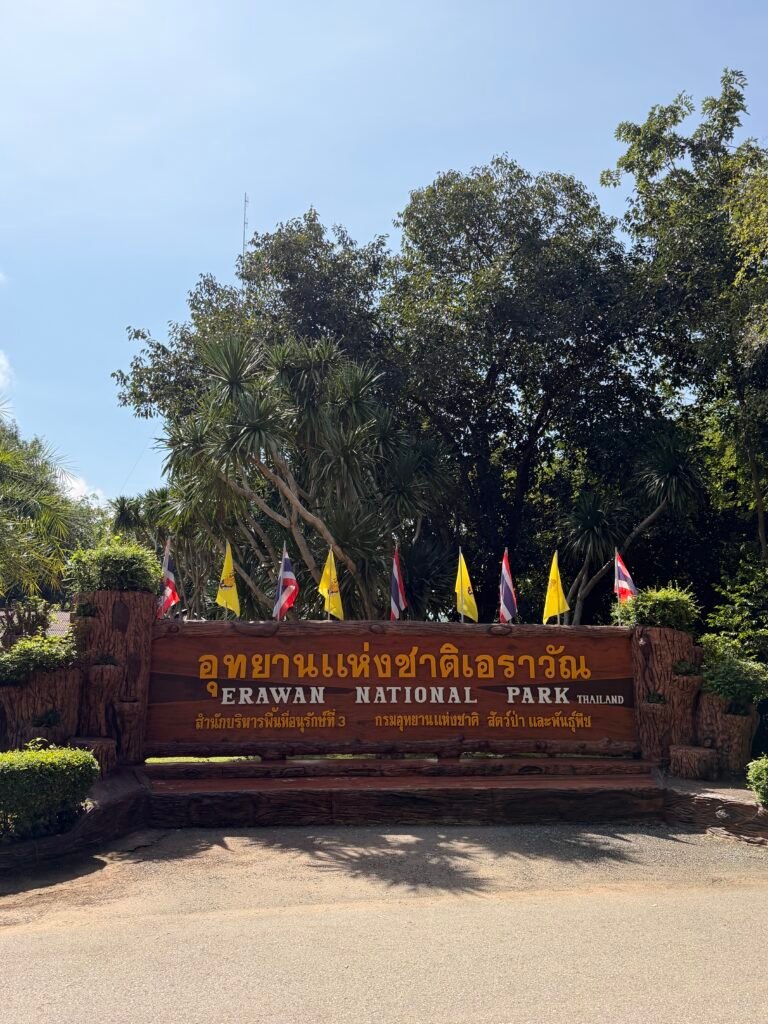
For our final day in Kanchanaburi, we headed to Erawan National Park to visit the famous Erawan Falls. After spending the previous two days exploring temples and historical sites, it was the perfect way to finish our trip with a day surrounded by nature.
Hiking to Erawan Falls
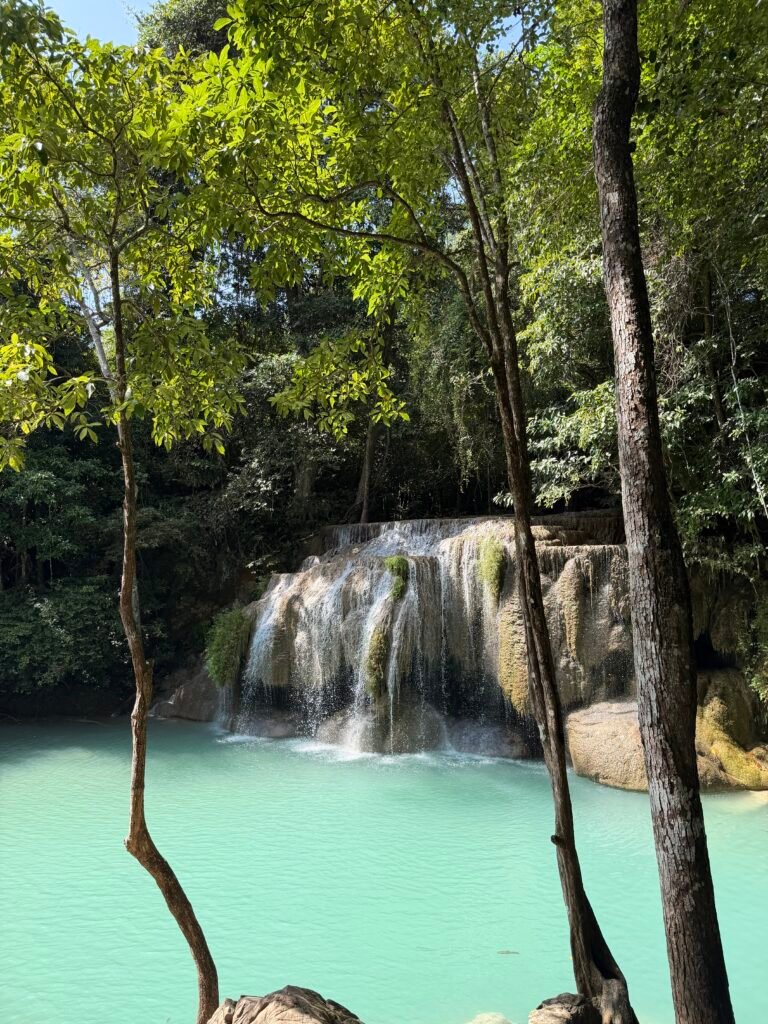
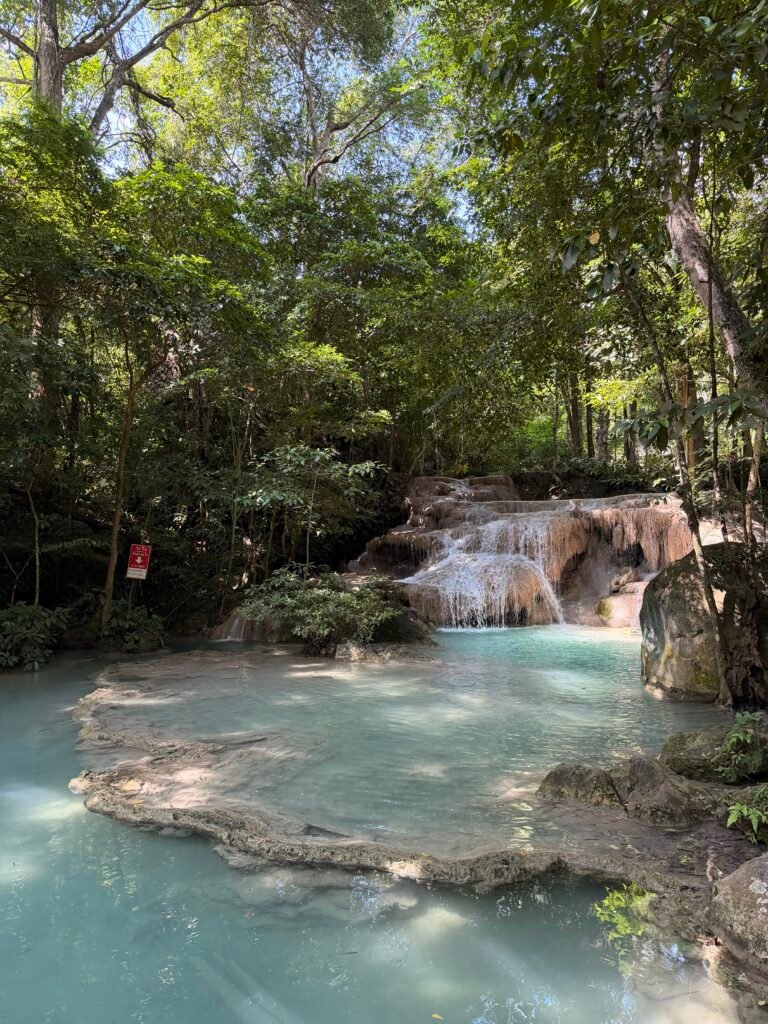
The first thing that struck us when we arrived was the colour of the water. The turquoise-blue pools were absolutely incredible to see in person, and it was easy to understand why Erawan Falls is one of Kanchanaburi’s most popular attractions.
There are seven tiers of waterfalls to explore, with the trail becoming more challenging as you make your way further up. The walk to the top was pretty hard going at times, particularly in the Thai heat, but we found that taking our time and stopping for breaks made it much more manageable.
The further we climbed, the more rewarding it felt, and there were plenty of beautiful spots along the way to stop and admire the waterfalls.
Swimming in the Waterfalls
After working up a sweat on the hike, we couldn’t wait to get into the water. We spent some time swimming in the falls to cool down, which was exactly what we needed after walking in the heat.
One thing to be aware of: the fish in the waterfalls do nibble on your feet and legs! Think of the fish you get at a foot spa, but considerably bigger.
It isn’t painful, but it definitely took me by surprise the first time one started nibbling on my foot! Once I got used to it, it was more amusing than anything else and definitely became one of those unexpected memories from our trip.
Is Erawan Falls Worth Visiting?
For us, Erawan Falls was the perfect way to end our three days in Kanchanaburi. The hike can be tiring in the heat, but the incredible blue-green water and opportunity to swim in the waterfalls make it well worth the effort.
If you’re planning a 3-day Kanchanaburi itinerary, we’d definitely recommend setting aside a full day for Erawan National Park. Take plenty of water, wear suitable footwear and don’t rush the hike — there are plenty of beautiful spots to stop and cool off along the way.
Tips for Visiting Kanchanaburi
After spending three days exploring Kanchanaburi, we found it to be a relatively easy destination to explore, although having some transport organised makes getting between the sights much easier.
Plan Around the Weather
If you’re visiting during Thailand’s rainy season, we’d recommend keeping your plans flexible. We had days where the forecast looked pretty poor, but the weather ended up being much better than expected.
This worked particularly well for us on day one. When the sun came out around lunchtime, we quickly arranged a songthaew tour and made the most of the good weather.
Start Early
Kanchanaburi can get very hot, particularly when you’re visiting outdoor attractions. We’d recommend starting your days early where possible, especially if you plan to do a lot of walking.
Our early morning visit to the River Kwai Bridge was particularly enjoyable as it was quieter and more comfortable before the heat of the day.
Allow Time for Erawan Falls
If Erawan Falls is on your itinerary, we’d recommend allowing most of the day rather than trying to squeeze it into a few hours.
The walk becomes more challenging as you make your way towards the higher levels, and you’ll want time to stop, take photos and enjoy the pools along the way.
Don’t Stick Too Rigidly to Your Itinerary
Some of our favourite moments in Kanchanaburi weren’t actually planned.
We hadn’t originally planned to visit Wihan Phra Phothisat Kuan Im Temple when we spotted it from the railway bridge, and our afternoon exploring the temples came about after our songthaew driver suggested some additional stops.
Having a rough itinerary while leaving some room for spontaneity worked really well for us.
How Many Days Do You Need in Kanchanaburi?
We found three days in Kanchanaburi to be a great amount of time to experience a mixture of the area’s history, temples and natural attractions.
Three days gave us enough time to visit the River Kwai Bridge and surrounding temples, explore Mueang Sing Historical Park and spend a full day at Erawan Falls without feeling like we were constantly rushing from one attraction to another.
If you have longer, you could easily add additional historical sites, waterfalls or day trips to your itinerary.
Kanchanaburi Itinerary FAQs
Is 3 days enough for Kanchanaburi?
Yes, we found three days to be a great amount of time to experience Kanchanaburi. It gave us enough time to visit the River Kwai Bridge, explore some of the area’s temples, visit Mueang Sing Historical Park and spend a full day at Erawan Falls without feeling too rushed.
What is Kanchanaburi best known for?
Kanchanaburi is best known for the Bridge over the River Kwai and its important history surrounding the Death Railway. However, the area also has beautiful temples, historical sites, waterfalls and national parks to explore.
Is Kanchanaburi worth visiting?
We definitely think Kanchanaburi is worth adding to a Thailand itinerary. We particularly enjoyed the variety of things to do, from exploring the River Kwai Bridge and temples to swimming in the turquoise waters of Erawan Falls.
What are the best things to do in Kanchanaburi?
Some of the most popular things to do in Kanchanaburi include visiting the Bridge over the River Kwai, exploring the area’s temples, visiting Mueang Sing Historical Park and spending a day at Erawan National Park and Erawan Falls.
How many days do you need in Kanchanaburi?
We recommend spending at least 2–3 days in Kanchanaburi. Two days would allow you to see some of the main attractions, while three days gives you more time to explore at a relaxed pace and dedicate a full day to Erawan Falls.
Is Erawan Falls worth visiting?
Yes. The turquoise-blue water was one of our favourite things we saw in Kanchanaburi. The hike to the higher levels can be hard work in the Thai heat, but being able to cool off with a swim in the waterfalls made it worthwhile.
Can you swim at Erawan Falls?
Yes, swimming is possible in the designated pools at Erawan Falls. Be aware that fish in the water can nibble at your feet and legs. It isn’t painful, but it can definitely give you a surprise if you’re not expecting it!
What is the best area to stay in Kanchanaburi?
Staying near the River Kwai Bridge is a convenient option for first-time visitors, particularly if you want to be close to one of Kanchanaburi’s most famous attractions. There are also hotels and resorts further along the river if you’re looking for a quieter stay.
What is the best time to visit Kanchanaburi?
The cooler, drier months are generally the most comfortable time to visit Kanchanaburi. However, we visited during the rainy season and still had plenty of sunshine. If you travel during rainy season, we’d recommend keeping your itinerary flexible and making the most of good weather when it appears.
How do you get around Kanchanaburi?
There are several ways to get around Kanchanaburi, including taxis, songthaews and organised tours. For our temple-hopping day, we hired a songthaew taxi and found this an easy way to visit several attractions outside the town.