
Erawan Waterfalls, Thailand: Complete Visitor Guide (2026)
You can’t visit Kanchanaburi without making a trip to Erawan Falls in Erawan National Park. It was one of the highlights of our time in the area, and if you’re a fan of waterfalls, swimming in turquoise pools and getting out into nature, it’s well worth adding to your itinerary. With seven tiers to explore, there’s plenty to see along the way, and the walk through the national park makes the experience just as enjoyable as the waterfalls themselves.
Erawan Waterfalls, Thailand: Everything You Need to Know Before Visiting
With seven tiers to explore, beautiful forest trails and natural pools where you can cool off, Erawan Falls is well worth the journey. In this guide, I’ll cover everything you need to know before visiting, including how to get there from Kanchanaburi, entrance fees, opening hours and what to expect when exploring the falls.
Where Are Erawan Waterfalls?
Erawan Waterfalls are located inside Erawan National Park, in western Thailand’s Kanchanaburi province. The park sits around 65 kilometres from Kanchanaburi town and is best known for its stunning seven-tiered waterfall.
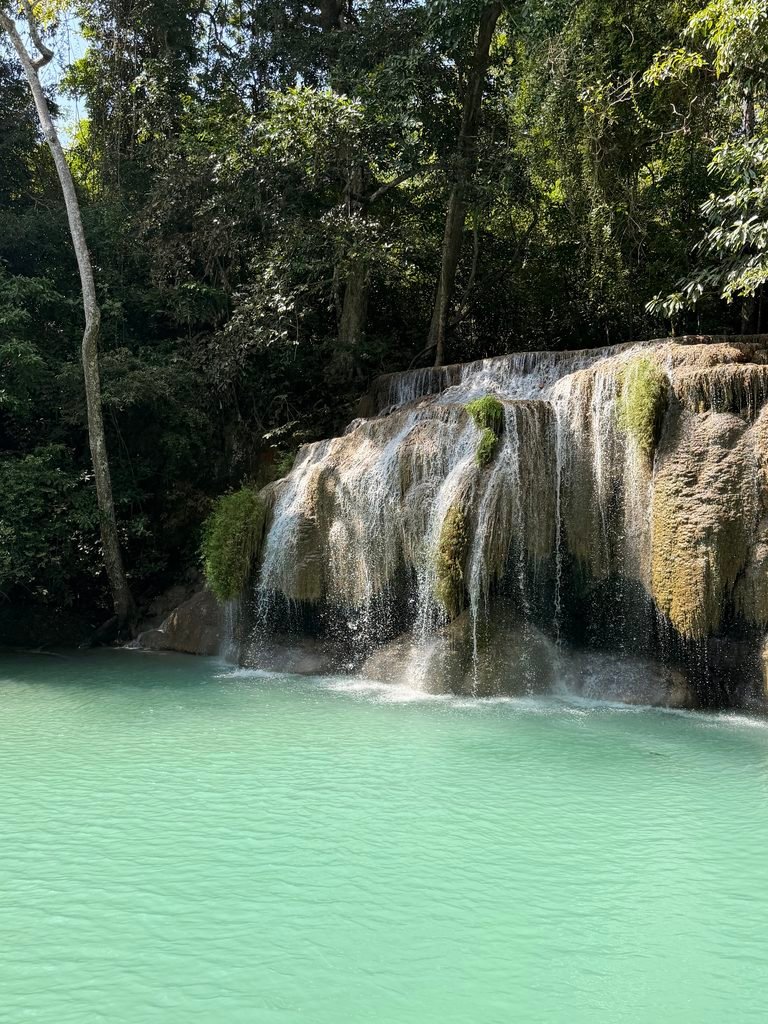
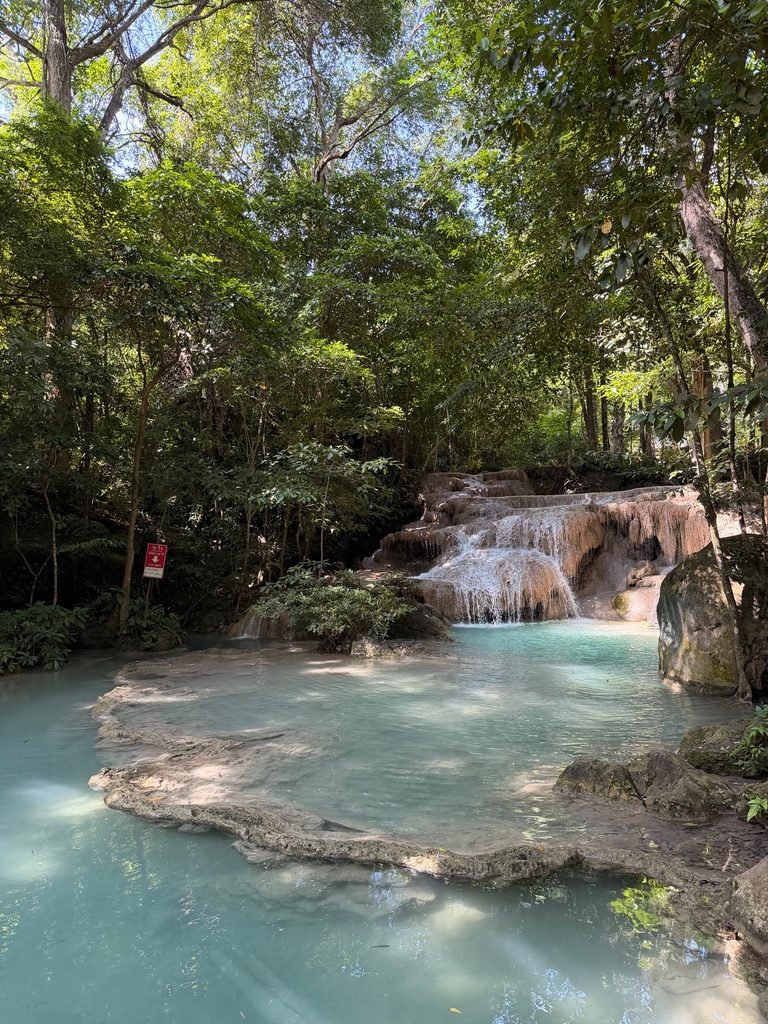
The falls are surrounded by lush tropical forest, with emerald-green pools, limestone formations and walking trails connecting the different levels. It’s a beautiful place to spend a few hours away from the town, particularly if you want to experience a different side of Thailand beyond its temples and cities.
Erawan Falls is also easy to combine with a longer stay in Kanchanaburi, making it a popular day trip for travellers exploring the region.
Is Erawan Waterfalls Worth Visiting?
Absolutely! Erawan Falls is one of the places I’d recommend prioritising if you’re visiting Kanchanaburi. The combination of cascading waterfalls, vivid turquoise pools and jungle scenery makes it a memorable place to explore.
What makes Erawan special is that there isn’t just one waterfall to see. There are seven tiers, each with its own character, and the higher you climb, the further you get into the surrounding forest. You can take your time walking between the levels, stop to admire the views and cool off in the pools where swimming is permitted.
I’d recommend allowing at least half a day for your visit so you don’t feel rushed. If you enjoy nature and don’t mind a bit of walking in the heat, Erawan Falls is well worth the trip.
How to Get to Erawan Waterfalls from Kanchanaburi
Erawan Falls is around a 1–1.5-hour journey from Kanchanaburi town, depending on your transport. You have a few options, depending on your budget and how much flexibility you want.
By bus: The public bus from Kanchanaburi to Erawan National Park is usually the cheapest option. Services run from the bus station, but departure times and journey lengths can vary, so check the latest schedule locally and allow enough time for the return journey.
By motorbike or car: If you’re comfortable riding a motorbike, or have access to a car, driving gives you more flexibility to explore at your own pace. The journey takes roughly an hour to an hour and a half. Only ride if you’re confident on the roads, and remember to check your insurance and licence requirements.
By organised tour or private transport: You can also arrange a private driver or book a guided day trip from Kanchanaburi. This is a convenient option if you don’t want to worry about bus timetables or navigating the route yourself.
I’d recommend starting early, especially if you want time to explore several tiers and swim before heading back to Kanchanaburi.
Looking for somewhere to stay in Kanchanaburi? Here are our picks
💰Budget Friendly: Scenario Hostel & Cafe
💰💰Mid Range: Kanchanaburi City Hotel
💰💰💰Treat Yourself: Royal River Kwai Resort & Spa
Erawan Waterfalls Entrance Fee and Opening Hours
Erawan Falls is located inside Erawan National Park, so you’ll need to pay the national park entrance fee to visit. Fees can differ for Thai and foreign visitors, and additional charges may apply for vehicles. Foreign visitor fee is 300 bhat per person.
Opening hours and access arrangements can also change, particularly during the rainy season when heavy rainfall may affect trail or swimming access. It’s worth checking with the park before travelling, especially if you’re visiting during September or another particularly wet period.
A few practical things to keep in mind:
- Bring cash: It’s useful for entrance fees and any small purchases.
- Arrive early: You’ll have more time to explore the higher tiers and avoid the hottest part of the day.
- Check swimming access: Some pools or sections may be temporarily closed for safety.
- Wear suitable footwear: The paths can become slippery, especially after rain.
Erawan Falls is a natural attraction, so conditions can change from day to day. A little preparation will help you make the most of your visit.


Exploring the Seven Tiers of Erawan Waterfalls
One of the best things about visiting Erawan Falls is that you get to explore seven different tiers, each offering something a little different. Rather than simply arriving at one viewpoint and heading back, you can follow the trail through the forest, discovering more waterfalls and beautiful natural pools as you climb.
The lower tiers are generally easier to reach, while the higher levels involve more walking and can be a little more challenging, particularly in hot or wet weather. I’d recommend giving yourself plenty of time to explore rather than rushing straight to the top.
Tier 1: Lai Kuen Rang
The first tier is a gentle introduction to Erawan Falls, with flowing water and a peaceful forest setting. It’s a good place to stop and enjoy the surroundings before continuing along the trail.
Tier 2: Wang Mat Cha
This tier is particularly popular for its beautiful blue-green pool. It’s one of the most recognisable sights at Erawan Falls, and the clear water makes it a tempting spot to cool off if swimming is permitted.
Tier 3: Pha Nam Tok
As you continue uphill, you’ll reach another lovely cascade surrounded by greenery. The water flows over rocky formations, creating a scenic spot to pause for photographs before heading towards the higher tiers.
Tiers 4–6: Continue Deeper Into the Forest
The middle and upper tiers are worth exploring if you have the time and energy. The trail takes you further into the forest, where you’ll find more cascades, pools and interesting rock formations. The atmosphere can feel quieter the further you walk, especially if you arrive early in the day.
Be prepared for uneven paths, humidity and slippery sections after rainfall. Take your time and bring water for the walk.
Tier 7: Phu Pha Erawan
The seventh tier is the highest level of the waterfall and a rewarding destination for anyone keen to explore the whole trail. Reaching it means walking further uphill, but you’ll be rewarded with another beautiful cascade surrounded by tropical forest.
If you’re planning to visit all seven tiers, allow enough time for the return walk and any stops along the way. Conditions can affect how far you’re allowed to go, so follow the national park’s guidance on the day.
My tip: Don’t feel you have to rush through every tier. The lower waterfalls are beautiful in their own right, but if you’re comfortable with the hike, I’d make the effort to explore as much of the trail as conditions allow.
What to Bring to Erawan Waterfalls
You’ll want to come prepared for a few hours of walking through the national park, especially if you’re planning to explore all seven tiers.
- Comfortable shoes: Wear shoes with good grip, as the paths and rocks can be slippery.
- Swimwear and a towel: Bring these if you want to swim in the designated pools.
- Water: Take enough drinking water for the walk, particularly during the hotter months.
- Sun protection: Sunscreen, sunglasses and a hat are useful, even when parts of the trail are shaded.
- A waterproof bag: Keep your phone, camera and other valuables protected around the water.
- Cash: Bring enough for entrance fees and any purchases at the park.
I’d also recommend starting early so you have plenty of time to explore without feeling rushed.
Final Thoughts: Is Erawan Waterfalls Worth Visiting?
If you’re visiting Kanchanaburi, I’d absolutely recommend making time for Erawan Falls. It was one of the highlights of our stay, and the combination of beautiful waterfalls, turquoise pools and forest trails makes it a fantastic place to spend a few hours.
I’d recommend allowing at least half a day to explore, particularly if you want to walk to the higher tiers rather than just visit the lower pools. Take your time, bring plenty of water and wear shoes with good grip.
The only thing I’d stress is checking the latest park conditions before you go, particularly during the rainy season. When conditions allow, Erawan Falls is a wonderful addition to any Kanchanaburi itinerary.
Frequently Asked Questions About Erawan Waterfalls
Is Erawan Waterfalls worth visiting?
Absolutely! Erawan Falls is one of the highlights of visiting Kanchanaburi. With seven tiers, turquoise natural pools and beautiful jungle scenery, it’s a fantastic place to spend a few hours exploring nature and escaping the busier tourist attractions.
How do you get from Kanchanaburi to Erawan Waterfalls?
Erawan Falls is around 65 kilometres from Kanchanaburi town. You can get there by public bus, motorbike, car or private transfer. The journey typically takes around 1–1.5 hours each way, depending on your transport and traffic.
How much is the entrance fee for Erawan Waterfalls?
Erawan Falls is inside Erawan National Park, which charges an entrance fee. The price depends on whether you’re a Thai or foreign visitor, and vehicle fees may apply. The foreign visitor entrance fee is 300 baht for adults and 150 baht for children. Check the latest fees before your visit, as prices can change.
How many tiers does Erawan Waterfalls have?
Erawan Falls has seven tiers, each with its own waterfalls, rock formations and natural pools. You can explore the lower levels for a shorter visit or continue uphill to see more of the falls.
Can you swim at Erawan Waterfalls?
Yes, swimming is permitted in designated pools when conditions allow. Some pools may be closed temporarily for safety reasons, so always follow the signs and instructions from park staff. The rocks can be slippery, and the pools may contain fish.
How long do you need at Erawan Waterfalls?
I’d recommend allowing at least half a day for your visit. This gives you time to walk the trails, explore several tiers, take photographs and enjoy the scenery without rushing. If you plan to reach all seven tiers and spend time swimming, allow longer.
What is the best time to visit Erawan Waterfalls?
The cooler, drier months from November to February are generally comfortable for walking. The rainy season can make the waterfalls more impressive, but heavy rain may also make trails slippery or lead to temporary closures. Arriving early is a good idea whatever time of year you visit.
Can you visit Erawan Waterfalls during the rainy season?
Yes, Erawan Falls can be visited during the rainy season, including September, when we visited Kanchanaburi. However, rainfall can affect water conditions, trail access and swimming opportunities. Check the park’s latest updates before travelling and take extra care on wet paths.
Is Erawan Waterfalls a day trip from Kanchanaburi?
Yes! Erawan Falls makes an excellent day trip from Kanchanaburi. The journey takes around 1–1.5 hours each way, leaving you plenty of time to explore the park before returning to town. I’d recommend starting early to make the most of your day.