
25 Best Things to Do in Hong Kong (2026)
I wasn’t sure what to expect from Hong Kong. After months of backpacking across Asia, I’d heard every possible take on the city — too crowded, too expensive, too touristy, skip it. But by the time I caught my first glimpse of the skyline rising over Victoria Harbour, I understood the hype.
Hong Kong ended up being one of my favorite stops on this entire trip. It’s a city that shouldn’t work — a dense maze of skyscrapers, street food stalls, ancient temples, and hiking trails all crammed onto a handful of islands and a sliver of mainland — and yet it pulls it off effortlessly. One minute you’re surrounded by neon and traffic, the next you’re on a quiet trail looking down at it all from above.
If you’re planning your first trip, this guide covers the best things to do in Hong Kong, from skyline views and harbour crossings to temples, markets, street food, and easy day trips. It’s an honest, first-timer’s list — the spots that genuinely blew me away, a few that surprised me, and some practical tips I wish I’d known before I arrived. Whether you’ve got two days or two weeks, I hope this helps you fall for the city the same way I did.
Quick Hong Kong Travel Tips
Before we get into the fun stuff, here are a few things I wish someone had told me before I arrived.
When to Visit
The best time to visit Hong Kong is October to early December. The weather is warm, sunny, and far less humid than the rest of the year, which makes walking, hiking, and exploring actually enjoyable. I’d avoid summer if you can — it’s hot, rainy, and typhoon season can disrupt your plans with little warning. Spring is pleasant but unpredictable, and winter (December–February) is mild and comfortable, though you’ll need a light jacket.
We visited in August as this is what fit in to our itinerary and can confirm it was very hot and humid at times. We were lucky to not be impacted by any typhoons.
How Many Days Do You Need?
I’d say a minimum of four full days to feel like you’ve seen the highlights without rushing. With five or six days, you can add a day trip to Lantau Island or Macau and still have time to wander neighbourhoods at a slower pace. Anything less than four days and you’ll be sprinting — and Hong Kong is a city that rewards slowing down.
Getting Around
Hong Kong’s transport is genuinely one of the best I’ve used on this trip. The MTR (the subway) is fast, cheap, air-conditioned, and covers almost everywhere you’ll want to go. Pick up an Octopus card at the airport — it works on the MTR, buses, ferries, trams, and even in convenience stores and some restaurants. You just tap and go, no fumbling for change.
For experiences that are about the journey itself, the Star Ferry and the historic ding ding trams are both cheap and unforgettable. Taxis are useful for spots the MTR doesn’t reach (like the south side beaches or trailheads), and they’re metered and honest compared to some other places in Asia. Just have your destination written in Chinese or saved on your phone — not every driver speaks English.
Iconic Things to Do in Hong Kong for First-Timers
These are the five things I’d tell anyone visiting Hong Kong for the first time to do without question. They’re the experiences that define the city — the ones you’ll still be talking about long after you’ve flown home.
1. Ride the Peak Tram to Victoria Peak
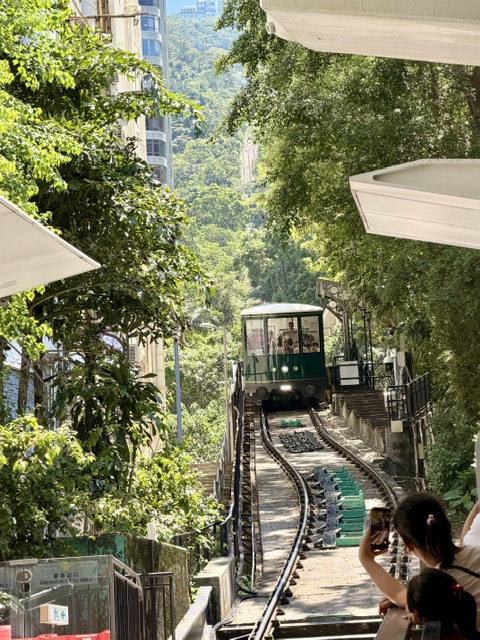
If there’s one experience that captures Hong Kong in a single moment, it’s riding the Peak Tram up to Victoria Peak. The historic funicular — Asia’s oldest, dating back to 1888 — reopened in 2022 after a HK$799 million renovation with larger sixth-generation tramcars, expanded waiting areas, and significantly reduced queues. The ride itself is an experience: as the tram climbs the steep incline, the buildings outside appear to lean at impossible angles, and then the harbour opens up below you.
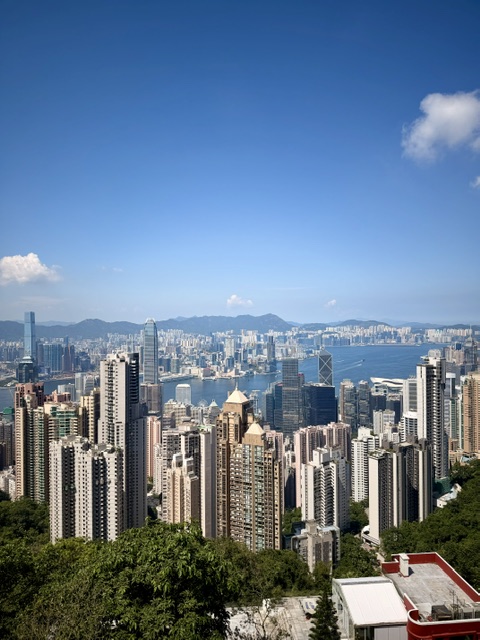
At the top, the Sky Terrace 428 gives you a 360-degree panoramic view across Victoria Harbour, Kowloon, and the islands beyond. Going up in the late afternoon and timing it for sunset is the move — watching the skyline shift from sharp silver to gold to a glittering carpet of lights is the kind of moment that stays with you.
This was one of my top experiences in Hong Kong. It was an excellent way to take in the Hong Kong skyline.
Practical tip: Go early or arrive about an hour before sunset to beat the worst of the crowds. Check current fares on the official Peak Tram website before you go, as prices have changed since the renovation. If the tram queue is long, you can also take bus 15 from Central — the view from the top is the same either way.
2. Take the Star Ferry Across Victoria Harbour
The Star Ferry is one of the best-value experiences in Hong Kong — a single crossing costs just a few Hong Kong dollars — and it’s the one thing every local and every guide will tell you not to miss.
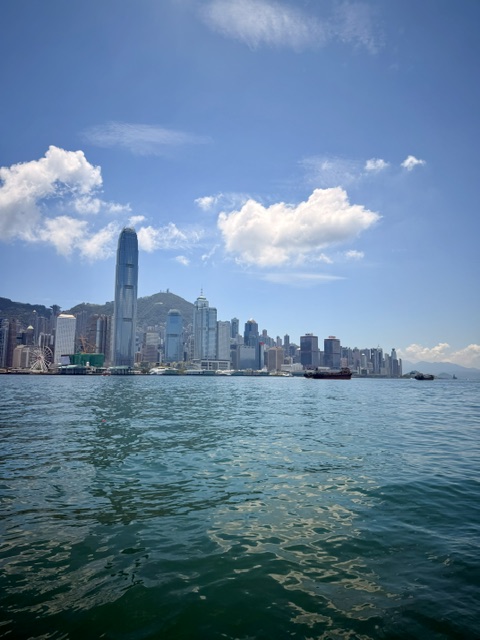
The green-and-white double-decker ferries have been crossing Victoria Harbour for over a century, and the short ride between Central Pier and Tsim Sha Tsui is the best way to see the skyline from the water.
Sit on the upper deck for the best views and breeze. The open-air windows make for incredible photos, especially as you approach the Kowloon side and the full skyline rises up in front of you. Doing the crossing at sunset and again after dark for the lights gives you two completely different experiences.
Practical tip: You can pay with your Octopus card — just tap at the gate. The ferries run every few minutes, so you don’t need to plan around a schedule. If you’re staying in Kowloon, do the crossing from Tsim Sha Tsui to Central in the morning and back in the evening to see both sides in daylight and at night.
3. Watch the Symphony of Lights
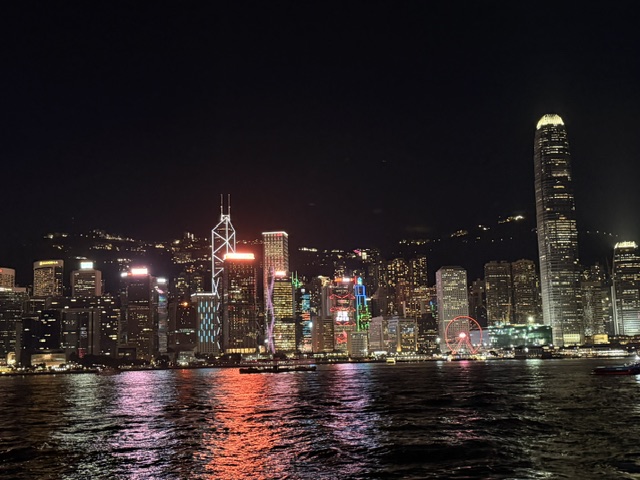
Every night at 8pm, more than 40 buildings on both sides of Victoria Harbour light up in a choreographed show of lasers, LED lights, and music — and it’s completely free. It’s officially recognised as the world’s largest permanent light show, and even if you’re a bit sceptical of organised spectacles, there’s something genuinely impressive about watching an entire skyline pulse in time to music.
The best viewing spot is the Tsim Sha Tsui Promenade, where you can sit on the waterfront with the harbour in front of you and the Hong Kong Island skyline doing its thing across the water. Arrive 15–20 minutes early to grab a good spot — it gets busy, especially on weekends.
Practical tip: If you happen to be on the Star Ferry during the 8pm show, you’ll get a floating front-row seat — one of the best free experiences in the city. Note that the show format has evolved over the years, so it’s worth checking what’s currently running closer to your visit date.
4. Stroll the Tsim Sha Tsui Promenade and Avenue of Stars
Even without the light show, the Tsim Sha Tsui Promenade is one of the best free things to do in Hong Kong. This waterfront walkway stretches along the Kowloon side of the harbour and offers what I think is the single best view of the Hong Kong Island skyline — a wall of skyscrapers that looks almost unreal, especially at night when the buildings glow.
The Avenue of Stars, Hong Kong’s answer to the Hollywood Walk of Fame, runs along the promenade with plaques and statues honouring the city’s film legends — including a Bruce Lee statue that’s a popular photo spot. Even if you’re not a huge fan of Hong Kong cinema, the walk is worth it just for the views and the people-watching.
Practical tip: The promenade is at its best in the evening, about an hour before sunset. Start at the Star Ferry pier and walk east — you’ll pass the Avenue of Stars, the Hong Kong Museum of Art, and eventually reach Hung Hom, with the skyline visible the entire way. It’s flat, paved, and free — perfect for a slow evening stroll.
5. Ride the Ding Ding Tram
The ding ding — as the locals call it — is Hong Kong’s historic double-decker tram system, running along the north coast of Hong Kong Island since 1904. The name comes from the bell the driver rings to warn pedestrians. At a flat fare of just a few Hong Kong dollars, it’s one of the cheapest ways to see the city, and it’s a completely different experience from the MTR — you’re at street level, rattling along through traffic, with the city unfolding right outside the window.
Sitting upstairs at the front, you watch the neighbourhoods roll by — Causeway Bay’s neon shops, Wan Chai’s old buildings, and the narrow streets of Sheung Wan. It’s slow, it’s a bit creaky, and that’s exactly the point. The ding ding feels like a piece of old Hong Kong that’s somehow survived into the present.
Practical tip: The trams run east-west along Hong Kong Island from Shau Kei Wan to Kennedy Town. Hop on anywhere along the route, head upstairs to the front seat, and ride until you’ve had enough — then just hop off at the next stop. Pay with your Octopus card on the way out, not the way in.
Best Temples and Cultural Experiences in Hong Kong
One side of Hong Kong that often surprises first-timers is how spiritual and cultural it feels. You can be walking through a concrete canyon of skyscrapers, turn down a side street, and suddenly find yourself standing in front of a temple that’s been there for over a century, thick with incense and completely still. These five spots give you a real sense of the city’s soul — and most of them are free.
6. Step Inside Man Mo Temple in Sheung Wan
Man Mo Temple is one of the oldest and most atmospheric temples in Hong Kong, and it hits you the moment you walk through the door. Built in 1847 during the Qing dynasty, it’s dedicated to the gods of literature (Man) and war (Mo), and it served as a place of worship and a community arbitration court where locals would settle disputes under oath when trust was thin between the Chinese and the colonial government.
What makes this temple unforgettable is the ceiling — rows of giant earth-coloured incense coils suspended from the roof, spiralling slowly downward like overgrown fungi in an upside-down garden. The smoke is thick and sweet, and the light filtering through it gives the whole space a hazy, almost dreamlike quality. It’s the kind of place where you instinctively lower your voice and slow down.
Practical tip: Man Mo Temple is on Hollywood Road in Sheung Wan, an easy walk from the Sheung Wan MTR or a short ride on the ding ding. Entry is free, but it’s an active place of worship — be quiet, don’t use flash photography, and dress respectfully. Pair it with a wander along Hollywood Road’s antique shops and a stop at PMQ nearby.
7. Explore Tai Kwun: Hong Kong’s Heritage Arts Hub
If Man Mo Temple shows you old Hong Kong, Tai Kwun shows you how the city reinvents itself without erasing its past. This 180-year-old compound — formerly the Central Police Station, Central Magistracy, and Victoria Prison — was reopened in 2018 after a HK$3.8 billion conservation project, making it the most expensive heritage restoration in Hong Kong’s history. The result is 16 restored heritage buildings juxtaposed with two striking contemporary art spaces, creating a living cultural hub in the heart of Central.
Walking through Tai Kwun feels like moving through layers of the city’s history. You can step inside the tiny, cramped prison cells where thousands were once held, wander the parade ground, and then walk straight into a contemporary art gallery in the same complex. By its fifth anniversary in 2023, Tai Kwun had welcomed over 13 million visitors — a testament to how quickly it became one of Hong Kong’s most important cultural landmarks.
Practical tip: Tai Kwun is on Hollywood Road in Central, between SoHo and Lan Kwai Fong. Entry to the heritage buildings and courtyard is free. Check the Tai Kwun website for current pass requirements, especially on weekends and holidays. The prison cells and heritage exhibitions are the highlight — don’t skip them. There are also several good restaurants and cafes inside if you need a break.
8. Browse PMQ: Hong Kong’s Creative Design Hub
Just a short walk uphill from Tai Kwun, PMQ is another example of Hong Kong repurposing its past. The building started life as the city’s first Western school, then became the Police Married Quarters in 1951 — even former Chief Executive Donald Tsang grew up here — before being transformed in 2014 into a creative hub for over 100 local designers.
Inside, the old residential units have been converted into small design studios and shops selling handmade jewellery, clothing, ceramics, and homewares. It’s the best place in Hong Kong to find souvenirs that don’t feel mass-produced, and many of the designers are actually working in their studios, so you can watch them craft pieces and chat about their process. PMQ also runs workshops — everything from silver ring making to mahjong tile painting — plus regular night markets and the annual deTour design festival.
Practical tip: PMQ is at 35 Aberdeen Street in Central, a short uphill walk from the Central MTR or the mid-levels escalator. Opening hours and workshop schedules vary, so check the PMQ website before you go to see what’s on.
9. Visit Wong Tai Sin Temple for Fortune Telling
Wong Tai Sin Temple is one of Hong Kong’s busiest and most colourful temples, dedicated to Wong Tai Sin, a Taoist deity known for answering prayers and telling fortunes. The temple’s vivid red pillars, jade-green roofs with intricate dragon ornaments, and thick incense make it a feast for the senses — and it draws worshippers and tourists in equal numbers year-round.
The real draw here, though, is the fortune-telling. The temple is famous for kau cim — the traditional practice of shaking a bamboo cylinder full of numbered sticks until one falls out. You take the number to one of the dozens of fortune-teller booths lining the arcade beside the main temple, and they interpret what the year has in store for you. Some speak English, and you can also look up your stick’s number on the temple’s website for a free English translation. It’s a fun, slightly nerve-wracking experience — and even if you don’t believe in it, watching the locals take it so seriously gives you a genuine glimpse into a living tradition.
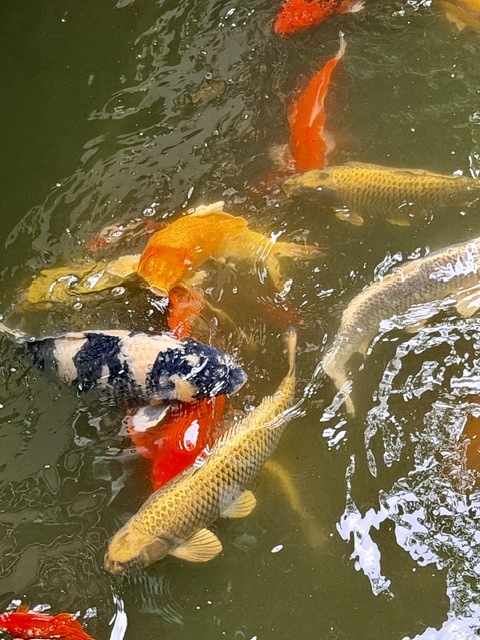
One of my favorite things to do was feed the koi fish. Food is available in a vending machine by the pond however this is limited per day to avoid over feeding.
Practical tip: Wong Tai Sin Temple is in Kowloon, right next to Wong Tai Sin MTR station (exit B3, turn right). Entry is free, and fortune-telling consultations typically cost upwards of HK$100. Go on a weekday morning if you want a quieter experience — it gets packed on weekends and around Chinese New Year.
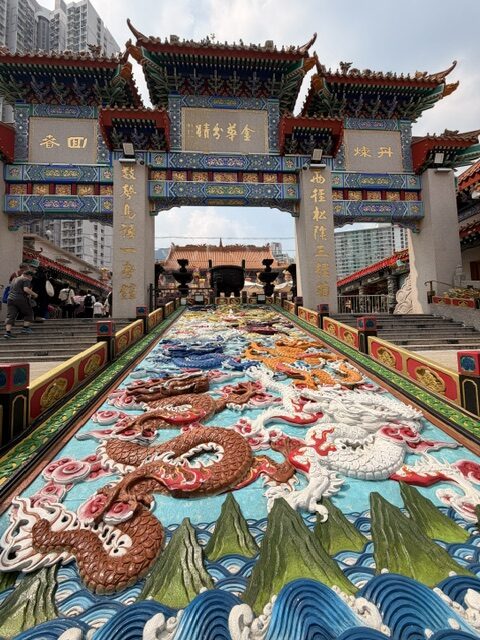
10. Find Peace at Chi Lin Nunnery and Nan Lian Garden
After the buzz of temples and markets, Chi Lin Nunnery and Nan Lian Garden are the perfect antidote. Located in Diamond Hill, this pair of Tang dynasty-style attractions offers a profound sense of peace and stillness that feels impossible to find in a city this dense.
Chi Lin Nunnery, originally established in 1934 and rebuilt in the 1990s, is the world’s largest hand-made wooden building constructed without a single nail — the entire structure uses interlocking cypress wood joints, a traditional technique that demonstrates the harmony between humans and nature. The complex includes halls, a library, a school, a pagoda, and lotus ponds where silent nuns deliver offerings of fruit and rice to Buddha.
Connected by a footbridge is Nan Lian Garden, a meticulously landscaped park that follows the same Tang dynasty design principles. Winding paths lead past ornamental rocks, koi-filled ponds, a rushing waterfall, and the iconic golden Pavilion of Absolute Perfection, reached by a striking red bridge. The contrast between the golden pagoda, the red bridge, and the surrounding greenery is one of the most beautiful photo spots in the garden — and it’s even more stunning in person.
Practical tip: Both sites are free to enter and are at Diamond Hill MTR station (exit C2, turn right at the top of the escalator and walk five minutes east along Fung Tak Road). You can easily visit both in about two hours. Remember that Chi Lin Nunnery is an active place of worship — maintain respectful silence and don’t take photos inside the halls. There’s also a lovely tea house (the Pine Teahouse) inside Nan Lian Garden if you want to extend the peaceful vibe with a cup of oolong.
Best Food and Local Markets in Hong Kong
No trip to Hong Kong is complete without diving headfirst into its food scene. From legendary street stalls and sizzling night markets to historic bakery staples and modernised dining halls, eating here is as much about the vibrant atmosphere as it is about the food itself. Here are five essential food and market experiences you shouldn’t miss.
11. Eat Dim Sum at a Local Spot or Cha Chaan Teng
Dim sum isn’t just a meal in Hong Kong — it’s a cultural institution. Walking into a traditional dim sum spot or cha chaan teng (a local Hong Kong-style cafe) for the first time is a sensory overload in the best way possible: steam rising from stacked bamboo baskets, the clatter of teacups, and the buzzing canteen energy of locals chatting over morning tea.
Make sure to order the classics: har gow (steamed shrimp dumplings with translucent skin), siu mai (pork and shrimp dumplings), char siu bao (fluffy steamed barbecue pork buns), and warm, flaky egg tarts for dessert. Don’t worry if you don’t speak Cantonese — many local places have picture menus or order sheets where you simply tick off what you want.
Practical tip: Dim sum is traditionally a morning or lunchtime affair (yum cha), though many modern spots serve it all day. If you go to a very traditional restaurant, don’t be surprised if table-sharing with strangers is required during peak hours — it’s all part of the authentic vibe!
12. Feast at Temple Street Night Market
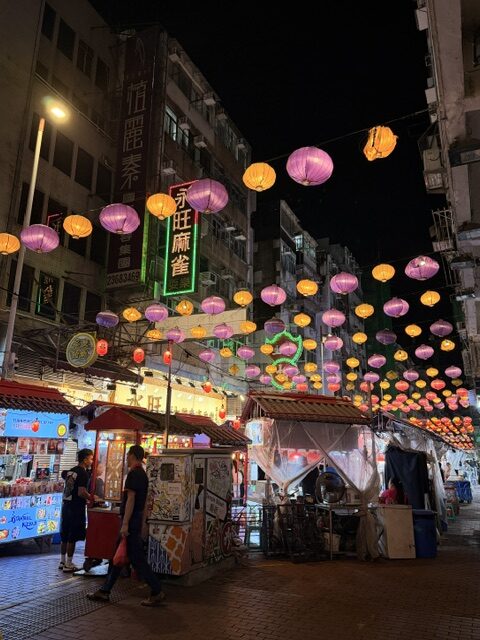
When the sun goes down, Temple Street in Kowloon comes alive with neon lights, sizzling woks, and rows of bustling stalls. It’s Hong Kong’s most famous night market and the ultimate spot for open-air street food (dai pai dong style).
Follow your nose down the main drag and pull up a plastic stool at one of the seafood or noodle stalls. Must-try dishes include sizzling claypot rice topped with preserved meats, crispy stinky tofu (bolder than it smells!), and fresh seafood cooked with garlic and chili. Grab a glass of freshly pressed sugar cane juice to wash it all down.
Practical tip: Beyond the food, the market stalls sell affordable souvenirs, electronics, and trinkets, and you’ll even find fortune-tellers lining the northern end near the temple. The market starts warming up around 6:00 PM, but 8:00 PM to 10:00 PM is when the energy peaks.
13. Browse Ladies’ Market in Mong Kok
Stretching along Tung Choi Street in the heart of Mong Kok, Ladies’ Market is a vibrant grid of over 100 stalls selling clothes, bags, souvenirs, accessories, and fun knick-knacks. Even if you aren’t planning a big shopping spree, walking through the narrow aisles under hanging banners and bright lights offers a hit of quintessential Hong Kong street energy.
It’s also one of the few places in the city where haggling is expected. Start by offering around 50–60% of the initial quoted price and work your way to a middle ground with a smile.
Practical tip: Keep your belongings secure in the tight crowds, and remember to carry cash, as stallholders rarely accept credit cards. Mong Kok MTR Station (Exit E2) puts you right near the entrance.
14. Eat Your Way Through Central Market
Located right in the hustle of Central, Central Market is a beautifully revitalised 1930s heritage building that blends streamlined Bauhaus architecture with modern food and lifestyle stalls. Once Hong Kong’s first public wet market, it now houses local snack shops, artisan craft stores, specialty coffee bars, and indoor dining spaces.
It’s an ideal, air-conditioned lunch stop as you wander through Central — perfectly situated right between heritage spots like Tai Kwun and the walk up toward the Peak Tram.
Practical tip: Take a moment to walk up the preserved central staircase — it’s one of the original architectural features and a favourite spot for photos showing the contrast between historical concrete and modern city life.
15. Try a Pineapple Bun with Butter (Bolo Bao)
Despite its name, a pineapple bun (bolo bao) contains no actual pineapple. It gets its name from the golden, crunchy, criss-cross sweet crust on top that resembles the skin of a pineapple. Beneath the crispy top sits a soft, pillowy sweet bread roll.
The ultimate way to eat it is bolo yau — served warm straight out of the oven with a thick, cold slab of salted butter stuffed into the middle. The contrast between the hot, sweet bun and the cool, melting butter is deceptively simple yet completely addictive.
Practical tip: You can find pineapple buns at almost any local bakery or cha chaan teng across the city. Pair it with a cup of hot Hong Kong-style milk tea (nai cha) for a classic afternoon snack.
Views, Nature & Hikes
While Hong Kong is world-famous for its glass-and-steel skyscrapers, over 40% of its land is actually protected country parkland. Escaping the concrete jungle is surprisingly easy—within 30 minutes, you can swap neon lights for coastal ridges, sandy beaches, and mountain peaks. Here are five of the best ways to experience Hong Kong’s outdoors and panoramic views.
16. Hike Dragon’s Back
Frequently named one of Asia’s best urban hikes, Dragon’s Back offers sweeping coastal views without demanding expert fitness. The undulating ridge trail resembles the spine of a dragon, giving you continuous panoramic vistas of Shek O, Tai Long Wan, and the South China Sea.
The most magic moment of the trail happens halfway through: the dense city skyline disappears completely behind the hills, leaving only green peaks, blue water, and open sky.
- Difficulty & Duration: Moderate; roughly 8.5 km (5.2 miles), taking about 2 to 3 hours to complete.
- Ending Point: The trail finishes at Big Wave Bay—a popular surf beach lined with casual outdoor cafes where you can celebrate with a cold drink or a dip in the ocean.
Practical tip: Take the MTR to Shau Kei Wan Station (Exit A3), then jump on Bus 9 to the Tei Tan Tam stop to reach the trailhead. Bring plenty of water and sunscreen, as the open ridge offers virtually no shade.
17. Visit the Big Buddha & Po Lin Monastery
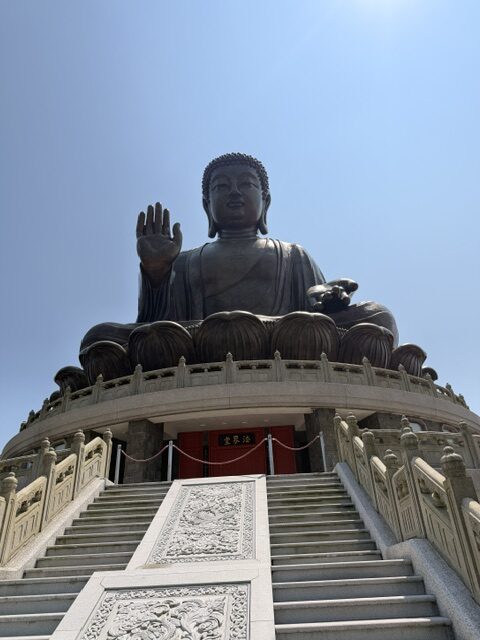
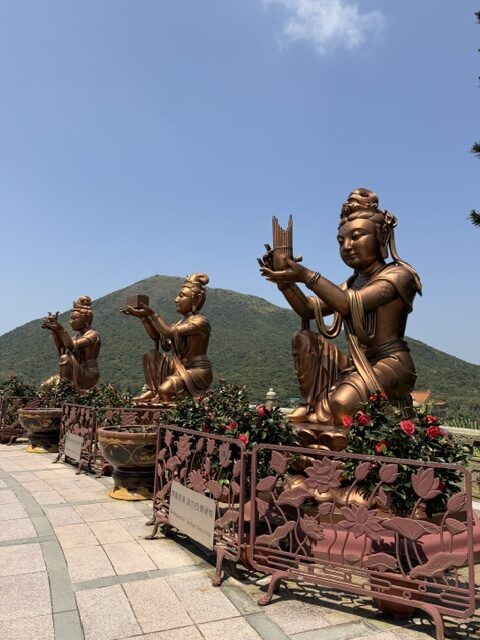
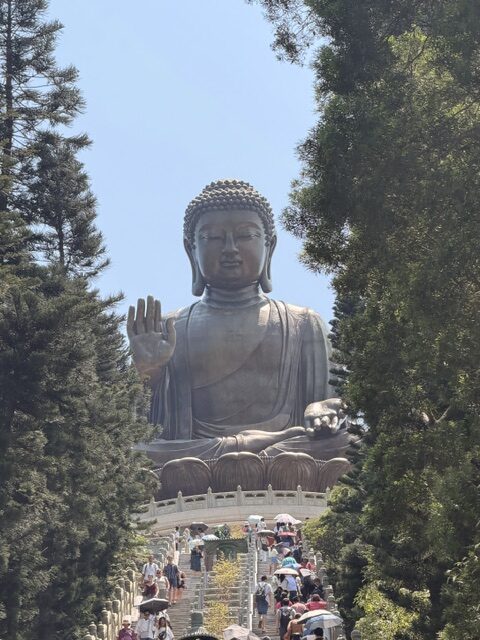
Perched high in the lush mountains of Lantau Island sits the Tian Tan Buddha (Big Buddha), a striking 34-metre (112-foot) bronze statue symbolising the harmonious relationship between human, nature, and faith. Sitting at the base requires climbing 268 steps, but the elevated views across the mountain valleys are worth the effort.
Adjacent to the statue is Po Lin Monastery, one of Hong Kong’s most important Buddhist sanctuaries, filled with colourful incense-filled courtyards and intricate architecture. Nearby, you’ll also find the peaceful Wisdom Path, a outdoor installation of wooden monuments carved with verses from the Heart Sutra.
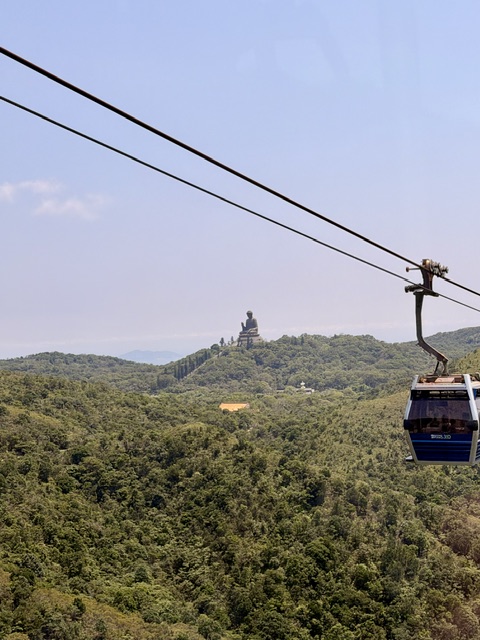
- Getting There: The journey is half the fun—take the Ngong Ping 360 cable car from Tung Chung for a scenic 25-minute ride over mountain forest and sea.
- Cabin Choice: Upgrade to the “Crystal Cabin” with a glass bottom if you want a birds-eye view of the trail below your feet.
This was my absolute number one activity we did in Hong Kong. The sheer size of the Buddha was breathtaking as well as the amazing views from the top and from the cable car on the way there.
Practical tip: Arrive right when the cable car opens (around 10:00 AM) to avoid long queues at the terminal. Don’t forget to grab a light vegetarian lunch or fresh tofu pudding at the monastery’s food stalls.
18. Explore Tai O Fishing Village
Step back in time by visiting Tai O, a traditional fishing community built over tidal flats on Lantau Island’s western coast. Known as the “Venice of Hong Kong,” Tai O is famous for its rows of historic stilt houses (pang uk) interconnected by narrow footbridges and walkways.
The pace here is noticeably slower. As you wander through the village streets, you’ll smell drying salted fish, spot traditional seafood vendors, and watch fishermen maneuvering small motorboats through the narrow canals.
- Dolphin Sightings: Local boat operators near the main bridge offer short 20-minute boat tours that take you out into the bay to spot rare Chinese white dolphins (often called pink dolphins due to their unique skin color).
- Day Trip Combo: Tai O pairs perfectly with a morning visit to the Big Buddha, as Bus 2 directly connects Ngong Ping Village to Tai O in about 20 minutes.
Practical tip: Try the local street snacks while exploring: gigantic grilled squid, freshly fried doughnut rings (saam sat), and sweet charcoal-grilled bubble waffles.
19. Have a Beach Day at Repulse Bay
One of the most pleasant surprises about Hong Kong Island is how quickly you can transition from financial skyscrapers to soft sand. Nestled on the island’s southern coast, Repulse Bay is a broad, crescent-shaped sandy beach with calm, wave-free waters framed by residential high-rises and green hills.
It’s an ideal spot for a relaxing afternoon away from the crowds, featuring clean public facilities, a tiled promenade, and plenty of dining options at the beachfront complex The Pulse. At the southeastern end of the beach sits a vibrant shrine dedicated to Kwun Yum and Tin Hau (goddesses protecting fishermen), complete with colorful statues and a traditional mosaic bridge.
Practical tip: Take Bus 6, 6X, or 260 from the Exchange Square Bus Terminus in Central. The scenic ride snakes over the mountain pass and down to the coast, taking less than 30 minutes.
20. Grab Sunset Drinks at a Rooftop Bar
Hong Kong’s skyline is impressive at ground level, but viewing it from high above with a drink in hand is an essential Hong Kong night-out experience. Watching the transition from dusk to twilight—as millions of office lights flick on across Victoria Harbour—is unforgettable.
Whether you’re looking for a high-end luxury cocktail or a more casual outdoor patio, the city has endless elevated vantage points:
- Ozone (Ritz-Carlton, Kowloon): Located on the 118th floor, this is famous for being one of the highest bars in the world. It offers sweeping, cloud-level views across the entire territory.
- Central & Wan Chai Rooftops: For open-air terrace views right among the skyscrapers on Hong Kong Island side, venues like Cruise, Wooloomooloo, or Popinjays offer outdoor decks overlooking the harbor.
Practical tip: Most upscale rooftop bars enforce a dress code in the evening (smart casual—avoid flip-flops, beachwear, or sleeveless shirts for men). If you’re on a budget, buy a cold drink at a convenience store and head to the public observation deck at the Central Pier or Tsim Sha Tsui Promenade instead!
Day Trips & Islands
When you need a breather from the fast-paced energy of the city center, Hong Kong makes it effortless to escape. Just a short ferry ride or subway trip away lie tranquil islands, preserved historic grounds, and distinct cultural enclaves that feel a world apart from Central’s glass towers. Here are three ideal day trips to round out your itinerary.
21. Take a Day Trip to Lamma Island
Just a 30-minute ferry ride from Central Pier, Lamma Island is the ultimate antidote to Hong Kong’s urban intensity. With no cars allowed on the island, the pace of life slows down instantly. You’ll swap skyscrapers and rushing crowds for quiet paved paths, lush jungle scenery, and laid-back village vibes.
The quintessential Lamma experience is walking the Lamma Island Family Trail, a gentle 1.5-hour hike connecting the island’s two main villages: Yung Shue Wan and Sok Kwu Wan. Along the way, you’ll pass white-sand beaches, hilltop view pavilions, and local craft shops. Finish your walk at Sok Kwu Wan with a feast of fresh garlic prawns, chili crab, and steamed fish at one of the open-air waterfront seafood restaurants.
Practical tip: Catch the ferry from Central Pier 4 to Yung Shue Wan, complete the trail to Sok Kwu Wan, and take the ferry back to Central from there. Don’t forget to pack sunscreen and comfortable walking shoes.
22. Take a Day Trip to Macau
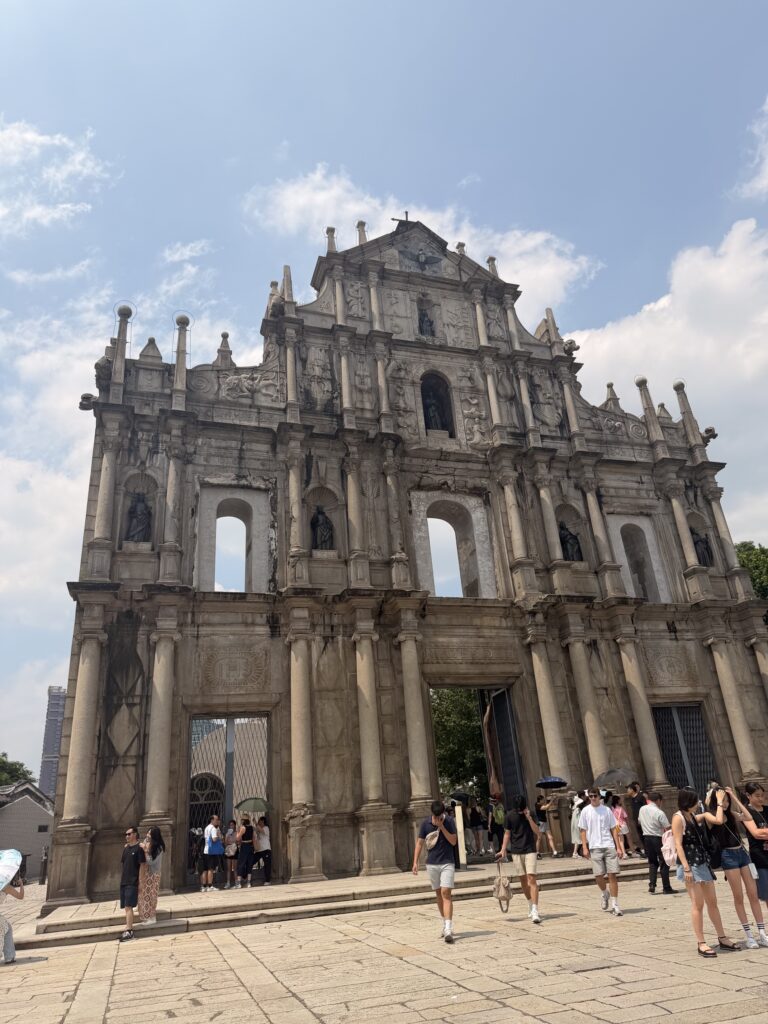
Located just 60 km across the Pearl River Delta, Macau makes for an easy and fascinating cross-border day trip. Known as the “Las Vegas of the East” for its sprawling luxury casinos, Macau is equally famous for its unique UNESCO World Heritage status, reflecting over 400 years of Portuguese colonial history blended with Chinese culture.
In a single day, you can explore the stone facade of the Ruins of St. Paul’s, wander down cobblestone streets lined with pastel-colored Mediterranean buildings, and marvel at the extravagant casino resorts on the Cotai Strip. Make sure to try authentic Portuguese egg tarts (pastel de nata) fresh out of the oven, as well as a local pork chop bun.
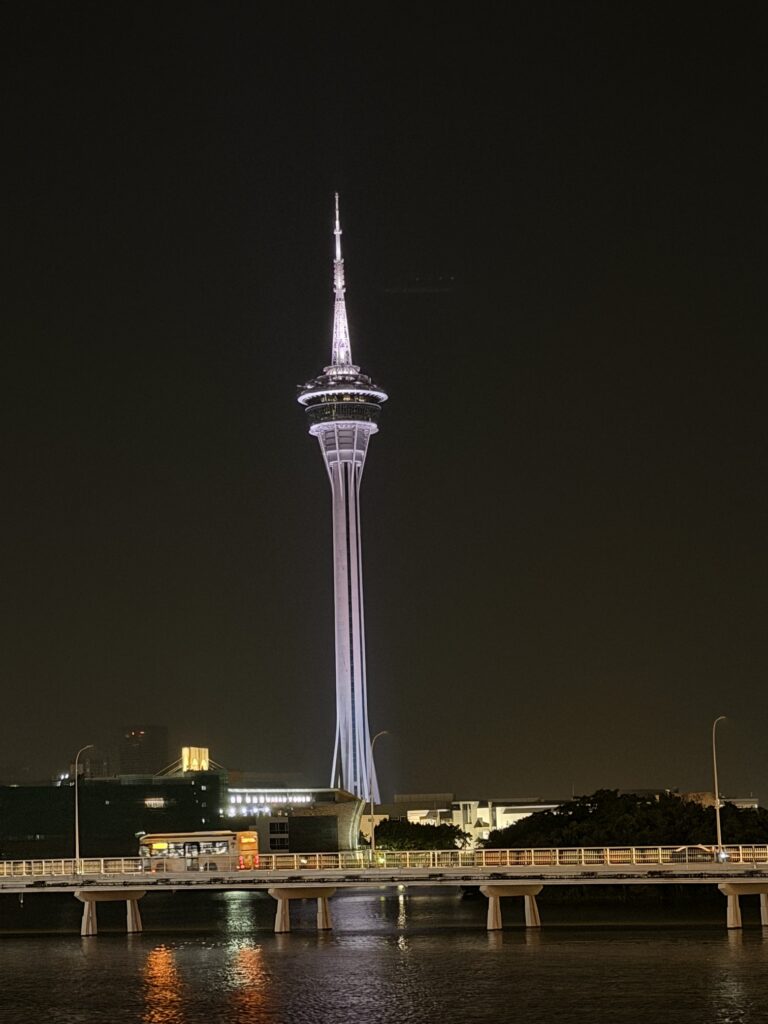
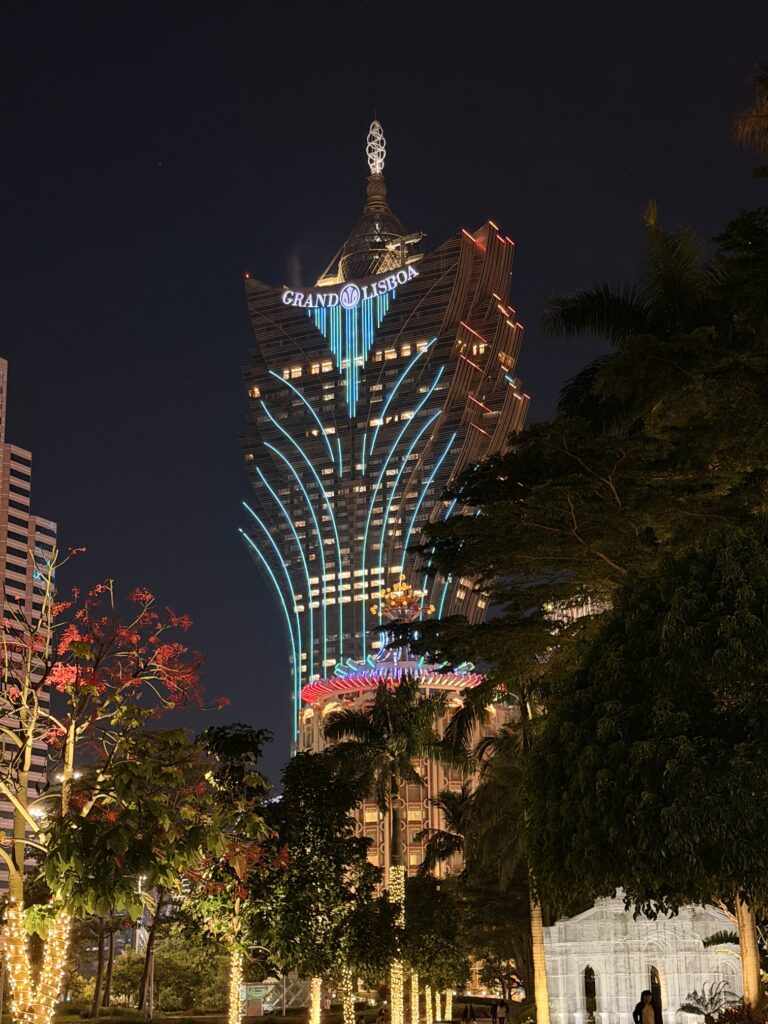
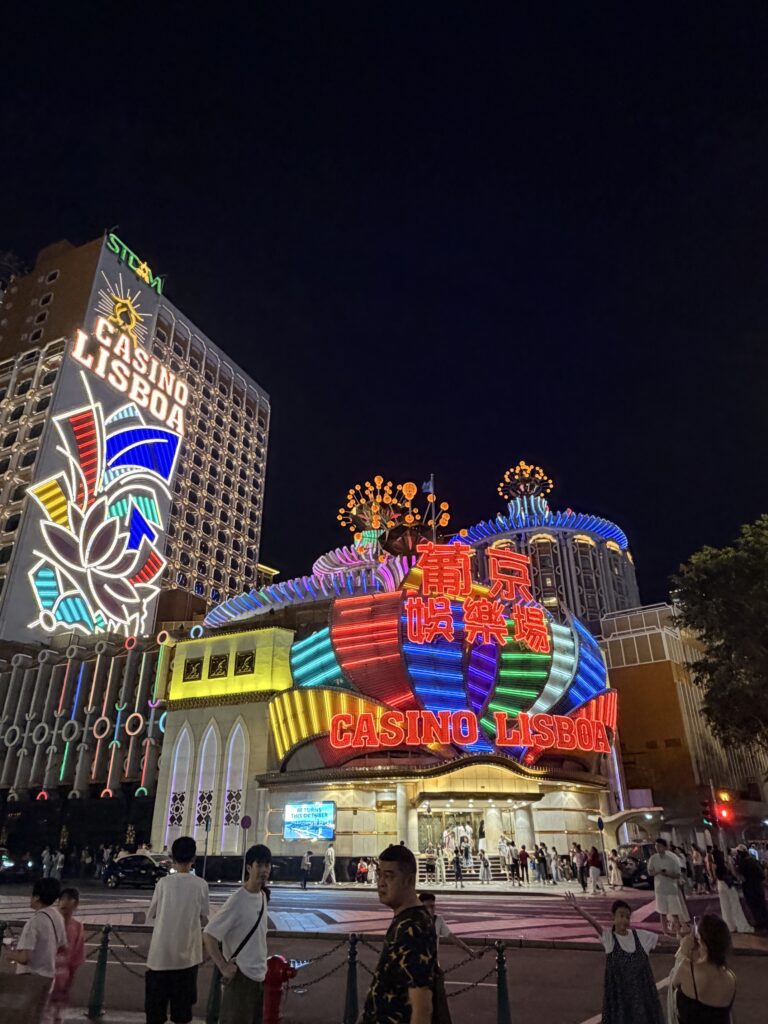
Practical tip: High-speed ferries depart regularly from the Hong Kong–Macau Ferry Terminal in Sheung Wan, taking about an hour. You can also take a bus across the Hong Kong-Zhuhai-Macau Bridge. Remember to bring your passport, as you’ll pass through immigration on both sides!
23. Visit Kowloon Walled City Park
For a fascinating look into Hong Kong’s complex past, head to Kowloon Walled City Park. Today, it’s a tranquil, beautifully landscaped Chinese garden filled with lotus ponds, pavilion walkways, and classic Lingnan architecture. However, until its demolition in the early 1990s, this site was home to the infamous Kowloon Walled City—a densely packed, ungoverned enclave of interconnected high-rises where tens of thousands lived outside municipal laws.
While the overgrown tenement blocks are long gone, the park preserves important historical remnants, including the original South Gate, stone tablets, and a bronze scale model of the original enclave. Detailed exhibition boards walk you through the history of how this military outpost evolved into an urban legend.
Practical tip: The park is free to enter and easily reached via a short walk from Sung Wong Toi MTR Station (Exit B3). Pair your visit with a meal in nearby Kowloon City, a neighborhood famous for incredible authentic Thai cuisine and traditional bakeries.
Museums & Modern Culture
Hong Kong’s cultural identity reaches far beyond its historic temples and street markets. Over the last decade, the city has transformed into Asia’s contemporary arts capital, balancing world-class modern architecture and global art institutions alongside long-standing local entertainment staples. These two contrasting destinations show off Hong Kong’s creative and modern side.
24. Explore M+ Museum
Rising dramatically over the Victoria Harbour waterfront in the West Kowloon Cultural District, M+ is Asia’s premier global museum of contemporary visual culture. Designed by renowned architects Herzog & de Meuron, the building itself is a masterpiece, featuring a massive LED facade that projects digital artworks across the harbour skyline after dark.
Inside, M+ houses 33 gallery spaces spanning contemporary art, design, architecture, moving image, and 20th- and 21st-century Hong Kong visual culture. A major highlight is the M+ Sigg Collection, widely regarded as one of the world’s most comprehensive collections of contemporary Chinese art. It sits within a wider cultural hub alongside the Hong Kong Palace Museum, making the area a full-day destination for art lovers.
25. Visit Ocean Park Hong Kong
Opening back in 1977, Ocean Park Hong Kong is the city’s iconic homegrown theme park, cut into dramatic coastal hillsides on the south side of Hong Kong Island. Part zoo, part aquarium, and part amusement park, it offers a distinctly local alternative to traditional theme parks.
The park’s ultimate stars are its giant pandas. At the Giant Panda Adventure you can meet Hong Kong’s beloved pandas, including the home-grown panda twins, parents Ying Ying and Le Le, and recent arrivals. Beyond the pandas, visitors can board the famous cable car over the mountain ridge for spectacular ocean views, walk through underwater glass tunnels at the Grand Aquarium, and ride thrill coasters at the Summit.
Conclusion: Why Hong Kong Belongs on Your Asia Itinerary
Before arriving in Hong Kong on my backpacking trip across Asia, I’ll admit I had my doubts. I expected a fast-paced, hyper-expensive financial hub with little space to breathe. What I actually found was one of the most dynamic, surprisingly accessible, and multi-layered cities in the world.
Hong Kong exceeded every expectation because of its sheer contrast. In a single day, you can eat a world-class dim sum meal in a steamy, buzzing local diner, ride a 120-year-old tram past neon-lit skyscrapers, hike along a dramatic ocean ridge, and catch the sunset from a quiet fishing village—all for the price of a few local transit passes. It’s a city where ultra-modern design sits side-by-side with centuries-old traditions, and where pristine national parks are never more than 30 minutes away from the downtown core.
Go Beyond the Tourist Trail
If you’re planning your first visit, hit the iconic highlights—ride the Peak Tram, cross Victoria Harbour on the Star Ferry, and admire the skyline. But don’t stop there. Take the extra time to hop on a ferry to Lamma Island, wander through the historic stilt houses of Tai O, haggle at street stalls in Mong Kok, or get lost in the incense-filled halls of local neighborhood temples. The real magic of Hong Kong happens when you step off the main thoroughfares and let the city’s incredible energy take over.
Loved This Guide?
- Save this post to your travel boards or bookmarks so you have these tips handy when planning your trip!
- Leave a comment below: Have you been to Hong Kong, or is it on your bucket list? Let me know which spot you’re most excited to visit!
- Share this guide with a friend, partner, or fellow traveler who’s planning an upcoming trip to Asia.

2 Comments