
Bamboo Bridge Pai, Thailand: Everything You Need to Know Before Visiting
Bamboo Bridge in Pai was another highlight of my time in Thailand. I loved walking along the sprawling bamboo bridge as it stretched across the rice fields, taking in the magnificent views all around us. It was such a peaceful spot and a lovely way to experience a different side of Pai.
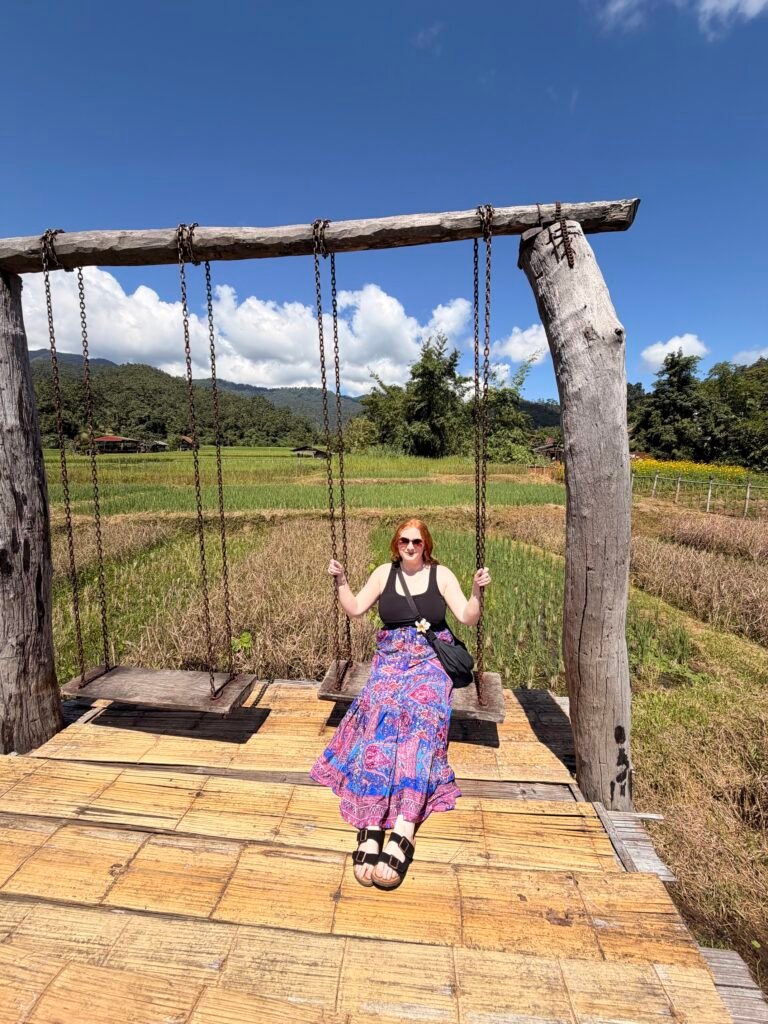
If you’re anything like me and love an Instagrammable spot, this is definitely one to add to your Pai itinerary! There are swings, scenic viewpoints and plenty of other photo opportunities along the bridge, all with the beautiful countryside as a backdrop. Even if you’re not there for the photos, the views alone make it worth a visit.
Looking for somewhere to stay in Pai?
💰Budget Friendly: Easy House
💰💰Mid Range: The Slyvana Pai
💰💰💰Treat Yourself: Pai Village Boutique Resort
Where Is Bamboo Bridge in Pai?
Bamboo Bridge, also known as Boon Ko Ku So Bamboo Bridge, is located in the countryside outside Pai in Mae Hong Son province, northern Thailand. It’s surrounded by beautiful rice fields, mountains and lush green scenery, making it a lovely escape from the busier streets of Pai town.
The bridge is around 10–12 km from Pai town, so you’ll need to arrange transport to get there. Hiring a scooter is a popular option if you’re comfortable riding, although you can also look into organised tours or a local taxi.
One of the best things about visiting Bamboo Bridge is how different it feels from Pai town. Instead of cafés and busy streets, you’ll find a peaceful rural setting where you can slow down, enjoy the views and take a walk through the countryside.
Is Bamboo Bridge Pai Worth Visiting?
Absolutely! Bamboo Bridge was another highlight of my time in Pai. I loved walking along the sprawling bamboo bridge as it stretched across the rice fields, with magnificent views of the surrounding countryside in every direction.
If you’re anything like me and love an Instagrammable spot, this is definitely one to add to your Pai itinerary. There are swings, scenic viewpoints and plenty of photo opportunities along the way, with the beautiful landscape providing the perfect backdrop.
But even if taking photos isn’t your thing, I still think Bamboo Bridge is worth visiting. The peaceful surroundings make it a lovely place to spend some time away from the town, and the walk itself is an experience. It’s also a great opportunity to see a more rural side of northern Thailand.
I’d particularly recommend visiting when the rice fields are lush and green, as the scenery is at its most impressive. Just keep in mind that the landscape changes with the seasons, so you might find golden or harvested fields at other times of year.
My advice: If you have a few days in Pai, I’d definitely make room for Bamboo Bridge alongside attractions such as Pai Canyon, the waterfalls and the White Buddha viewpoint.
What to Expect at Bamboo Bridge Pai
Bamboo Bridge was one of my favourite places we visited in Pai. It’s a relatively simple attraction, but that’s part of its charm. You can take a leisurely walk across the bridge, stop for photos and enjoy a different side of northern Thailand away from the busy streets.
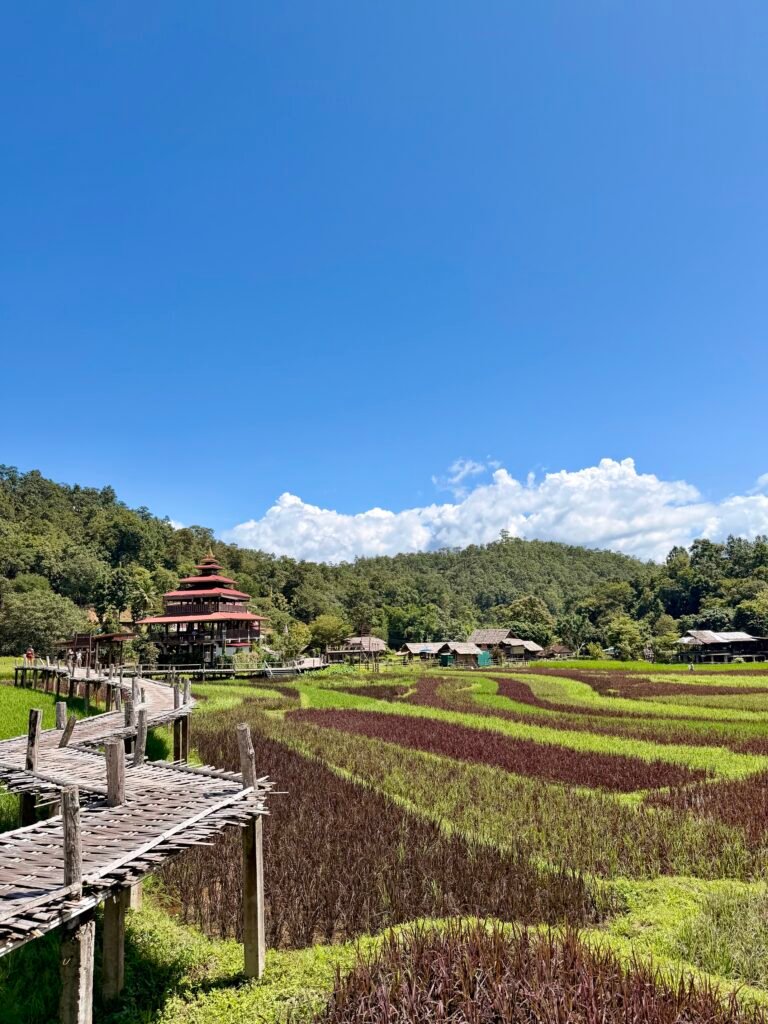
The bridge stretches through the rice fields towards a small temple, with swings and scenic spots along the way. I’d recommend taking your time rather than rushing through, especially if you enjoy photography.
Walk Along the Bamboo Bridge Through the Rice Fields
The main attraction is the bamboo bridge itself, which winds its way through the rice fields and offers a unique way to explore the area.
I loved walking along the sprawling bridge and taking in the views as we went. It was such a peaceful experience and a lovely change of pace from exploring Pai town. The walk is fairly relaxed, so you don’t need to be particularly active to enjoy it.
Take your time, stop for photos and enjoy the experience. Just be careful after rain, as the bamboo can become slippery underfoot.
Enjoy the Views of the Surrounding Countryside
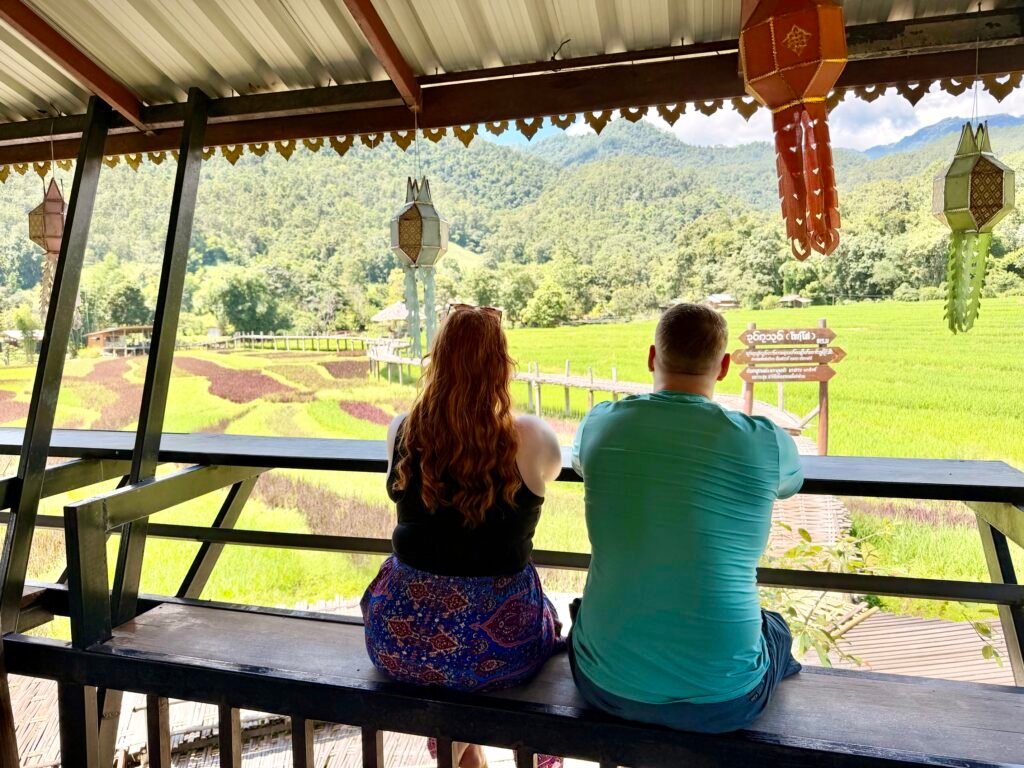
For me, the views were a big part of what made Bamboo Bridge so special. From the walkway, you can look out across the rice fields towards the mountains in the distance.
The scenery changes depending on the season. During the rainy season, the rice fields can be beautifully green, while other months may bring golden fields or recently harvested paddies. If you’re hoping to see the landscape at its greenest, it’s worth considering the time of year when planning your visit.
Find the Best Photo Spots and Swings
If you love finding Instagrammable places when you travel, Bamboo Bridge is definitely one to add to your Pai itinerary!
There are swings and plenty of photo opportunities along the bridge, with the rice fields and mountains making a beautiful backdrop. I loved how many different spots there were to stop and take pictures without needing to go far.
I’d allow a little extra time if you enjoy photography, as you’ll probably want to stop more than once. Just be mindful of other visitors and avoid blocking the walkway while taking photos.
Visit the Temple at the End of the Bridge
The bridge leads towards a small Buddhist temple, giving you another reason to walk its full length rather than turning back after the first few viewpoints.
It’s a peaceful place to pause before heading back along the bridge. If you plan to enter any religious buildings, dress respectfully and be mindful of anyone praying.
For me, the walk itself was the main highlight, but the temple adds a little cultural interest to the visit. I’d recommend exploring it before making your way back to the entrance.

Practical Visit Details for Bamboo Bridge Pai
Before visiting Bamboo Bridge, there are a few practical things worth knowing to help you plan your trip.
- Location: Bamboo Bridge, also known as Boon Ko Ku So Bamboo Bridge, is around 10–12 km from Pai town in northern Thailand.
- How to get there: The easiest option is usually to ride a scooter from Pai if you’re a confident rider. You can also arrange a local taxi or look into an organised tour.
- Entrance fee: There is typically a small entrance fee to help maintain the bridge. Check locally for the current price before visiting.
- Opening hours: Opening times can vary, so it’s worth checking locally before setting off, particularly during the rainy season.
- How long to spend: Allow around 1–2 hours to walk across the bridge, stop for photos and visit the temple at the end.
- Best time to visit: The rice fields are generally at their greenest during the rainy season, although the exact timing depends on local planting and growing conditions.
- What to wear: Comfortable shoes or sandals with a good grip are ideal, as the bamboo walkway can be slippery when wet.
- What to bring: Take water, sun protection and your camera. There isn’t a huge amount to do here beyond enjoying the walk and scenery, so you don’t need to pack much.
My tip: Check the weather before heading out. The bridge is exposed, and heavy rain can make walking more difficult. If you’re visiting during the rainy season, conditions can change quickly, so keep your plans flexible.
How Long Do You Need at Bamboo Bridge Pai?
I’d recommend allowing around 1–2 hours to visit Bamboo Bridge in Pai. This gives you plenty of time to walk along the bridge, enjoy the views across the rice fields, stop for photos and explore the temple at the end.
If you’re anything like me and love an Instagrammable spot, you might want to allow a little longer. There are so many lovely places to stop for photos, including the swings overlooking the rice fields, that it’s easy to spend more time here than you initially planned.
Bamboo Bridge is also easy to combine with other things to do in Pai, so you don’t need to dedicate an entire day to visiting. I’d suggest heading here in the morning or late afternoon, then combining your visit with nearby attractions or heading back into Pai town for food and a wander.
My advice: If you’re spending two or three days in Pai, Bamboo Bridge is well worth adding to your itinerary. It’s a relatively short visit, but for me, it was one of the highlights of the area.
Final Thoughts: Is Bamboo Bridge Pai Worth Visiting?
Absolutely! Bamboo Bridge was one of my favourite places we visited in Pai, and I’d highly recommend adding it to your Thailand itinerary. I loved walking along the sprawling bamboo bridge, taking in the incredible views across the rice fields and stopping at the swings and photo spots along the way.
If you love beautiful scenery and finding those Instagrammable places when you travel, I think you’ll really enjoy it here. It’s also a lovely way to escape the busier streets of Pai and experience a quieter side of northern Thailand.
What I particularly liked was that we didn’t need to plan a whole day around it. A couple of hours is plenty of time to explore the bridge, take photos and visit the temple at the end. This makes it easy to fit into a Pai itinerary alongside other highlights such as Pai Canyon and the White Buddha viewpoint.
If I had to give one tip, it would be to consider the time of year you visit. The rice fields are especially beautiful when they’re lush and green, although the scenery is still worth experiencing at other times of year.
My recommendation? Don’t skip Bamboo Bridge when visiting Pai! It’s one of those places that’s simple but memorable, and I think the views and experience make it well worth the trip out of town.
Frequently Asked Questions About Bamboo Bridge Pai
Is Bamboo Bridge Pai worth visiting?
Absolutely! Bamboo Bridge was one of my favourite places we visited in Pai. Walking across the bridge through the rice fields, enjoying the views and stopping at the swings for photos made it a memorable experience. I’d definitely recommend adding it to your Pai itinerary.
Where is Bamboo Bridge in Pai?
Bamboo Bridge, also known as Boon Ko Ku So Bamboo Bridge, is located around 10–12 km outside Pai town in Mae Hong Son province, northern Thailand. It’s surrounded by rice fields and mountains, making it a lovely escape from the town centre.
How do you get to Bamboo Bridge from Pai?
The easiest way to reach Bamboo Bridge is by scooter if you’re a confident rider. Alternatively, you can arrange a local taxi or look into an organised tour. The bridge is outside Pai town, so you’ll need to arrange transport rather than walk there from the centre.
How much does it cost to visit Bamboo Bridge Pai?
There is typically a small entrance fee to visit Bamboo Bridge, which helps with the upkeep of the attraction. Prices can change, so check locally before your visit to confirm the current cost.
How long do you need at Bamboo Bridge Pai?
I’d recommend allowing around one to two hours to walk along the bridge, enjoy the views, take photos and visit the temple at the end. You may want longer if you enjoy photography and plan to stop at all the scenic spots.
What is the best time to visit Bamboo Bridge Pai?
The best time depends on what you’d like to see. The rice fields are generally at their greenest during the rainy season, although the exact timing depends on the local growing cycle. For a more comfortable walk, consider visiting in the morning or late afternoon when the sun is less intense.
Can you visit Bamboo Bridge Pai during the rainy season?
Yes, Bamboo Bridge can be a lovely place to visit during the rainy season, particularly when the rice fields are green. However, heavy rain can make the bamboo walkway slippery, and weather conditions may affect access. Check conditions locally before setting off.
Is Bamboo Bridge Pai good for photos?
Definitely! If you love Instagrammable places, Bamboo Bridge is a great stop. There are swings, scenic viewpoints and plenty of opportunities to take photos with the rice fields and mountains in the background.
Can you visit Bamboo Bridge Pai without a scooter?
Yes. If you don’t feel comfortable riding a scooter, you can arrange a local taxi or look for an organised tour that includes Bamboo Bridge. Confirm the return transport before leaving Pai, particularly if you’re visiting independently.
What else can you do near Bamboo Bridge Pai?
You can combine your visit with other Pai attractions, such as Pai Canyon, the White Buddha viewpoint and the area’s waterfalls. I’d recommend grouping attractions by location to avoid spending too much time travelling back and forth.