
Best Things to Do in Chiang Rai, Thailand: 14 Must-See Attractions
Before visiting Chiang Rai, I’d heard so many people say there was nothing to do there and that it wasn’t really worth adding to a Thailand itinerary. Honestly, I started to wonder whether we should bother visiting at all. However, after visiting for ourselves, I’m so glad we didn’t listen to the sceptics!
We absolutely loved Chiang Rai. From its incredible temples and unique attractions to its more laid-back atmosphere, we found there was far more to see and do than we’d expected. It quickly became one of those places that reminded us why it’s worth doing your own research rather than relying on other people’s opinions.
If you’re wondering whether Chiang Rai is worth visiting or looking for the best things to do in Chiang Rai, Thailand, this guide covers the attractions we recommend, along with practical tips to help you plan your own visit. Whether you’re visiting for a day or planning to stay a little longer, there’s plenty here to make the trip worthwhile.
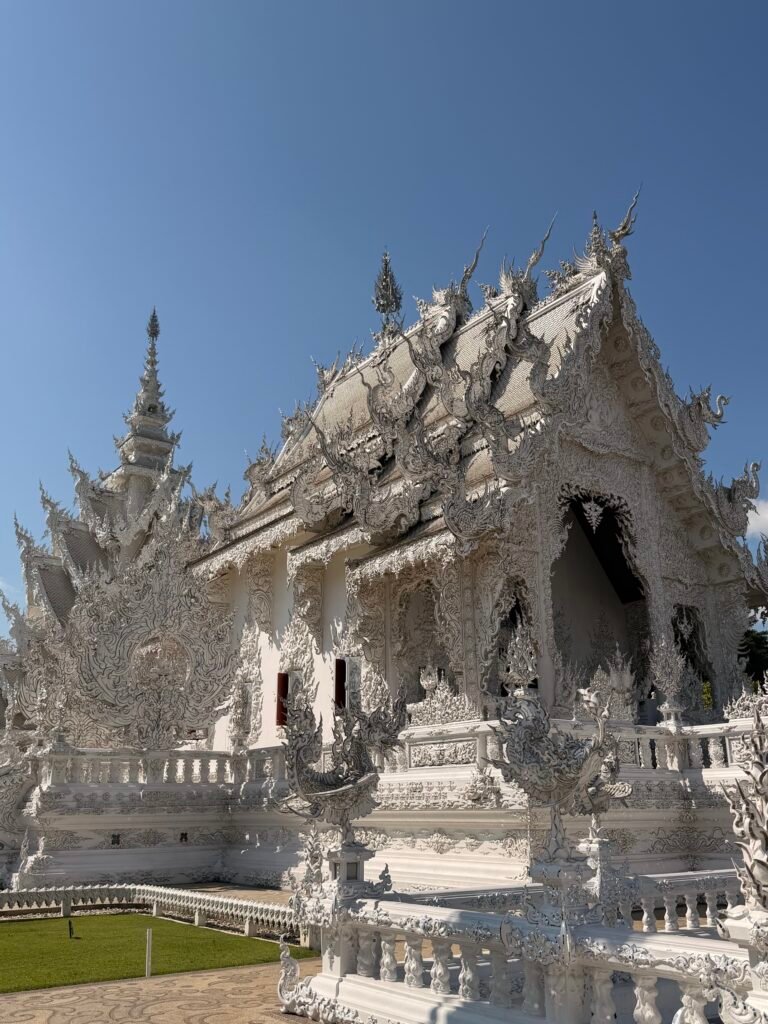
1. Visit the Famous White Temple (Wat Rong Khun)
The White Temple is one of Chiang Rai’s most famous attractions and, for us, an absolute must-visit. Its bright white exterior, intricate details and unusual sculptures make it unlike any other temple we visited in Thailand. Even if you’ve seen plenty of temples on your travels, this one is well worth adding to your itinerary.
2. Explore the Beautiful Blue Temple (Wat Rong Suea Ten)
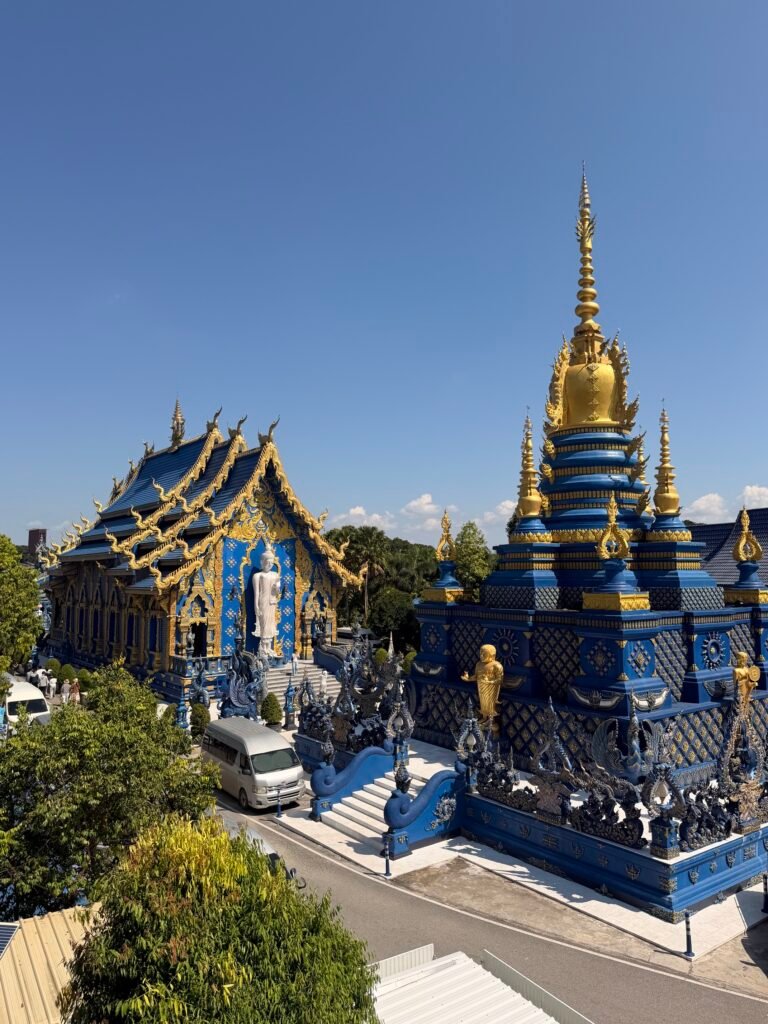
The Blue Temple was another highlight of our time in Chiang Rai. As the name suggests, the temple is covered in striking shades of blue, with elaborate gold details and an impressive interior featuring a large white Buddha statue. It’s a beautiful place to explore and a great contrast to the White Temple. If you enjoy visiting temples, this is one you won’t want to miss.
3. Discover the Black House Museum (Baan Dam Museum)
If you’re looking for something a little different from Chiang Rai’s temples, the Black House Museum is well worth considering. Also known as Baan Dam Museum, this collection of dark wooden buildings showcases the work of Thai artist Thawan Duchanee. Inside, you’ll find unusual artwork, sculptures and displays made from natural materials. The atmosphere is quite different from the city’s colourful temples, making it an interesting addition to your itinerary.
Looking for somewhere to stay in Chiang Rai?
💰Budget Friendly: My Paradise Boutique Eco Resort
💰💰Mid Range: The Heritage Chiang Rai
💰💰💰Treat Yourself: Riva Vista Riverfront Resort
4. Visit Wat Huay Pla Kang and the Giant White Buddha
Wat Huay Pla Kang is another impressive religious site just outside Chiang Rai. Its enormous white statue is often referred to as the Big Buddha, although it actually represents Guanyin, the Buddhist Goddess of Mercy. The complex also features a striking nine-tier pagoda and beautiful views of the surrounding countryside. It’s a great place to visit if you want to see another side of Chiang Rai beyond its two most famous temples.
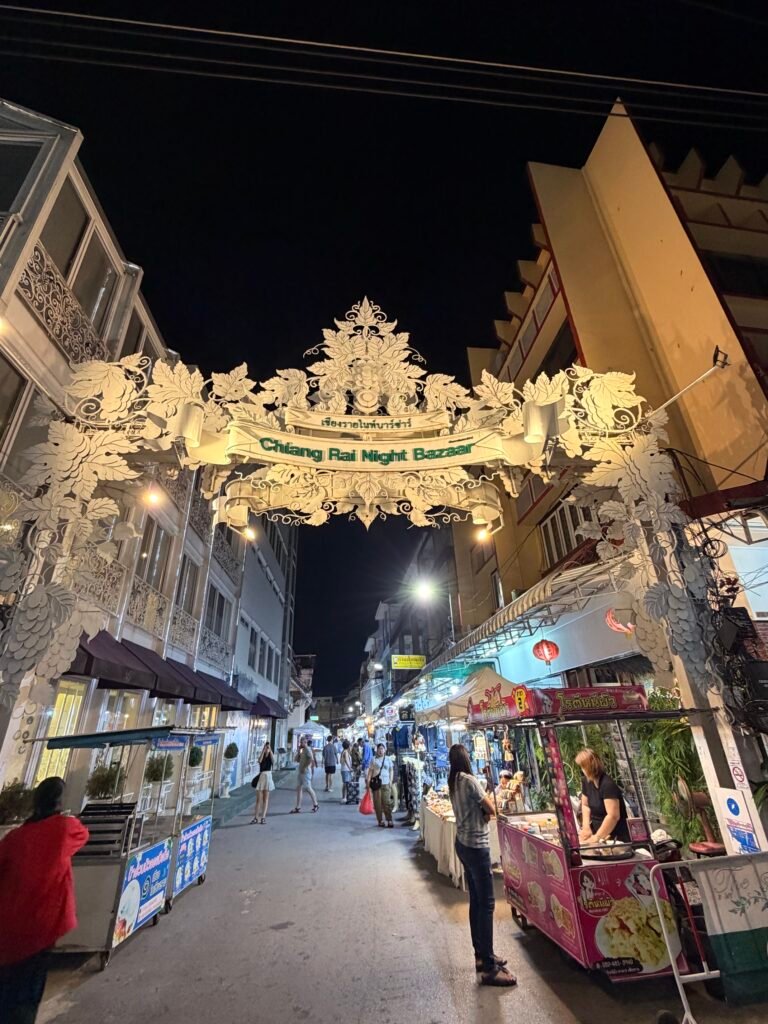
5. Wander Around Chiang Rai Night Bazaar
After a day of sightseeing, Chiang Rai Night Bazaar is a lovely place to spend the evening. You’ll find market stalls selling souvenirs, clothing and local handicrafts, alongside plenty of food stalls serving Thai favourites. It’s a good opportunity to try some local dishes, browse the stalls and enjoy the more relaxed atmosphere of Chiang Rai after dark. If you’re travelling on a budget, it’s also an easy way to enjoy an evening out without spending much.
6. Explore Chiang Rai’s Clock Tower
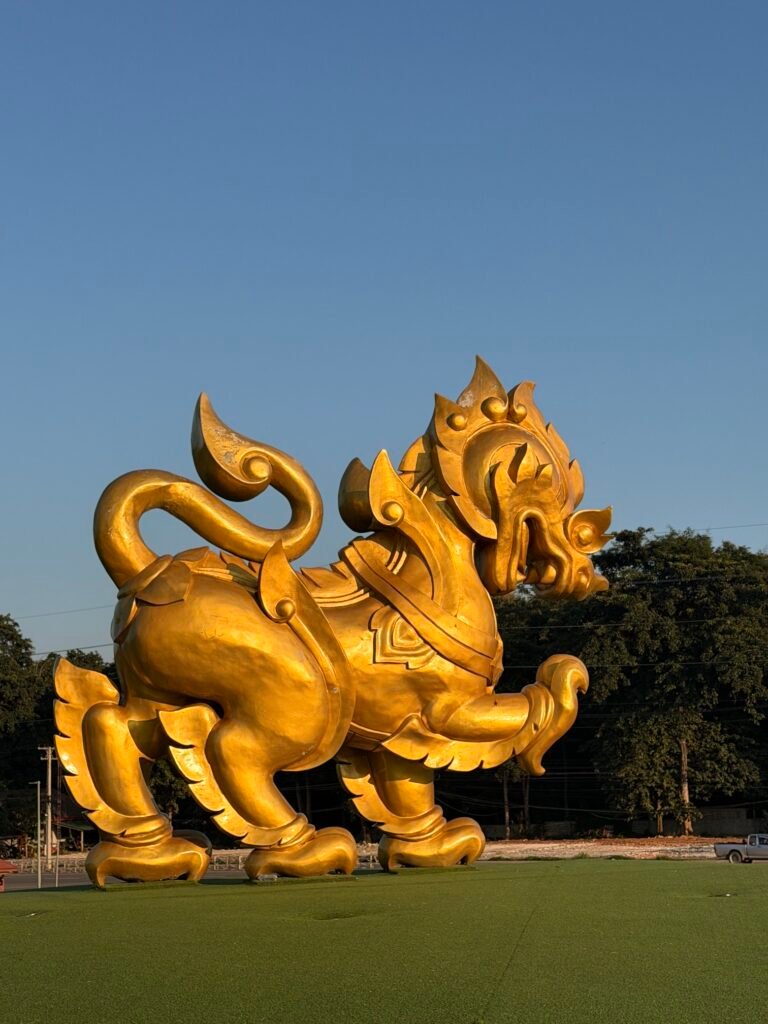
Chiang Rai’s Clock Tower is one of the city’s most recognisable landmarks and is worth a quick stop while exploring the town centre. Designed by Thai artist Chalermchai Kositpipat, who also created the famous White Temple, the golden tower stands out with its intricate details. If you’re nearby in the evening, try to catch the light show, when the tower lights up in different colours. It doesn’t take long to visit, making it an easy addition to your Chiang Rai itinerary.
7. Visit Wat Phra Kaew
Wat Phra Kaew is one of Chiang Rai’s most historically significant temples. It is best known as the place where the Emerald Buddha was discovered in 1434 before eventually being moved to Bangkok. Although the original statue is no longer here, the temple remains an interesting place to visit, with beautiful grounds and a replica of the Emerald Buddha. If you want to explore beyond Chiang Rai’s more famous modern temples, this is a lovely stop to add to your day.
8. Explore Singha Park
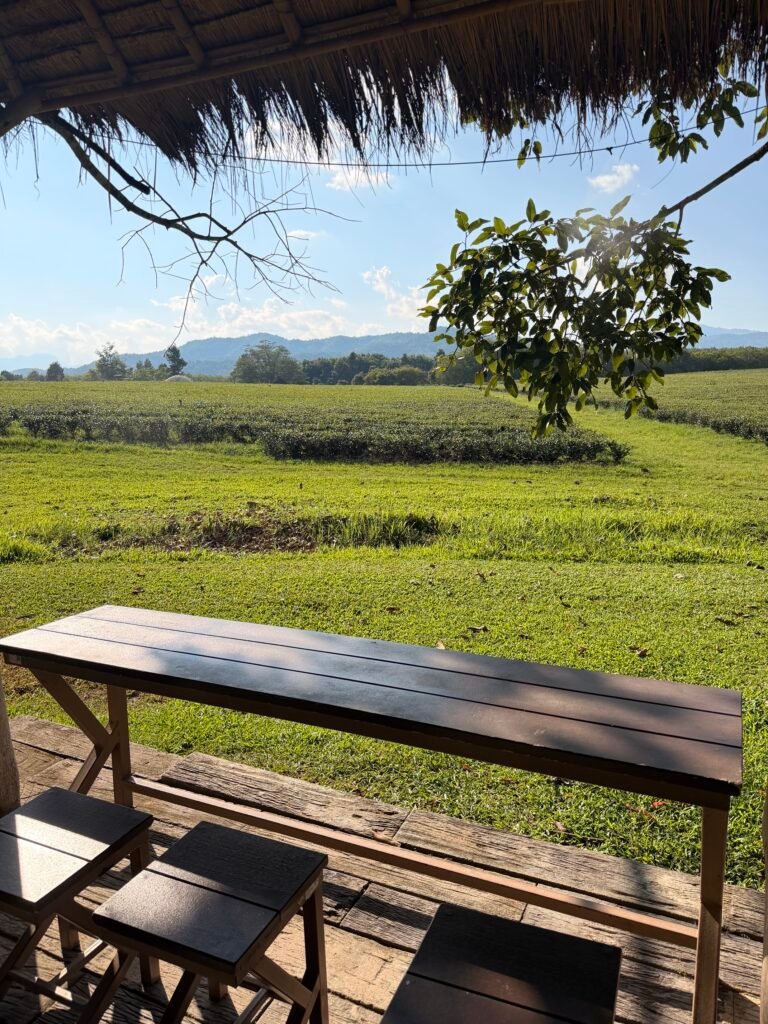
If you fancy a break from temple hopping, Singha Park offers a different side of Chiang Rai. This large park features landscaped gardens, tea plantations, open countryside and scenic viewpoints. Depending on the season, you may also see flower displays and agricultural areas. It’s a good option if you enjoy spending time outdoors, although the park is spread out, so you’ll need to consider transport rather than expecting to explore everything on foot. It’s particularly worth considering if you have more than one day in Chiang Rai.
We loved it here. We hired a golf cart to drive around the park stopping at all the main attractions. There is also a petting zoo which makes it a great option if you are travelling with children.
We loved the tea tasting at the tea fields. It was so peaceful there to sit and look out over the views while sampling locally grown tea.

9. Visit the Golden Triangle
The Golden Triangle is one of northern Thailand’s most famous destinations and makes an interesting day trip from Chiang Rai. This is the point where Thailand, Laos and Myanmar meet, with the Mekong River forming part of the natural border between the three countries.
The main attraction is the Golden Triangle viewpoint, where you can look across the river towards the neighbouring countries. It’s quite a different experience from exploring Chiang Rai’s temples, and it gives you the chance to see more of the surrounding region. If you have a few days in Chiang Rai, I’d consider adding the Golden Triangle to your itinerary, particularly if you enjoy exploring places with an interesting history.
10. Learn About Local History at the Hall of Opium
If you’re visiting the Golden Triangle, the Hall of Opium is well worth considering. This museum explores the history of opium production and the impact of the opium trade across the region. Through its exhibitions, you can learn about the history of the drug, the people affected by its production and the efforts made to tackle the problem.
It offers a deeper understanding of the Golden Triangle beyond the viewpoints and photo opportunities. I’d recommend allowing extra time for the museum if you’re interested in history, as it provides useful context about this part of northern Thailand.
11. Discover Doi Tung and Mae Fah Luang Garden
Doi Tung is a beautiful mountain destination north of Chiang Rai, known for its cooler climate, scenic surroundings and Mae Fah Luang Garden. The garden is carefully landscaped, with colourful flowers, manicured lawns and peaceful walking paths. It’s a lovely change of pace if you’ve spent the past few days visiting temples and exploring busy towns.
The area is also associated with the development projects initiated by the late Princess Mother, which helped support local communities and encourage alternatives to opium cultivation. If you enjoy nature, gardens and learning more about northern Thailand, Doi Tung is a great option for a day trip. Just remember to factor in travel time, as it’s some distance from Chiang Rai city.
12. Visit the Hill Tribe Villages and Local Communities
Northern Thailand is home to several ethnic minority communities, each with its own traditions, culture and history. Visiting local communities around Chiang Rai can offer a chance to learn more about the region beyond its famous temples and tourist attractions.
If this is something you’re interested in, I’d recommend choosing a responsible community-based experience that is led by local people and benefits the community directly. Be mindful that these are people’s homes rather than tourist attractions, so always respect local customs, ask permission before taking photographs and avoid experiences that treat residents as a spectacle.
It’s worth researching tours carefully before booking to make sure the experience is respectful and authentic.
13. Explore Chiang Rai’s Local Markets
One of my favourite ways to get a feel for a destination is to explore its local markets, and Chiang Rai is no exception. Markets are a great place to browse everyday goods, pick up inexpensive souvenirs and try Thai street food without spending a fortune.
Chiang Rai Night Bazaar is a good starting point if you want a lively evening atmosphere, with food stalls, shopping and places to sit and eat. You can also look out for daytime markets around the city, where you’ll find fresh produce, snacks and local ingredients.
Even if you don’t plan on buying anything, it’s worth spending some time wandering around and seeing what’s on offer. Markets are often one of the easiest ways to experience the everyday side of a destination.
14. Enjoy Chiang Rai’s Cafes and Local Food
Chiang Rai is a great place to slow down and enjoy northern Thai food, particularly if you’re travelling around Thailand for a longer period. Alongside familiar Thai favourites, look out for regional dishes such as khao soi, a rich curry noodle soup, and sai ua, a fragrant northern Thai sausage.
The city also has plenty of cafes where you can take a break between sightseeing stops. If you’re exploring the surrounding countryside, you may find cafes with garden settings and views of the area’s green landscapes.
My advice is to leave a little room in your itinerary for unplanned food stops. Some of the best travel experiences come from finding a small local restaurant, trying something new and taking a break from rushing between attractions.
Is Chiang Rai Worth Visiting?
Before visiting Chiang Rai, I’d heard so many people say there wasn’t much to do there, but after visiting for ourselves, I completely disagree. We loved our time in Chiang Rai and were so glad we decided to include it in our Thailand itinerary.
The temples alone make it worth visiting. The White Temple and Blue Temple are two of the most impressive religious sites we saw in Thailand, and there’s plenty more to explore if you have the time. From the Black House Museum to the local markets and surrounding countryside, Chiang Rai offers a good mix of culture, history and opportunities to experience a different side of northern Thailand.
I also think Chiang Rai is a great option if you want to get away from some of Thailand’s busier tourist destinations. It has a more relaxed feel than Chiang Mai, although there are still plenty of attractions to keep you busy.
My advice? Don’t skip Chiang Rai just because other people say it’s not worth visiting. If you enjoy temples, culture and exploring somewhere a little different, I think it’s well worth adding to your Thailand itinerary.
How Many Days Do You Need in Chiang Rai?
I’d recommend spending two to three days in Chiang Rai if you want to see the main attractions without rushing.
If you’re short on time, one full day is enough to visit the highlights, including the White Temple, Blue Temple and Black House Museum. However, you’ll need to plan your transport carefully, as these attractions are spread around the city and its outskirts.
With two days, you’ll have more time to explore the temples, visit Wat Huay Pla Kang and enjoy Chiang Rai’s Night Bazaar in the evening. You could also use an extra day to explore further afield.
If you want to visit the Golden Triangle, the Hall of Opium or Doi Tung and Mae Fah Luang Garden, I’d recommend allowing three days or more. These trips take additional time, particularly when travelling independently.
For us, I’d rather allow a little extra time than rush through everything. Chiang Rai has more to offer than you might initially expect.
How to Get Around Chiang Rai
Getting around Chiang Rai is relatively straightforward, but you’ll need to think about transport before setting off. Unlike some city centres where you can walk between most attractions, many of Chiang Rai’s best things to do are spread out.
Here are the main options to consider:
- Grab and taxis: Convenient for travelling between individual attractions, although costs can add up if you’re visiting several places in one day.
- Songthaews: These shared or privately hired pickup trucks can be useful for getting around, depending on the route and destination. Agree on the price before setting off if hiring one privately.
- Scooter rental: Renting a scooter gives you more flexibility to explore independently. However, only consider this if you’re experienced, properly licensed and comfortable with the local driving conditions.
- Organised tours: A good option for visiting places further afield, such as the Golden Triangle or Doi Tung, without worrying about transport connections.
- Walking: The central parts of Chiang Rai are pleasant to explore on foot, particularly around the Clock Tower, markets and some of the local temples.
If you’re planning to visit several attractions outside the city centre in one day, I’d recommend grouping them by location to avoid spending too much time travelling back and forth.
The Best Time to Visit Chiang Rai
The best time to visit Chiang Rai is generally during the cooler, drier months from November to February. Temperatures are usually more comfortable for sightseeing, making it a good time to explore the temples and surrounding countryside.
Here’s what to expect throughout the year:
- November to February: Generally the most comfortable time to visit, with cooler temperatures and less rain. This is also a popular period for travelling in northern Thailand.
- March to May: Temperatures can become very hot. March and April can also bring significant smoke and poor air quality due to seasonal agricultural burning.
- June to October: The rainy season brings more frequent showers and greener landscapes. You can still visit during these months, but it’s worth allowing flexibility in your itinerary.
If you’re travelling around Thailand on a budget, the rainy season can be worth considering. Just be prepared for occasional downpours and check local conditions before heading into the countryside.
One important thing to keep in mind is the burning season. Air quality in northern Thailand can become particularly poor during late winter and spring, so check current air pollution levels before booking your trip.
Practical Tips for Visiting Chiang Rai
A little planning can make your time in Chiang Rai much easier, especially if you want to see several attractions in a short visit.
- Start early: The White Temple and Blue Temple can get busy, so visiting earlier in the day can make for a more enjoyable experience.
- Dress appropriately for temples: Cover your shoulders and knees when visiting religious sites, and follow any signs or instructions about footwear and photography.
- Plan attractions by location: The temples and museums aren’t all within walking distance of one another, so grouping nearby sights together will save time.
- Carry cash: Smaller restaurants, markets and local transport providers may not accept cards.
- Bring water and sun protection: Chiang Rai can be hot, particularly when you’re walking around temple grounds.
- Check opening times: Attractions can have different opening hours, entrance fees and occasional closures, so check the details before setting off.
- Allow time for day trips: The Golden Triangle and Doi Tung are outside the city, so avoid trying to squeeze too many distant attractions into one day.
- Respect local communities: If visiting ethnic minority villages, choose responsible experiences and ask permission before photographing people.
My biggest tip is not to underestimate how much there is to see. Chiang Rai might look like a quick stop on a Thailand itinerary, but you’ll enjoy it much more if you give yourself enough time to explore.
Frequently Asked Questions About Chiang Rai
Is Chiang Rai worth visiting?
Yes! Chiang Rai is well worth visiting, particularly if you enjoy temples, culture and exploring northern Thailand. The White Temple, Blue Temple and Black House Museum are among its standout attractions, and there are plenty of options for day trips beyond the city.
Is Chiang Rai better than Chiang Mai?
It depends on what you’re looking for. Chiang Mai has a wider range of restaurants, nightlife, shopping and activities, while Chiang Rai has a more relaxed atmosphere and several distinctive temples. If you have enough time, I’d recommend visiting both rather than choosing one over the other.
Can you visit Chiang Rai as a day trip from Chiang Mai?
Yes, it’s possible to visit Chiang Rai on a day trip from Chiang Mai, and organised tours often include the White Temple and Blue Temple. However, the journey takes several hours each way, so it makes for a long day. I’d recommend staying overnight if your itinerary allows.
How many days should I spend in Chiang Rai?
Two days is a good starting point for visiting the main attractions. Allow three days or more if you also want to explore the Golden Triangle, Doi Tung and other destinations outside the city.
Is Chiang Rai expensive to visit?
Chiang Rai can be a relatively affordable destination. Local food and markets offer budget-friendly options, while transport and entrance fees will depend on which attractions you visit. Hiring private transport or booking organised tours will increase your overall costs.
What is Chiang Rai famous for?
Chiang Rai is best known for the White Temple (Wat Rong Khun), Blue Temple (Wat Rong Suea Ten) and Black House Museum (Baan Dam Museum). It’s also known for its northern Thai culture, mountain scenery and proximity to the Golden Triangle.
Is Chiang Rai safe for tourists?
Chiang Rai is generally considered a manageable destination for tourists, including independent travellers. As anywhere, take normal precautions with your belongings, be careful when crossing roads and only rent a scooter if you’re appropriately licensed and experienced.
What is the best month to visit Chiang Rai?
December and January are generally excellent months for comfortable sightseeing, with cooler, drier weather. However, conditions vary from year to year, and it’s worth checking air quality if you’re considering a visit in March or April.