
Suwon: The Perfect Day Trip From Seoul
Just 30–40 minutes south of Seoul by train, Suwon is one of the best and easiest day trips from the Korean capital. Known for its impressive UNESCO-listed fortress, vibrant food scene, traditional markets, and modern attractions, Suwon offers a fascinating glimpse into Korea’s history and culture without requiring an overnight stay.
Whether you’re interested in architecture, history, local cuisine, or simply escaping the bustle of Seoul for a day, Suwon makes an excellent addition to any South Korea itinerary.
Why Visit Suwon?
While Seoul is packed with iconic attractions, Suwon provides a different perspective on Korean life. The city combines centuries-old heritage with modern urban development, creating a destination that feels authentic yet easily accessible.
Visitors can explore ancient fortress walls, sample local specialties, stroll through bustling markets, and enjoy panoramic views of the city—all within a single day.
How to Get From Seoul to Suwon
Getting from Seoul to Suwon is relatively easy, making it an ideal day trip if you’re staying in the South Korean capital. You can travel by train or subway, with regular services connecting the two cities. Once you arrive, Suwon’s historic attractions are accessible by local bus, taxi or on foot, depending on which sights you want to visit.
For most travellers, taking the train or subway is the easiest and most budget-friendly option. You don’t need to book an organised tour to explore Suwon independently, and travelling by public transport gives you the flexibility to spend as much time as you like at each attraction.
By Train or Subway
The cheapest way to travel from Seoul to Suwon is usually the subway, while a conventional train is a good option if you’d prefer a quicker journey.
- Subway Line 1: Trains run from Seoul Station to Suwon Station in approximately one hour. The journey is straightforward, although you should check the destination displayed on the train to make sure it stops at Suwon.
- Regular trains: ITX and Mugunghwa services connect Seoul Station or Yongsan Station with Suwon in around 30–40 minutes. These require a separate ticket, so check the timetable and fare before travelling.
Both options take you to Suwon Station, rather than directly to the main historic attractions.
By Bus
Taking a bus can be convenient if you’re staying in southern Seoul. Direct buses connect Suwon with areas including Gangnam, Sadang and Jamsil.
Journey times vary depending on your departure point and traffic, but a bus may be particularly useful if you want to reach the historic centre without changing trains. Popular routes include bus 3000 from Gangnam and bus 7770 from Sadang.
Getting Around Suwon
Once you arrive at Suwon Station, you’ll need to travel a little further to reach the main sights around Hwaseong Fortress.
You can take a local bus or taxi to Hwaseong Haenggung Palace and the surrounding historic district. If you’d prefer to walk, some attractions are accessible on foot, but remember to save your energy for exploring the fortress walls.
Our tip: Check the route to your first attraction before leaving Seoul, as Suwon Station and the historic centre are not in the same location. You can use Naver Map or KakaoMap to plan your journey and check local bus routes.
Looking for somewhere to stay in Seoul? Here are our recommendations
💰Budget Friendly: Namsan Guesthouse
💰💰Mid Range: Hotel Chloe
💰💰💰Treat Yourself: Lottie City Hotel
Best Things to Do in Suwon
Suwon is a fantastic day trip from Seoul if you want to experience a different side of South Korea. While the capital is known for its busy shopping districts, modern skyscrapers and vibrant nightlife, Suwon offers a mix of historic fortifications, traditional Korean architecture, charming café streets and contemporary attractions.
The city’s biggest highlight is Hwaseong Fortress, a UNESCO World Heritage Site that surrounds much of the historic centre. However, there’s more to Suwon than its impressive fortress walls. You can explore a historic palace, sample local Korean food, wander through independent cafés and even visit one of South Korea’s most talked-about modern libraries.
If you’re planning a day trip, these are the best things to do in Suwon and the attractions I’d prioritise during your visit.
Visit the UNESCO-Listed Hwaseong Fortress
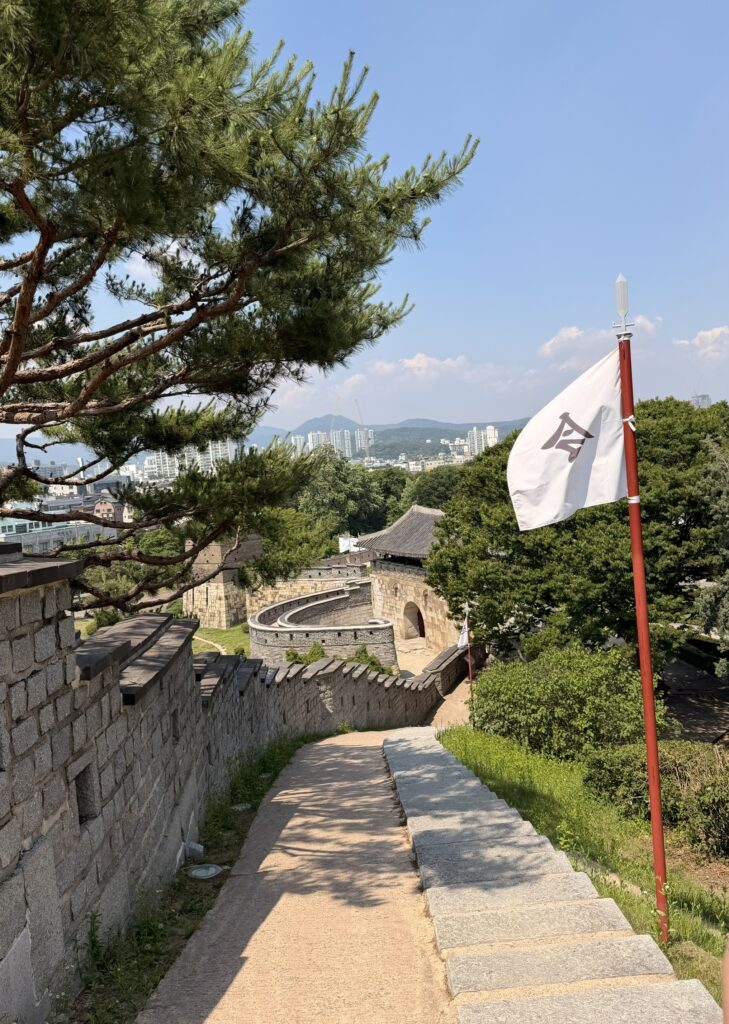
The highlight of any visit to Suwon is Hwaseong Fortress, a UNESCO World Heritage Site built in the late 18th century during the Joseon Dynasty.
Walk along the fortress walls and enjoy sweeping views over Suwon.
Walking the entire fortress circuit takes around two to three hours, though shorter sections are perfect for day-trippers.
Our tip: Wear comfortable shoes and allow plenty of time to explore. Some sections include uphill walking and steps, so you may prefer to concentrate on the most scenic areas if you’re visiting Suwon for just one day.
Explore Hwaseong Haenggung Palace
Another must-see attraction is Hwaseong Haenggung Palace. Located within the historic fortress area, this palace served as a temporary royal residence when King Jeongjo visited Suwon. It was also used for local government administration when the king wasn’t staying there.
Inside, you can wander through traditional courtyards, admire the colourful wooden buildings and learn more about the royal history of the city. It’s a great addition to your visit to Hwaseong Fortress, as the two attractions can easily be combined.
Allow around an hour to explore the palace, although you may want longer if you’re particularly interested in Korean history or photography.
See Paldalmun Gate
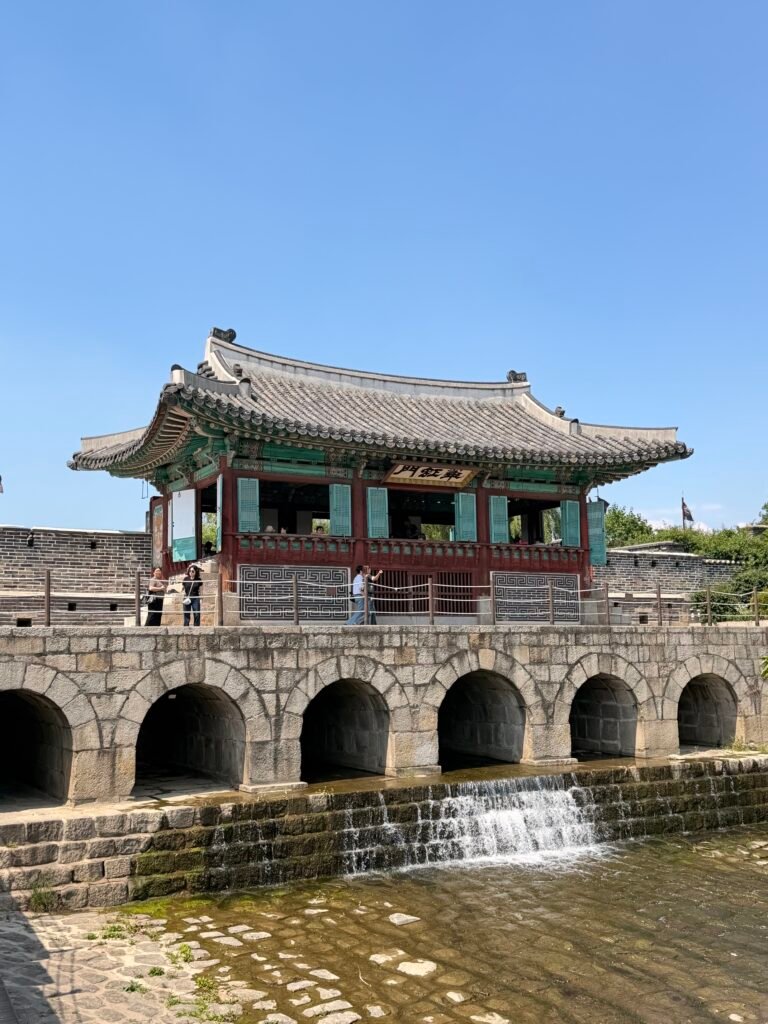
Paldalmun Gate is one of the main historic gates associated with Hwaseong Fortress. Its distinctive circular stone walls and traditional tiled roof make it an interesting stop for anyone exploring Suwon’s historic landmarks.
Unlike some of the fortress sections that feel removed from the city, Paldalmun sits amid busy streets and shops, offering a glimpse of how Suwon’s historic architecture fits into everyday urban life.
It’s worth stopping to admire the gate and take a few photographs. You can also explore the surrounding market area, making this a convenient addition to your walking route.
Try Suwon’s Local Food
No day trip to Suwon would be complete without sampling some local food. The city is particularly famous for Suwon galbi, a Korean grilled beef rib speciality that’s well worth trying if you eat meat.
If you’re looking for something more casual, Suwon’s famous fried chicken street is another option. Known locally for tongdak, or Korean-style fried chicken, it’s a great place to stop for a relaxed meal. Traditional markets around the historic centre are also worth exploring for Korean snacks and affordable local dishes.
If you’re travelling on a budget, look for smaller eateries and market stalls rather than making every meal a sit-down restaurant experience.
See Starfield Library at Starfield Suwon
If you want to see a more contemporary side of South Korea, consider visiting Starfield Library inside Starfield Suwon shopping centre.
The striking library features towering bookshelves and an impressive multilevel interior, making it a popular stop for photographs. The surrounding shopping centre also has plenty of shops, cafés and restaurants if you fancy browsing or taking a break from historical sightseeing.
However, Starfield Suwon is outside the main fortress district, so you’ll need to allow additional travel time. If you’re visiting Suwon for just one day, I’d prioritise Hwaseong Fortress and the historic centre first, adding the library if you have time left.
Practical Tips for Visiting Suwon
Suwon is relatively easy to explore independently, making it a great addition to your South Korea itinerary. Most of the main historic attractions are clustered around Hwaseong Fortress, so you can see several highlights in one day without needing to book an organised tour.
However, a little planning will help you make the most of your visit. From choosing the best time to go to deciding how much of the fortress to explore, here are my practical tips for planning a Suwon day trip from Seoul.
How Long Do You Need in Suwon?
One full day is enough to see Suwon’s main attractions. I’d recommend allowing around six to eight hours, including time for lunch and travelling between sights.
You can spend the morning exploring Hwaseong Fortress and Hwaseong Haenggung Palace, stop for lunch, then spend the afternoon wandering around Haengnidan-gil and visiting Banghwasuryujeong Pavilion. If you still have time and energy, you could also visit Starfield Library, although this requires travelling away from the historic centre.
If you’re particularly interested in Korean history or enjoy taking your time exploring on foot, you could easily spend longer in Suwon. However, for most visitors staying in Seoul, a day trip is a good way to experience the city without changing accommodation.
The Best Time to Visit Suwon
Spring and autumn are generally the most comfortable seasons for visiting Suwon. In spring, the weather is often pleasant for walking around the fortress, while autumn brings colourful foliage that makes the historic surroundings particularly scenic.
Summer can be hot and humid, with the possibility of heavy rain. As much of a visit to Suwon involves walking outdoors, the heat can make exploring the fortress walls more tiring. If you’re visiting during summer, start early and carry plenty of water.
Winter is also an option, although temperatures can be very cold and the fortress walls can feel particularly exposed to the wind.
My tip: If you can, choose a clear day for your visit. You’ll get more enjoyment from walking around the fortress and taking in the views when the weather is good.
What to Wear When Exploring Suwon
Comfortable walking shoes are essential for a day trip to Suwon. You’ll likely spend several hours on your feet, exploring the fortress walls, palace grounds and surrounding streets. Some sections of the fortress involve slopes and uneven surfaces, so I’d avoid wearing shoes that aren’t suitable for walking.
What you pack will also depend on the season. In summer, lightweight clothing, sunglasses, a hat and sunscreen will help you cope with the heat. Spring and autumn are ideal for layering, while winter calls for a warm coat, gloves and a scarf.
I’d also recommend bringing a reusable water bottle, particularly if you plan to walk a substantial section of the fortress walls.
Is Suwon Easy to Explore Independently?
Yes! Suwon is a straightforward destination to visit independently from Seoul, and you don’t need to book an organised tour to enjoy its main attractions.
Much of the historic centre can be explored on foot, with Hwaseong Fortress, Hwaseong Haenggung Palace, Banghwasuryujeong Pavilion and Haengnidan-gil all forming part of the same general sightseeing area. You can explore at your own pace, stop for coffee whenever you fancy and choose which sections of the fortress you want to walk.
I’d recommend downloading Naver Map or KakaoMap before your trip, as these apps are useful for navigating South Korean streets and checking public transport routes. Keep in mind that Starfield Suwon is further away from the historic centre, so you’ll need to factor in extra travel time if you want to visit.
If you enjoy learning about history, you can also check whether guided tours or cultural activities are available during your visit. However, independent sightseeing is perfectly manageable for most travellers.
How Much Does a Suwon Day Trip Cost?
Suwon can be an affordable day trip from Seoul, particularly if you travel by public transport and focus on its historic attractions.
One of the biggest advantages is that walking around Hwaseong Fortress is free. You can enjoy the fortress walls, admire the gates and explore much of the surrounding area without paying an entrance fee. Hwaseong Haenggung Palace has a separate admission charge, with adult tickets currently listed at ₩2,000. Prices and opening arrangements can change, so check before visiting. 수원문화재단+1
Your overall spending will depend on your transport choice, meals and any additional activities.
Here’s what to budget for:
- Transport: Return train or subway fares from Seoul, plus any local buses or taxis in Suwon.
- Attractions: Free access to the fortress grounds, with separate fees for the palace and certain activities.
- Food and drinks: Budget for lunch, snacks and perhaps a coffee or cake in Haengnidan-gil.
- Optional extras: Shopping, museum visits or experiences such as the fortress tourist trolley.
If you’re travelling on a budget, you can keep costs down by walking between the main attractions, eating at local restaurants and skipping optional paid activities.
My advice is to prioritise the fortress and palace, then decide how much you want to spend on food and extras once you’re there. Suwon is a great destination for a full day of sightseeing without needing to spend a fortune.
Frequently Asked Questions About Visiting Suwon
Can You Visit Suwon as a Day Trip From Seoul?
Yes! Suwon is an excellent day trip from Seoul, and you can easily visit its main attractions in one day. The city is well connected to the capital by train and subway, making it straightforward to explore independently. I’d recommend prioritising Hwaseong Fortress, Hwaseong Haenggung Palace and the charming streets of Haengnidan-gil.
How Far Is Suwon From Seoul?
Suwon is approximately 30 kilometres south of central Seoul. Depending on your departure point and mode of transport, the journey generally takes around 30 minutes to an hour. The subway is usually the most budget-friendly option, while faster train services can reduce travel time.
How Do You Get From Seoul to Suwon?
The easiest way to reach Suwon is by subway or train. Seoul Subway Line 1 connects the capital with Suwon Station, while regular train services offer a faster alternative. Once you arrive, you can use local buses, taxis or walk to reach the main historic attractions.
Is Suwon Hwaseong Fortress Free to Visit?
Yes, walking around the grounds and fortress walls is generally free. However, some attractions within the historic area, including Hwaseong Haenggung Palace, charge a separate admission fee. Check the latest entrance fees and opening arrangements before your visit.
How Long Does It Take to Walk Around Suwon Hwaseong Fortress?
Walking the full fortress circuit takes approximately two to three hours, depending on your pace and how often you stop for photographs. The route is around 5.1 kilometres long and includes some uphill sections. If you’re short on time, you can explore selected sections and still see several of the main landmarks.
What Is Suwon Famous For?
Suwon is best known for Hwaseong Fortress, a UNESCO World Heritage Site built during the Joseon Dynasty. The city is also famous for Hwaseong Haenggung Palace, its traditional architecture, Suwon galbi (Korean grilled beef ribs) and its fried chicken restaurants.
Is Suwon Worth Visiting for First-Time Visitors to South Korea?
Absolutely! Suwon is particularly worthwhile if you’re interested in Korean history and want to see somewhere beyond Seoul. Its historic fortress, traditional palace, local food and café-lined streets offer a different experience from the capital’s busy shopping districts. It’s also easy to visit independently, making it a convenient addition to a first-time South Korea itinerary.
What Is the Best Time of Year to Visit Suwon?
Spring and autumn are generally the best seasons for exploring Suwon on foot. Spring brings pleasant conditions for sightseeing, while autumn offers colourful foliage around the fortress. Summer can be hot and humid, and winter temperatures can be very cold, so plan your clothing and walking route accordingly.
Can You Visit Suwon Without a Tour?
Yes, Suwon is easy to explore independently. Public transport connects the city with Seoul, and many of the main historic attractions are within walking distance of one another. Using a navigation app such as Naver Map or KakaoMap will help you plan routes and find local transport.
One Comment