
Where to Stay in Sapa: Best Areas & Hotels for Every Budget
Choosing where to stay in Sapa can make a big difference to your trip, especially if it’s your first time visiting. With mountain villages, beautiful rice terraces and a lively town centre to choose from, there’s quite a bit to think about when deciding where to base yourself.
For both of us, this was our first time visiting Sapa, so we decided to keep things simple and stay right in the town centre. We found this to be a great choice, as we were just a stone’s throw from Sun Plaza, Sapa Stone Church, plenty of restaurants and all the local amenities we needed. It also made getting out and exploring much easier, particularly when we wanted to organise trips into the surrounding mountains and villages.
Of course, staying in the centre isn’t the only option. If you’re dreaming of waking up to mountain views or spending a few nights in a traditional homestay surrounded by rice terraces, there are some beautiful alternatives just outside town.
In this guide, we’ll walk you through the best areas to stay in Sapa, what to expect from each one and our recommendations for different budgets. Hopefully, it’ll help you find the perfect base for your own Sapa adventure!
The Best Areas to Stay in Sapa
One of the first things to decide when booking accommodation in Sapa is whether you want to be right in the middle of town or somewhere a little further out, surrounded by mountains and rice terraces. Both have their advantages, and the best choice really depends on what kind of experience you’re looking for.
We chose to stay in Sapa town centre during our visit and loved how convenient it was. However, if you have a little more time or fancy something different, the surrounding valleys and villages are well worth considering too.
Here’s a closer look at the best areas to stay in Sapa and what you can expect from each one.
Looking for somewhere to stay in Sapa?
💰Budget Friendly: Sapa Florence Hotel
💰💰Mid Range: Eden Boutique Hotel & Spa
💰💰💰Treat Yourself: KK Sapa Hotel
1. Sapa Town Centre: Best for First-Time Visitors and Convenience
If it’s your first time visiting Sapa, we’d recommend looking at accommodation in the town centre. This is where we chose to stay, and for us, it made a brilliant base for exploring everything the area has to offer.
You’ll be within easy walking distance of some of Sapa’s best-known landmarks, including Sun Plaza and the beautiful Stone Church. There are also plenty of restaurants, cafés, shops and convenience stores nearby, so you’ll never be too far from somewhere to grab a bite to eat or pick up anything you need.
Another big advantage is how easy it is to organise your activities from here. Whether you’re planning to take the cable car to Fansipan Mountain, visit Cat Cat Village or arrange a trek through the surrounding rice terraces, the town centre is a convenient starting point.
There are accommodation options to suit most budgets too. You’ll find everything from affordable guesthouses and simple hotels to more luxurious stays with beautiful mountain views. Just bear in mind that some central streets can get quite busy, particularly around the main square.
Why stay in Sapa Town Centre?
- Best for first-time visitors who want everything close by.
- Plenty of restaurants, cafés and shops within walking distance.
- Convenient for arranging tours, treks and day trips.
- A good choice of accommodation for different budgets.
- Easy access to Sun Plaza, Sapa Stone Church and other attractions.
Things to consider: The town centre can be busy and doesn’t offer quite the same peaceful mountain escape as staying in one of the surrounding villages. Some hotels also have better views than others, so check the location and room photos before booking.
Our verdict: This would be our top recommendation for first-time visitors, especially if you only have a few days in Sapa and want to make the most of your time without worrying too much about transport.

2. Muong Hoa Valley: Best for Mountain Views and Scenic Stays
If waking up to incredible mountain scenery sounds more appealing than being surrounded by shops and restaurants, Muong Hoa Valley could be the perfect place to stay.
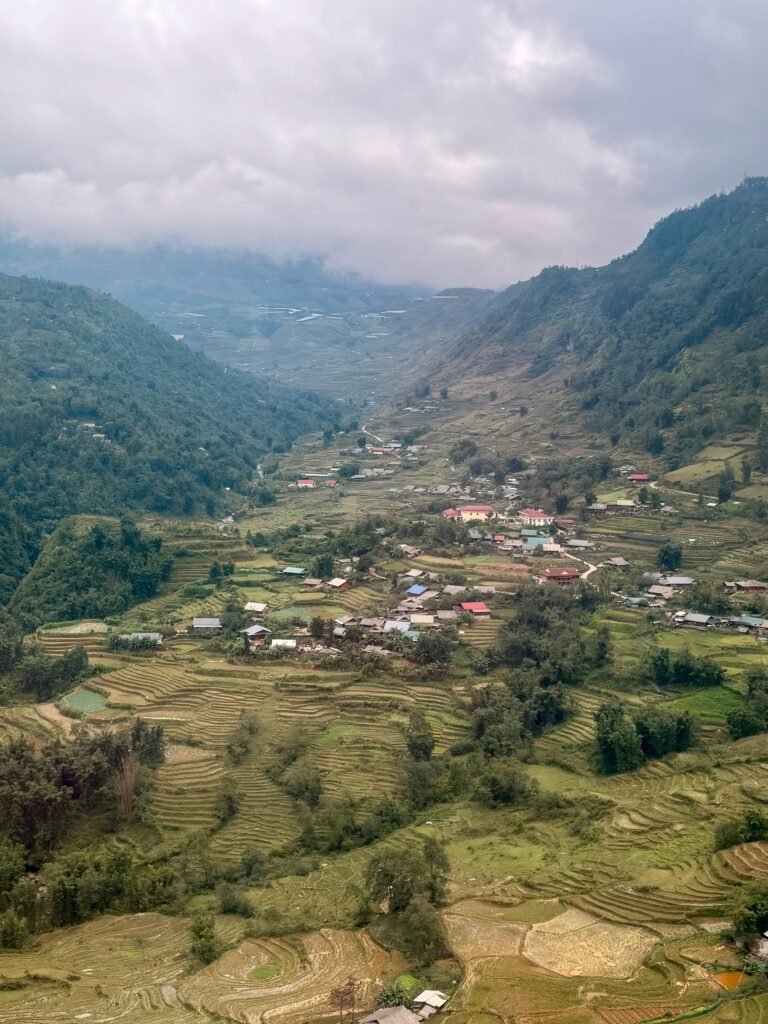
Located just outside Sapa town, this beautiful valley is famous for its sweeping rice terraces, traditional villages and dramatic mountain landscapes. It’s the sort of place where you can open your curtains in the morning and be greeted by views that make you want to grab your camera straight away.
Accommodation here tends to focus more on the experience than convenience. You’ll find charming homestays, boutique mountain lodges and resorts, many with balconies overlooking the valley. It’s a particularly lovely option if you’re looking for somewhere peaceful to relax after a busy day exploring.
Muong Hoa Valley is also a great base for anyone interested in trekking. Several walking routes pass through the surrounding villages and rice fields, meaning you can often explore the scenery directly from your accommodation rather than travelling back and forth from town.
The main downside is that you’ll be further away from Sapa’s restaurants, shops and attractions. Depending on exactly where you stay, you may need to arrange a taxi or use a local driver to get into town. Roads can also be steep and winding, so don’t assume everything will be within easy walking distance.
Why stay in Muong Hoa Valley?
- Incredible views of mountains and terraced rice fields.
- Beautiful homestays and boutique accommodation.
- A peaceful alternative to the busy town centre.
- Great access to trekking routes and traditional villages.
- Ideal for couples and travellers looking for a scenic escape.
Things to consider: You’ll have fewer restaurants and shops nearby, and getting into Sapa town can take a little extra planning. Also, mountain views aren’t guaranteed every day, particularly when mist and low cloud roll in.
Our verdict: Muong Hoa Valley is a fantastic choice if scenery and a peaceful atmosphere are high on your priority list. We’d particularly recommend it if you have a few extra nights in Sapa and want to experience a different side of the region. We will definitely be making time for this next time!
3. Ta Van Village: Best for Traditional Homestays and Trekking
If you’re looking for a more traditional Sapa experience, Ta Van Village is a lovely place to consider. Located in Muong Hoa Valley, around 10–12 km from Sapa town, it’s surrounded by mountains, rice terraces and small local villages. It’s a world away from the busier town centre and offers a much slower pace of life.
Ta Van is particularly popular with travellers who want to experience staying in a traditional homestay. There are plenty of family-run properties where you can enjoy a more personal experience, often with beautiful views across the valley. Some are fairly basic, while others offer surprisingly comfortable rooms with private bathrooms, balconies and even swimming pools.
It’s also one of the best areas to stay if you’re interested in trekking. Several popular walking routes pass through Ta Van, connecting it with neighbouring villages and the surrounding rice terraces. You can spend your days exploring the countryside before returning to your homestay for a relaxed evening away from the crowds.
One thing to keep in mind is that Ta Van is quite a distance from Sapa town. You’ll need to arrange transport if you want to visit attractions such as Sun Plaza or take the cable car to Fansipan. There are a few local cafés and restaurants, but nowhere near the same choice you’ll find in town.
Why stay in Ta Van Village?
- A great choice of traditional and family-run homestays.
- Beautiful mountain and rice terrace scenery.
- Excellent access to popular trekking routes.
- A quieter, more authentic experience away from Sapa town.
- Perfect for travellers wanting to slow down and enjoy rural life.
Things to consider: Ta Van is quite remote compared to Sapa town, so you’ll need to think about transport. Some homestays are also fairly basic, so check the facilities carefully before booking if you’re used to having a few extra comforts.
Our verdict: We’d recommend Ta Van if you’re looking for a more immersive Sapa experience. It’s particularly suited to travellers who enjoy trekking, don’t mind being away from the main attractions and would love to spend a few nights surrounded by the mountains.
4. Lao Chai Village: Best for Rice Terraces and a Peaceful Escape
If your idea of the perfect Sapa stay involves waking up to endless rice terraces and enjoying some peace and quiet, Lao Chai Village is another great option.
Situated in Muong Hoa Valley, Lao Chai is known for its spectacular terraced hillsides and traditional wooden houses. It’s one of the most scenic parts of the Sapa region, particularly during the rice-growing season when the terraces turn vibrant shades of green. Later in the year, you may catch the beautiful golden colours of the harvest.
Accommodation here is generally made up of small homestays, guesthouses and a handful of boutique properties. Many are tucked into the hillsides, giving you lovely views across the valley. It’s a great opportunity to experience a slower side of Vietnam and enjoy a little more time surrounded by nature.
Lao Chai is also a popular stop on trekking routes through the valley. You can explore the surrounding countryside, walk between local villages and take in the scenery without needing to travel far from your accommodation.
However, like Ta Van, it’s not the most convenient location if you want to spend lots of time in Sapa town. Restaurants and shops are more limited, and you’ll need to arrange transport for trips into the centre.
Why stay in Lao Chai Village?
- Some of the most beautiful rice terrace scenery in Sapa.
- Peaceful surroundings away from the busier tourist areas.
- Small homestays with lovely valley views.
- Excellent opportunities for walking and trekking.
- A chance to experience a more rural side of the region.
Things to consider: Facilities are more limited than in Sapa town, and you’ll need to factor in transport costs if you plan to visit the main attractions regularly. Some accommodation is also quite spread out, so check exactly where your chosen property is located.
Our verdict: Lao Chai is a wonderful option if you’re prioritising scenery and a peaceful atmosphere. We’d particularly recommend it for travellers who want to spend their days exploring the rice terraces rather than being close to shops, restaurants and nightlife.
5. Cat Cat Village: Best for a Quiet Stay Close to Nature
Cat Cat Village is another option if you’d like to stay somewhere a little quieter without travelling too far from Sapa town. Located around 2–3 km from the centre, it’s particularly well known for its traditional houses, mountain scenery and beautiful surroundings.
Unlike some of the more remote villages in the valley, Cat Cat is relatively close to Sapa’s main attractions. You can reach the town centre by taxi or on foot, although the walk involves some steep sections, so it’s worth keeping that in mind.
Accommodation around Cat Cat tends to focus on scenic stays, with a mixture of homestays, boutique hotels and mountain-view properties. Many offer lovely views across the surrounding hillsides, making it a good choice if you want somewhere peaceful to return to after a busy day sightseeing.
The village itself is a popular tourist attraction, so don’t expect it to be completely untouched or particularly quiet during the day. Cat Cat Village receives plenty of visitors, especially during peak travel periods. However, staying nearby can still give you a more relaxed atmosphere once the day-trippers have left.
Why stay near Cat Cat Village?
- Beautiful mountain scenery and countryside surroundings.
- A quieter alternative to staying directly in Sapa town.
- Relatively close to the town centre and main attractions.
- A good selection of scenic homestays and boutique accommodation.
- Convenient for visiting Cat Cat Village and exploring the surrounding area.
Things to consider: The area is quite hilly, so walking into town isn’t always as straightforward as the short distance on a map might suggest. Cat Cat Village itself can also get busy with tourists during the day.
Our verdict: We’d consider Cat Cat if you want a scenic stay without being too far from Sapa town. However, if convenience is your main priority, we’d still lean towards staying in the town centre.

How Many Nights Should You Stay in Sapa?
We’d recommend spending around 2–3 nights in Sapa to give yourself enough time to enjoy the main attractions without feeling like you’re constantly rushing around.
If it’s your first visit, three nights would be our recommendation. This gives you time to explore Sapa town, take the cable car up Fansipan Mountain, visit Cat Cat Village and perhaps fit in a trek through the famous rice terraces. You’ll also have a little flexibility if the weather doesn’t play ball, which is something worth considering in Sapa!
If you’re short on time, two nights is still enough to experience some of the highlights. You could spend one day exploring the town and visiting Fansipan, then use another to visit Cat Cat Village or explore the surrounding countryside.
For anyone planning a longer trekking adventure or wanting to stay in one of the traditional homestays around Ta Van or Lao Chai, we’d suggest allowing 4–5 nights. This gives you more time to enjoy the scenery, experience village life and slow things down a little.
Ultimately, how long you stay will depend on what you want to get out of your visit. Just remember that Sapa is a destination where the weather can change quickly, so having an extra day up your sleeve can be useful if you’re hoping to enjoy those famous mountain views.
Tips for Choosing Where to Stay in Sapa
Before booking your accommodation, there are a few things worth thinking about. Sapa might look fairly small on a map, but the surrounding villages and valleys are spread out, and where you stay can make a difference to how easily you get around.
Here are a few things we’d keep in mind when choosing where to stay.
Think About What You Want From Your Sapa Trip
This is probably the biggest deciding factor. If you’re visiting Sapa for the first time and want to see the main attractions, staying in the town centre makes life much easier. You’ll have restaurants, cafés, shops and transport options close by.
On the other hand, if you’re visiting primarily for trekking, mountain scenery and traditional village experiences, staying in Muong Hoa Valley, Ta Van or Lao Chai might suit you better.
There’s no right or wrong choice. It really comes down to whether you prefer convenience or a more peaceful countryside escape.
Check How Far Your Accommodation Is From Sapa Town
Don’t just look at the distance on a map when booking. Some of the surrounding areas involve steep, winding roads, and what looks like a short journey can take longer than expected.
If you’re staying outside the centre, check how easy it is to arrange transport and whether your accommodation offers pick-up services. This is particularly important if you plan to visit Sapa town regularly for restaurants, shopping or sightseeing.
Consider the Views Before Booking
One of the biggest reasons people visit Sapa is for its incredible mountain scenery, so it’s worth checking what kind of views your accommodation actually offers.
Many hotels and homestays advertise mountain views, but this can mean anything from a small glimpse of the hills to a panoramic view across the entire valley. Have a look at recent guest photos and reviews before booking if the scenery is important to you.
It’s also worth remembering that Sapa can experience plenty of mist and low cloud, particularly during certain times of the year. Even the best mountain-view room won’t guarantee clear skies!
Choose Accommodation With Heating or Air Conditioning
Something we think is worth checking before booking is what facilities your room actually has. Sapa can get surprisingly cold, particularly during the winter months, and temperatures can drop quite significantly at night.
If you’re visiting during the cooler season, look for accommodation with proper heating, electric blankets or heated bedding. During the warmer months, air conditioning or a fan may be more important.
Don’t automatically assume every hotel will have both, so it’s worth checking the facilities before confirming your stay.
Read Recent Reviews Before Booking
We always recommend checking recent reviews rather than relying entirely on the property’s photos. This is especially useful in Sapa, where weather conditions, road access and the quality of accommodation can vary quite a bit.
Pay attention to comments about cleanliness, hot water, heating, Wi-Fi and the actual location. If you’re booking somewhere outside the town centre, reviews mentioning transport and accessibility are particularly helpful.
Book Ahead During Peak Travel Periods
Sapa is a popular destination, particularly during the rice harvest season around September and October, when the terraces attract plenty of visitors.
If you’re travelling during these months, we’d recommend booking your accommodation in advance. The same applies to weekends and public holidays, when domestic tourism can make some of the more popular hotels and homestays fill up quickly.
If you’re travelling during quieter periods, you may have a little more flexibility, but it’s still worth securing somewhere that ticks all your boxes before arriving.
Frequently Asked Questions About Where to Stay in Sapa
What Is the Best Area to Stay in Sapa?
For first-time visitors, we’d recommend staying in Sapa town centre. It’s the most convenient base, with plenty of hotels, restaurants, cafés and shops within walking distance. You’ll also be close to popular attractions such as Sun Plaza and Sapa Stone Church, making it easy to explore without constantly arranging transport.
If you’d prefer somewhere quieter with beautiful mountain views, Muong Hoa Valley, Ta Van and Lao Chai are all worth considering.
Is It Better to Stay in Sapa Town or the Villages?
It really depends on the type of experience you’re looking for. Sapa town is better for convenience, particularly if you want to visit the main attractions, eat out and have everything close by.
The surrounding villages are better suited to travellers looking for peaceful accommodation, traditional homestays, trekking opportunities and beautiful rice terrace views.
We chose Sapa town for our first visit and were really happy with our decision.
How Many Nights Should You Stay in Sapa?
We’d recommend spending 2–3 nights in Sapa. This gives you enough time to visit Fansipan Mountain, explore Cat Cat Village, wander around the town and enjoy some of the surrounding countryside.
If you’re planning longer treks or want to spend a few nights in a traditional village homestay, 4–5 nights would be even better.
Is Sapa Town a Good Place to Stay?
Absolutely! We stayed in Sapa town centre during our visit and found it a really convenient base. We were just a short walk from Sun Plaza, Sapa Stone Church, restaurants, cafés and plenty of other local amenities.
It’s particularly good for first-time visitors who want to explore the main attractions without worrying too much about transport.
Is Sapa Expensive for Accommodation?
Sapa has accommodation to suit most budgets. You’ll find affordable guesthouses and homestays, comfortable mid-range hotels and some beautiful luxury resorts with incredible mountain views.
Staying outside the town centre can sometimes offer better value, although you should factor in any additional transport costs.
Is It Worth Staying in a Homestay in Sapa?
Definitely! Staying in a traditional homestay is a lovely way to experience a different side of Sapa. Many are family-run and offer a more personal experience than a standard hotel.
Ta Van and Lao Chai are particularly good areas to look at if you’d like to stay somewhere surrounded by rice terraces and mountains.
Can You Stay in Sapa Without Renting a Motorbike?
Yes, absolutely. You don’t need to rent a motorbike to enjoy Sapa. If you stay in the town centre, many restaurants, shops and attractions are within walking distance.
For places further afield, you can arrange taxis, private transfers or join organised tours. If you’re staying in one of the surrounding villages, it’s worth checking transport options with your accommodation before booking.
When Is the Best Time to Visit Sapa?
September and October are particularly popular because of the beautiful golden rice terraces during harvest season. Spring is also lovely, with milder temperatures and blossoming flowers.
Summer brings lush green landscapes but also more rain, while winter can be very cold, with occasional frost or even snow. The best time ultimately depends on whether you’d prefer clear mountain views, green rice fields or golden harvest scenery.