
The Perfect 2-Month Thailand Itinerary: Islands, Temples & Hidden Gems
We’ve just spent the best two months backpacking around Thailand, travelling from the tropical islands in the south all the way to the mountains and hidden gems in the far north. It was an incredible adventure, but planning a trip this long came with plenty of logistics, from working out the best route to booking transport and deciding how long to spend in each place.
I wanted to put this guide together while everything is still fresh in my mind, sharing the route we took, the places we loved and all the practical tips we picked up along the way. Whether you’re planning your own two-month backpacking adventure or simply looking for inspiration for your Thailand trip, this itinerary will help you plan an unforgettable journey through one of our favourite countries.
Our 2-Month Thailand Itinerary at a Glance
Two months in Thailand gave us the chance to explore so much more than the usual tourist trail. We started in the bustling capital of Bangkok before heading south to discover tropical islands, turquoise waters and beautiful limestone cliffs. From there, we travelled inland to explore historic towns, waterfalls and national parks before making our way north to Chiang Mai, Pai and Chiang Rai.
It was the perfect mix of beach days, temple hopping, adventure and discovering places we might have otherwise missed. Some stops were planned well in advance, while others surprised us and ended up becoming some of our favourite places of the entire trip.
If you’re planning your own two-month Thailand adventure, this route is a great starting point. We’ve included the destinations we visited, how long we recommend spending in each place and links to our more detailed guides to help you plan your trip.
Our route took us through:
- Bangkok and Ayutthaya: Exploring Thailand’s capital and discovering ancient temples on a day trip.
- Koh Tao and Koh Samui: Enjoying island life, beautiful beaches and laid-back evenings.
- Railay Beach, Koh Phi Phi and Koh Lanta: Discovering dramatic limestone cliffs, turquoise seas and quieter island escapes.
- Kanchanaburi: Visiting Erawan Falls, historic landmarks and beautiful countryside.
- Sukhothai: Exploring one of Thailand’s most impressive historical parks and one of our favourite stops.
- Chiang Mai: Visiting stunning temples, wandering night markets and enjoying the city’s relaxed atmosphere.
- Pai: Discovering waterfalls, mountain viewpoints, hot springs and beautiful rice fields.
- Chiang Rai: Exploring incredible temples, tea plantations and attractions in Thailand’s far north.
We travelled through Thailand over two months, including during the rainy season, so our experience of the weather and some island conditions may differ from travelling in peak season. Throughout this guide, we’ll share what worked for us, along with practical tips to help you plan your own route.
A quick breakdown of how long to spend in each destination
We had a few bumps along the way of extended stays due to upset tummies on travel days to increasing our stay when we really loved somewhere. Here is a breakdown of how long we actually ended up staying in each destination:
- Bangkok – 9 nights
- Overnight bus – 1 night
- Koh Tao – 5 nights
- Koh Samui – 6 nights
- Railay Beach – 4 nights
- Koh Phi Phi – 6 nights
- Koh Lanta – 4 nights
- Krabi – 1 night
- Overnight Train – 1 night
- Bangkok – 4 nights
- Kanchanaburi – 4 nights
- Phitsanulok – 1night
- Sukhothai – 3 nights
- Chiang Mai – 7 nights
- Pai – 4 nights
- Chiang Rai – 2 nights
Who is this Thailand itinerary for?
This itinerary is ideal for backpackers who want to experience a bit of everything Thailand has to offer. It combines tropical islands and beach time with ancient temples, bustling cities, mountain scenery and quieter destinations away from the main tourist trail. We travelled on a budget, using a mix of buses, trains, ferries and other local transport, so you don’t need to spend a fortune to follow a similar route.
This is also fairly full itinerary, with several travel days, so it’s best for people who enjoy moving between destinations rather than staying in one place for weeks at a time. We also had the gift of time as we are currently travelling full time therefore we stayed some places a lot longer than is necessarily needed to explore the main attractions.
Travelling Thailand During Rainy Season
We spent our two months backpacking around Thailand during the rainy season, and honestly, it didn’t stop us from having an incredible trip. We had afternoon showers on the islands, a few wet days and the occasional change of plans, but we also enjoyed plenty of sunshine and some unforgettable experiences. This was simply because this is when it best fit in to our overall travel plans for the year.
One thing we learnt is that the weather can vary quite a bit depending on where you are in Thailand. While we had some rain in the south, we still managed to enjoy beautiful beaches, boat trips and island hopping. We also found that travelling during the quieter months meant fewer crowds in some destinations.
That said, rainy season is worth factoring into your planning. Ferry crossings and boat trips can be affected by rough seas, and some attractions or tours may close depending on the conditions. We recommend keeping your itinerary a little flexible where possible and checking local weather forecasts before booking activities.
We’ll share more about our experience of visiting each destination during rainy season throughout this guide, including where the weather affected our plans and what we’d recommend if you’re travelling at the same time of year.
Our Complete 2-Month Thailand Route
Planning a two-month trip around Thailand can feel a little overwhelming at first. With so many incredible places to visit, deciding where to go, how long to spend in each destination and how to get between them takes a fair bit of research.
We planned our route to experience as much of Thailand as possible, combining the country’s beautiful southern islands with historic towns, cultural highlights and the mountains of the north. We travelled from Bangkok down to the islands before heading back inland and making our way north towards Chiang Mai, Pai and Chiang Rai.
Looking back, we’re really happy with the route we chose. We experienced a fantastic mix of destinations, from busy cities and famous landmarks to quieter places that ended up being some of our favourites.
Below, we’ve broken down our route in the order we travelled, so you can see how the different stops fit together and start planning your own two-month Thailand adventure.
Exploring Bangkok and Visiting Ayutthaya
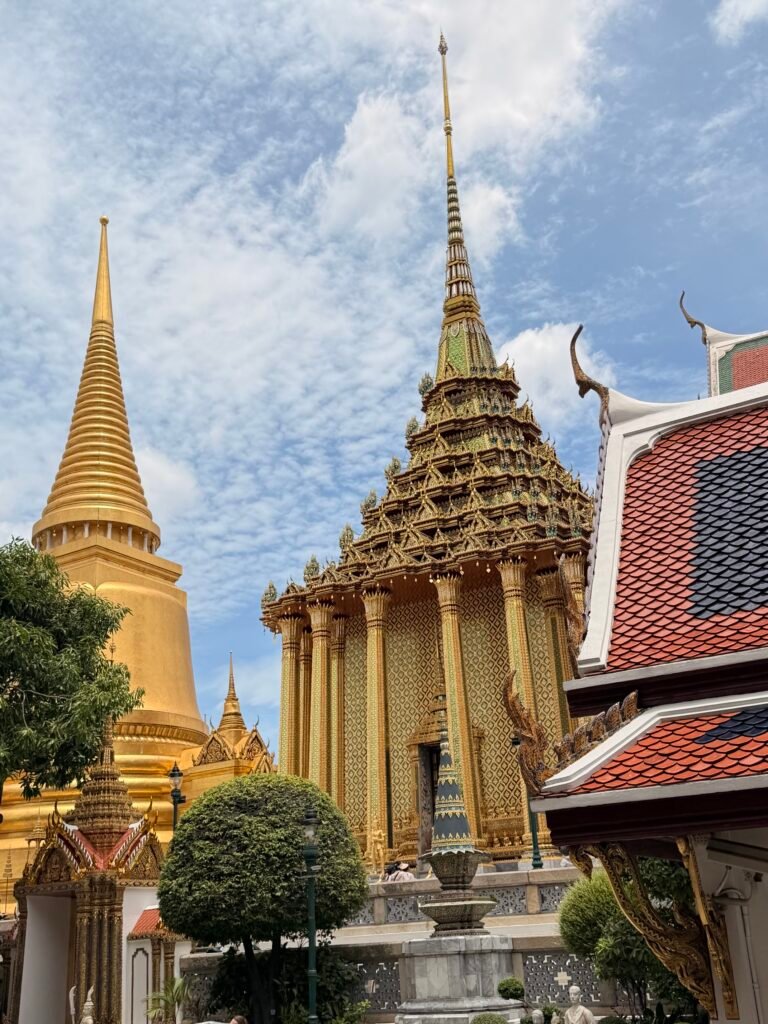
We started our two-month Thailand adventure in Bangkok, spending our first nine nights exploring everything this incredible city has to offer. Bangkok is a brilliant place to begin your trip, with a mix of ancient temples, bustling street markets, modern shopping malls and plenty of delicious Thai food to discover.
We spent our time wandering around Bangkok’s beautiful temples, exploring the huge modern shopping malls and escaping the busy streets for a little while at Lumphini Park. There’s so much to see and do in Bangkok that we were glad we gave ourselves plenty of time to explore without feeling rushed.
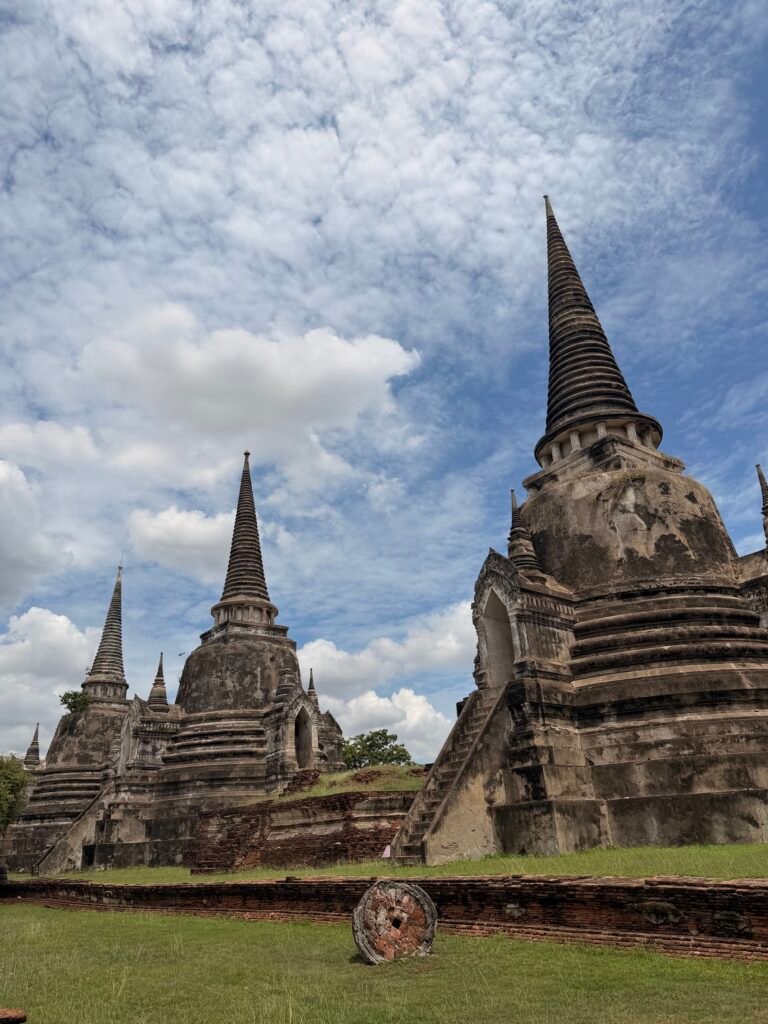
While staying in Bangkok, we also took a day trip to the historic city of Ayutthaya. This was one of our favourite days in Thailand so far and a great way to experience a different side of the country. Famous for its ancient temple ruins and fascinating history, Ayutthaya is surprisingly easy to visit independently from Bangkok, making it a fantastic addition to your itinerary.
We travelled there by train, which was both affordable and straightforward. If you’re short on time, you don’t necessarily need to spend a night there to experience its highlights.
If you’d like to follow in our footsteps, we’ve put together a complete guide explaining how to take a day trip from Bangkok to Ayutthaya, including how to get there, getting around and what to see.
Island Life on Koh Tao and Koh Samui
After starting our trip around Asia with South Korea, Japan and Hong Kong, followed by nine nights exploring Bangkok, we were ready to slow things down and discover Thailand’s beautiful southern islands. We’d spent quite a lot of time in cities by this point, so the thought of turquoise water, sandy beaches and a more relaxed pace was exactly what we needed.
We took an overnight bus from Bangkok to Chumphon before catching the ferry to Koh Tao. The journey was fairly straightforward and a great way to travel south without losing an entire day to transport. If you’re planning the same journey, we’ve shared all the details in our guide on how to get from Bangkok to Koh Tao by bus and ferry.
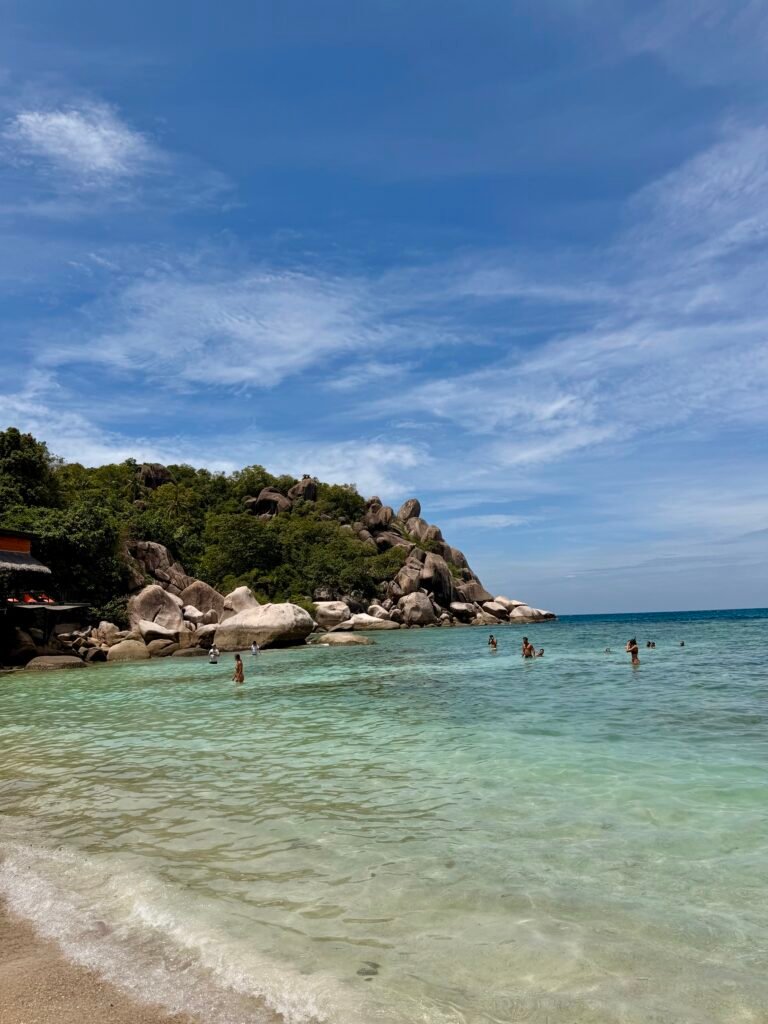
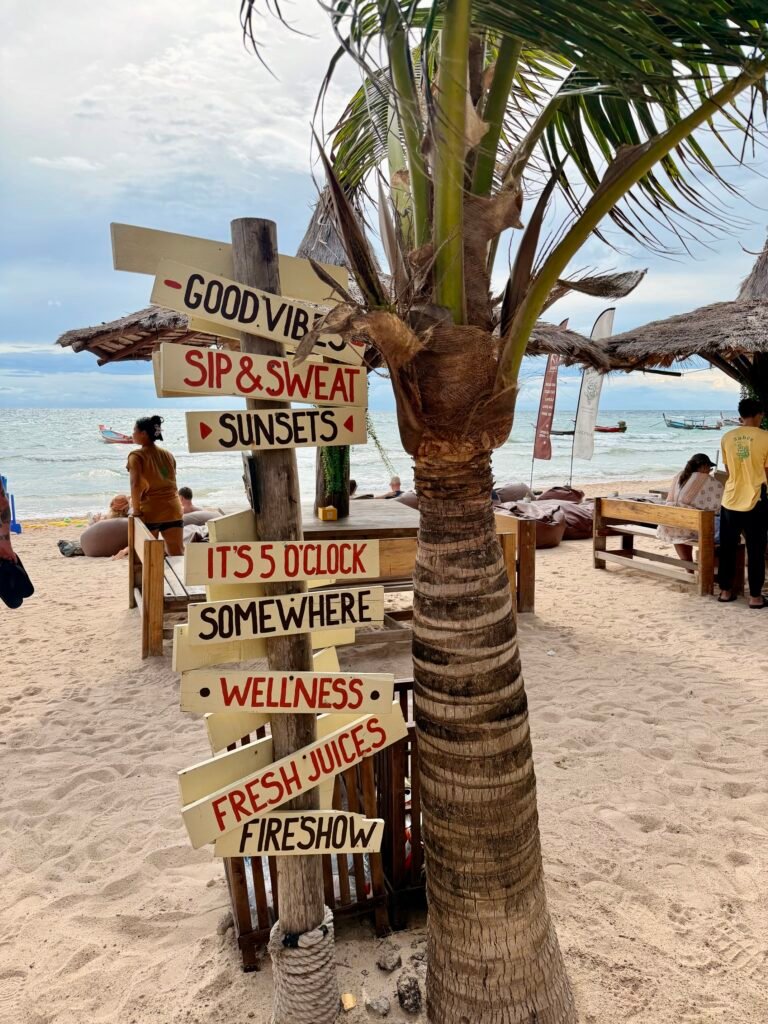
We spent five nights on Koh Tao, which turned out to be a brilliant introduction to island life in Thailand. The island has a wonderfully relaxed atmosphere, with beautiful turquoise beaches, laid-back restaurants and plenty of opportunities to enjoy the sea. We loved exploring the different beaches and simply having some time to slow down after our busy start to the trip. You can read more about our favourite spots and experiences in our Koh Tao travel guide.
From Koh Tao, we continued to Koh Samui by ferry, which felt quite different. While Koh Tao has a more laid-back, beachy feel, Koh Samui is much more developed, with bigger resorts, modern shopping areas and a wider range of restaurants and facilities. We enjoyed exploring its temples, visiting Fisherman’s Village and discovering some of its beautiful beaches.
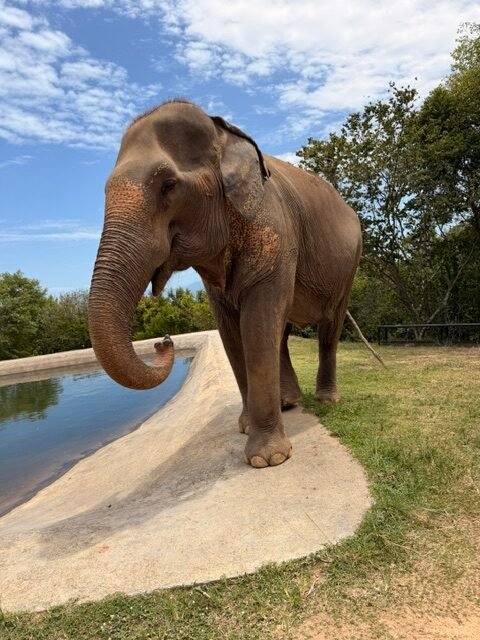
One of our highlights on Koh Samui was visiting an ethical elephant sanctuary. It was a memorable experience and a lovely opportunity to see these incredible animals up close. We’d recommend researching any elephant sanctuary carefully before visiting to make sure its practices genuinely prioritise elephant welfare.
We really enjoyed experiencing these two islands back to back because they offer something quite different. Koh Tao was perfect for a slower-paced island escape, while Koh Samui gave us more variety and a taste of Thailand’s more developed resort side. If you’re planning your own island-hopping adventure, we’d definitely recommend considering both.
For more details, including the best things to do, beaches and practical tips, check out our complete Koh Samui travel guide.
Discovering Railay Beach, Koh Phi Phi and Koh Lanta
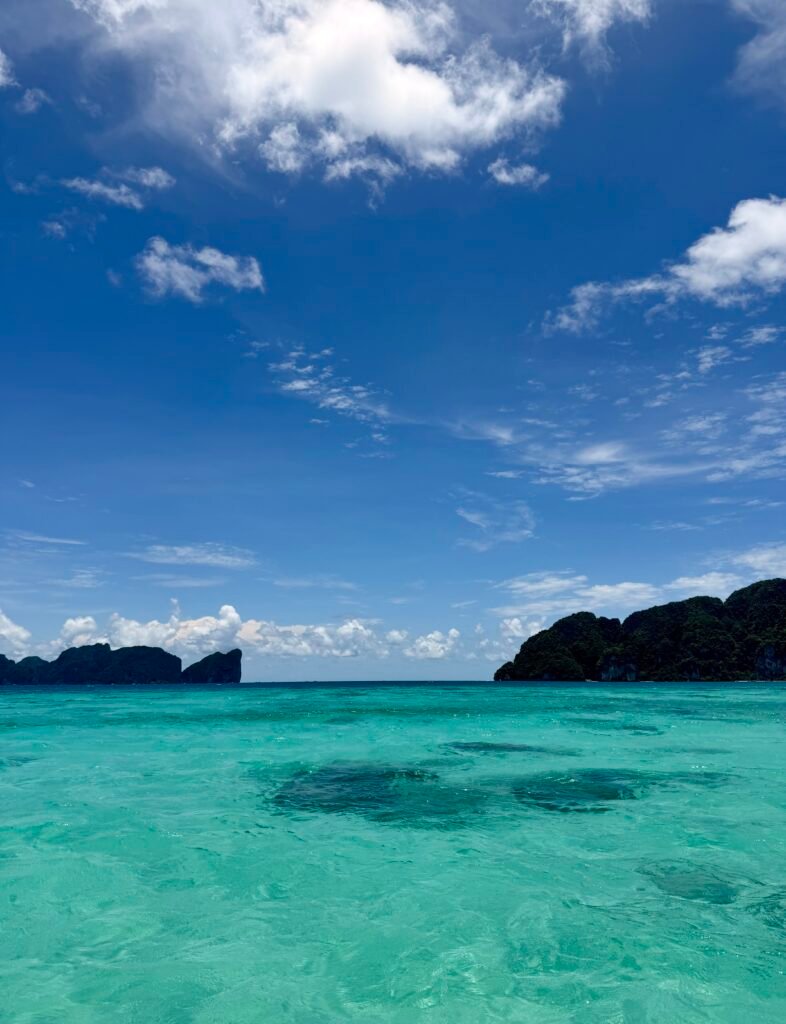
After our time on Koh Samui, we continued our island-hopping adventure towards the Andaman Coast, where some of Thailand’s most spectacular scenery was waiting for us. This part of the trip involved a little more travelling, but it was absolutely worth it. From towering limestone cliffs to turquoise water and incredible marine life, we loved exploring this side of Thailand.
Railay Beach
Our first stop was Railay Beach. We took the ferry from Koh Samui to Donsak, followed by a bus to Krabi and a longtail boat to Railay. Although the journey involved a few different connections, getting there was fairly straightforward.
We absolutely loved Railay and were so glad we decided to stay here rather than base ourselves in Krabi. With its dramatic limestone cliffs, beautiful beaches and peaceful atmosphere, it felt like a world away from the busier destinations we’d visited earlier in our trip. Railay also holds a very special place in our hearts because it’s where we got engaged!
One of our highlights was taking the Four Islands tour from Railay Beach. Exploring the surrounding islands, swimming in turquoise water and seeing the enormous limestone formations up close was an unforgettable experience. Railay was one of those places where we could easily have stayed longer, and we’d highly recommend including it in your Thailand itinerary.
Koh Phi Phi
From Railay, we caught a ferry to the Phi Phi Islands. This was a straightforward journey and an easy way to continue our island-hopping route.
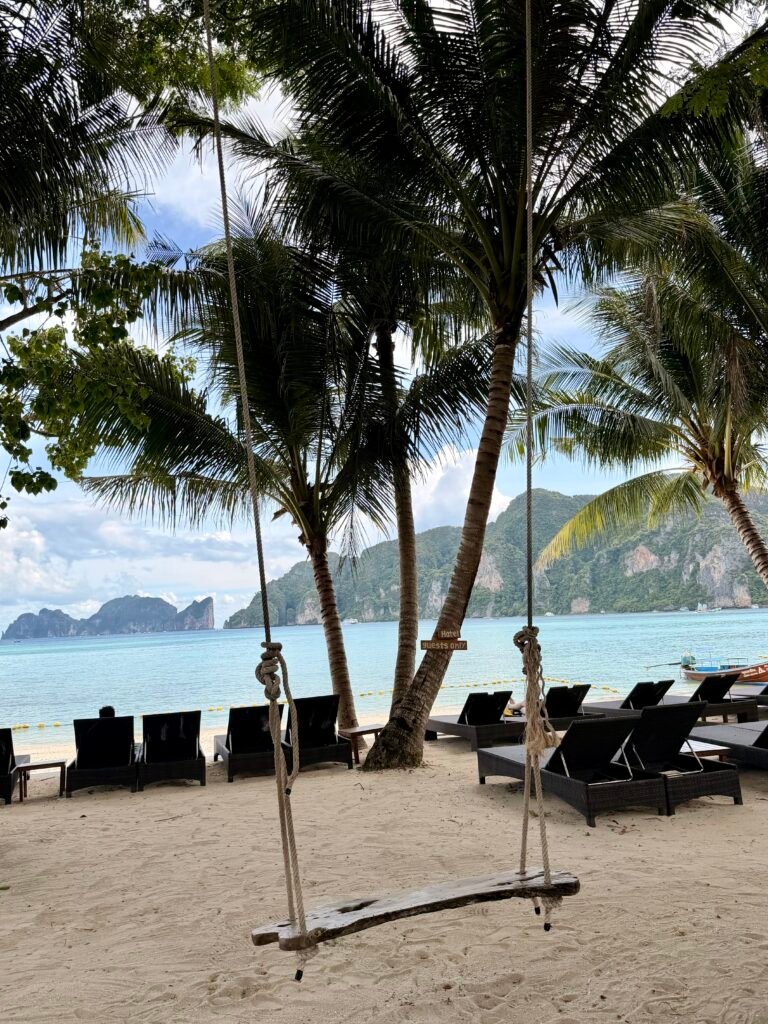
We originally planned to spend just three nights in Phi Phi, but we enjoyed it so much that we decided to stay longer. Although the islands are well known for their lively atmosphere and beautiful scenery, there is also plenty to discover if, like us, you enjoy getting out on the water and exploring independently.
One of our absolute highlights was taking a private longtail boat to snorkel with blacktip reef sharks at Shark Point. Seeing these sharks in their natural habitat was an incredible experience, and we also got to visit a quieter beach away from the crowds. If you’re looking for inspiration, we’ve shared more of our favourite experiences in our guide to the best things to do in the Phi Phi Islands.
Phi Phi ended up being another place we wished we’d allowed more time for. Between the snorkelling, beaches and beautiful scenery, it was easy to see why so many travellers fall in love with these islands.
Koh Lanta
After Koh Phi Phi, we continued south to Koh Lanta, which offered a completely different atmosphere from the islands we’d just visited. We travelled during the low season, so the island was incredibly quiet, with some businesses operating reduced hours or closing for the season.
We still enjoyed our time here and loved the slower pace, particularly after spending time in busier destinations. Koh Lanta is a great option if you’re looking for somewhere more laid-back, with long beaches, relaxed evenings and plenty of space to unwind.
However, our experience did make us think that Koh Lanta might be even better during the shoulder season, when more restaurants and other businesses are open but the island may still feel quieter than during peak season.
If you’re thinking about adding Koh Lanta to your own Thailand itinerary, we’ve put together a complete Koh Lanta travel guide covering everything you need to know before visiting, including the best things to do, where to stay and practical tips for planning your trip.
Overall, we loved exploring this stretch of Thailand’s Andaman Coast. Railay was particularly special to us, Phi Phi gave us some unforgettable wildlife encounters, and Koh Lanta was a chance to slow down again before continuing our journey inland.

Exploring Kanchanaburi and Erawan Falls
After finishing our time on the Thai islands, it was time to head back inland and explore more of the country’s history and natural beauty. Our next stop was Kanchanaburi, a destination we’d been looking forward to visiting for its waterfalls, temples and fascinating World War II history.
Getting there involved quite a bit of travelling. We took the ferry from Koh Lanta and a bus to Krabi, where we spent the night before catching an overnight bus back to Bangkok. We then spent a few more nights in Bangkok as it was Andy’s birthday, and we wanted to break up the long travel days before continuing our journey. From Bangkok, we caught a bus to Kanchanaburi.
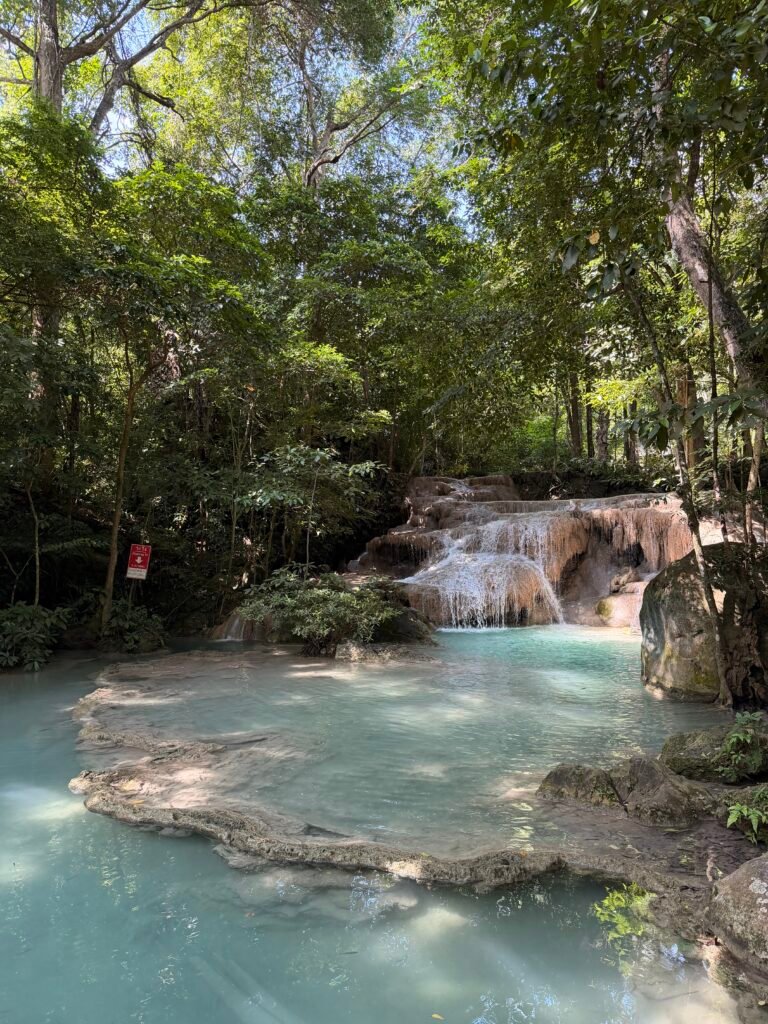
We spent four nights in Kanchanaburi, which gave us plenty of time to explore the area without feeling rushed. One of the biggest highlights was visiting Erawan Falls in Erawan National Park. With its beautiful turquoise pools, multiple waterfall tiers and jungle surroundings, it was one of our favourite nature experiences in Thailand. If you love waterfalls and swimming in natural pools, we’d definitely recommend making time for a visit.
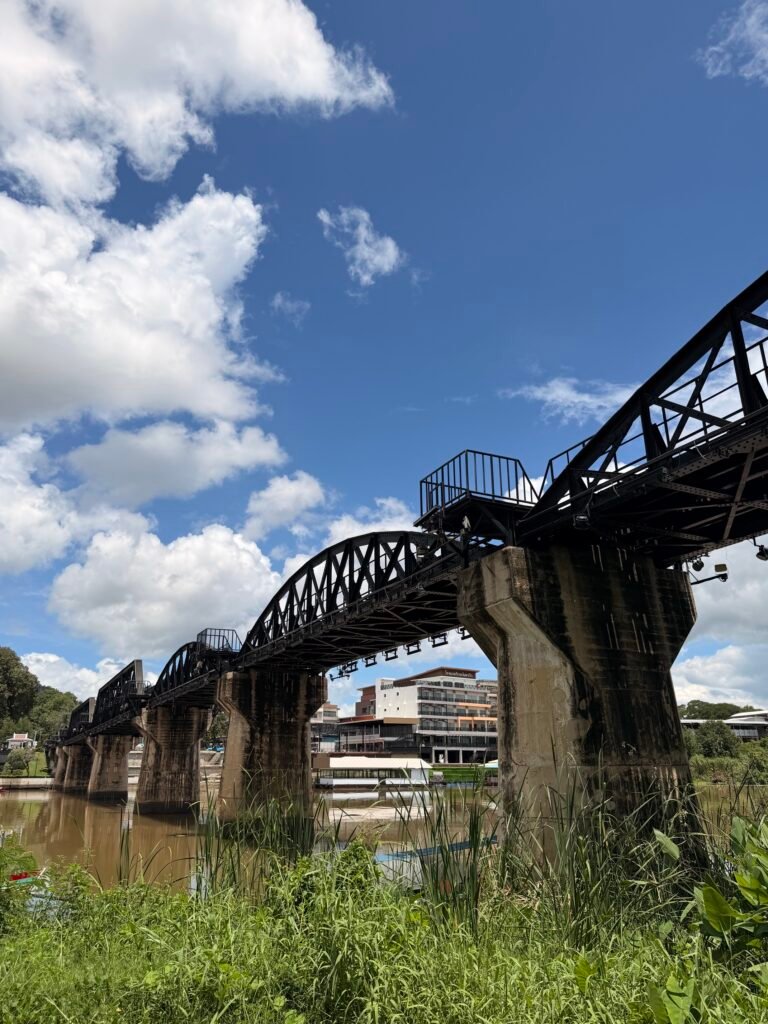
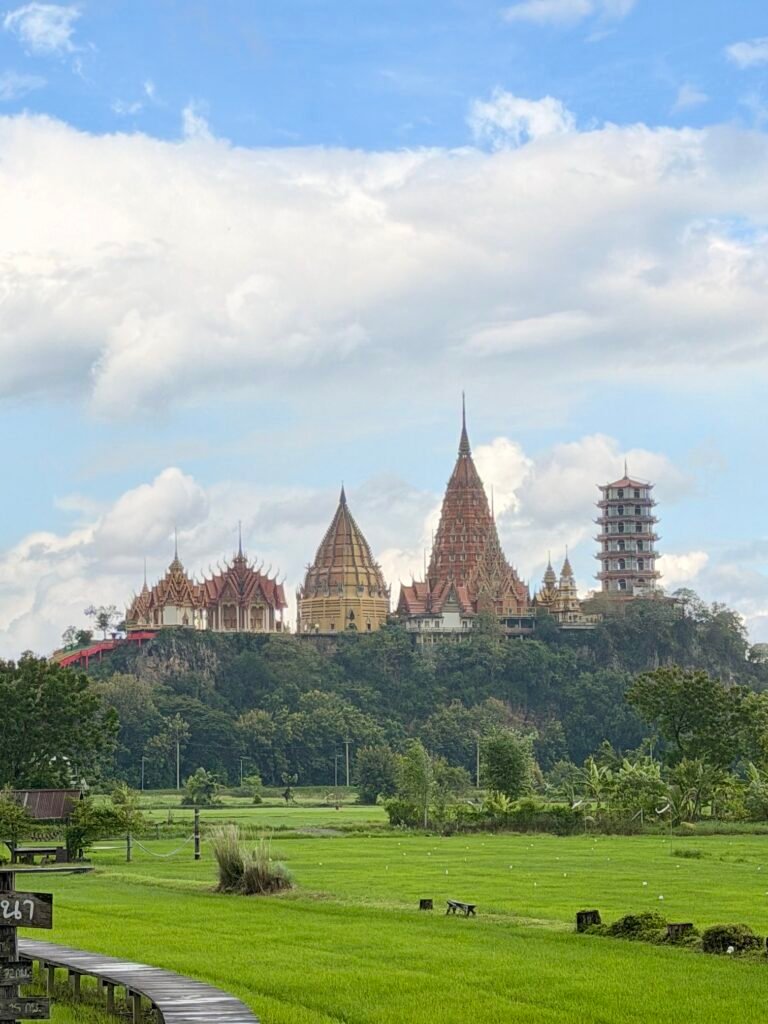
We also explored some of Kanchanaburi’s temples and learned more about the region’s history by visiting the famous Death Railway and the Bridge over the River Kwai. It was a fascinating contrast to the relaxed island life we’d enjoyed earlier in the trip and a reminder of just how much variety Thailand has to offer.
We were glad we included Kanchanaburi rather than heading straight from the islands to northern Thailand. It gave us a chance to experience a different side of the country, combining beautiful natural scenery with important historical sites.
If you’re planning to visit, take a look at our guide to the best things to do in Kanchanaburi, where we share more about the waterfalls, temples, historical attractions and other places worth adding to your itinerary.
Stepping Back in Time in Sukhothai
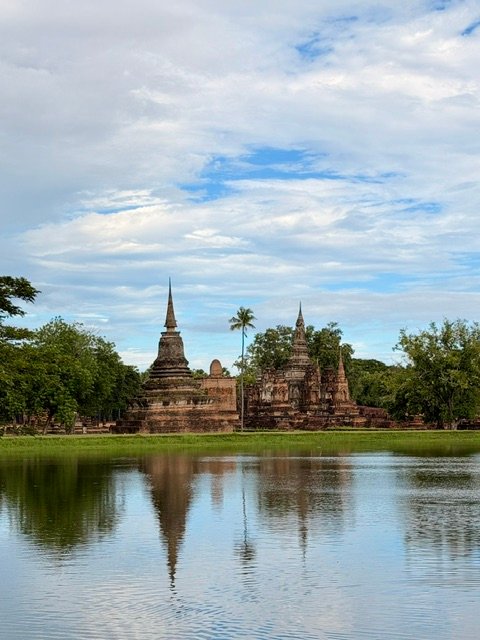
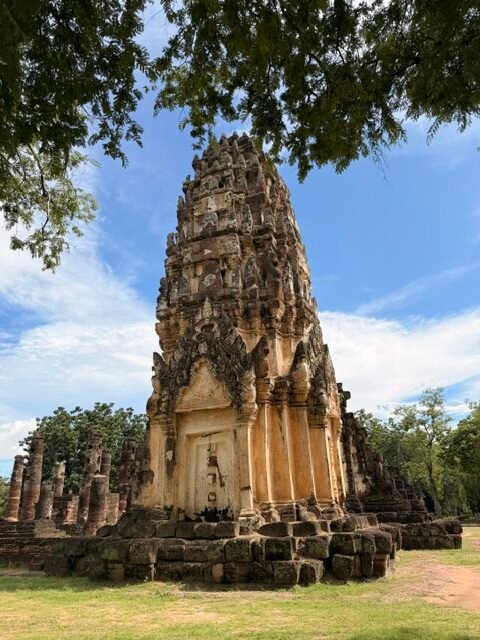
Sukhothai was one of the highlights of our entire Thailand trip, and personally, I think it deserves far more attention than it gets. It genuinely felt like stepping back in time, with ancient temples, impressive Buddha statues and historic ruins surrounded by beautiful green spaces. One of the things we loved most was how peaceful it felt compared to Ayutthaya, which we’d visited earlier in our trip.
Getting to Sukhothai took a little more planning than some of our other stops. We caught a bus to Phitsanulok, spent the night there and then continued by bus to Sukhothai the following morning. It wasn’t the most direct journey, but we were so glad we made the effort to visit.
We spent our time exploring Sukhothai Historical Park, wandering between the ancient ruins and taking in the atmosphere. We also loved discovering the local markets and enjoying the slower pace of life in the Old Town. It was a welcome change from some of Thailand’s busier tourist destinations, and one of those places where we wished we’d had even longer to explore.
If you’re deciding between Ayutthaya and Sukhothai, we’d say Ayutthaya is the easier choice if you’re short on time and staying in Bangkok, as it’s simple to visit on a day trip. However, if you have more time to travel around Thailand, we’d absolutely recommend adding Sukhothai to your route. For us, it was one of the most memorable places we visited.
If you’d like to discover more, take a look at our guide to the best things to do in Sukhothai, Thailand, where we share the temples, historic sights and experiences we recommend adding to your visit.
Discovering Chiang Mai and Its Temples
After exploring Sukhothai, we continued north to Chiang Mai, one of Thailand’s most popular destinations and somewhere we’d been looking forward to visiting. Getting there was easy, as we took a straightforward direct bus from Sukhothai to Chiang Mai, making the journey much simpler than some of our other travel days.
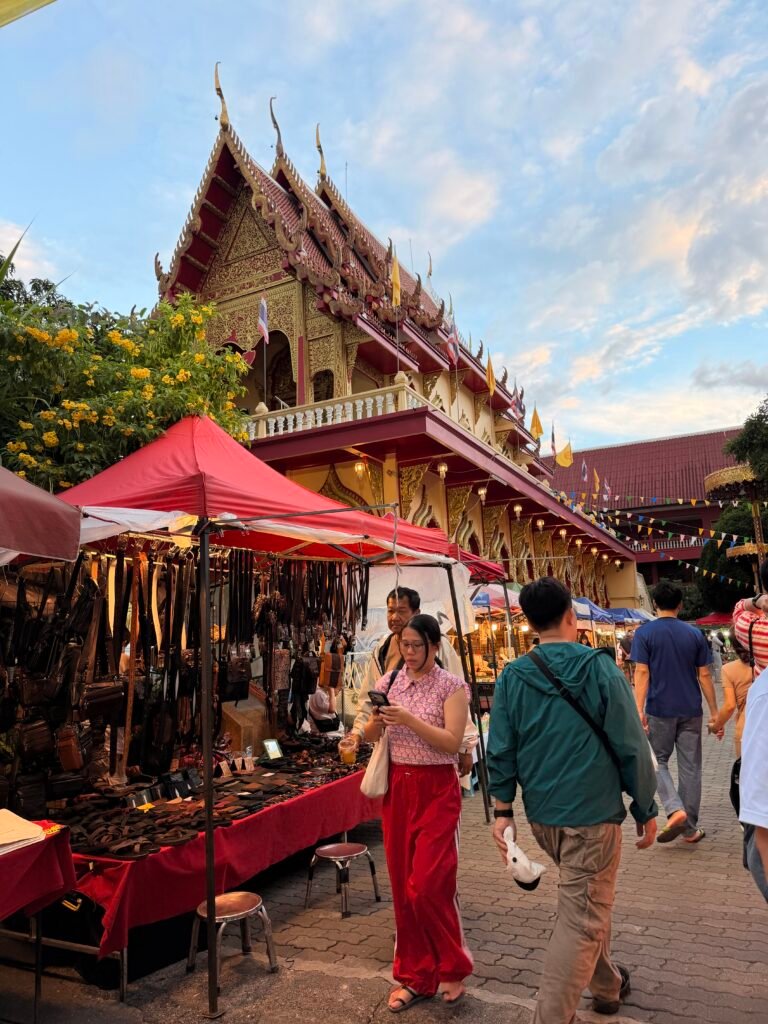
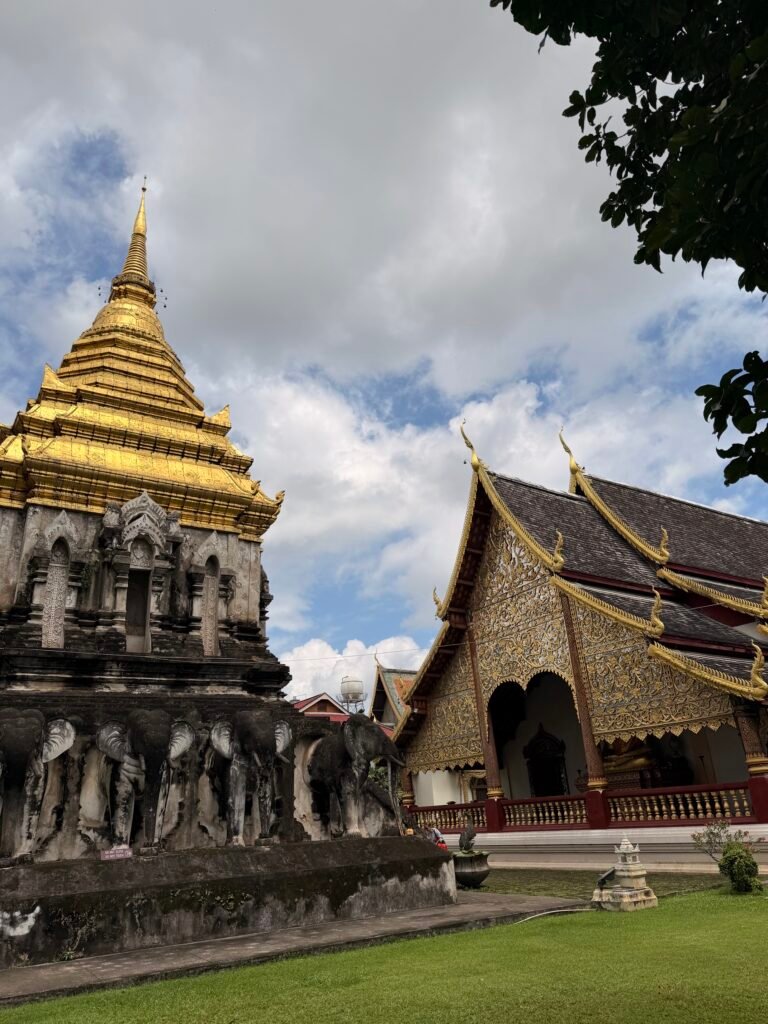
Known for its beautiful temples, lively night markets, delicious food and relaxed atmosphere, Chiang Mai was a fantastic place to spend a few days. We loved exploring the Old City and discovering its many temples, each with its own character and beautiful details. There is so much to see here, and we really enjoyed being able to explore at our own pace.
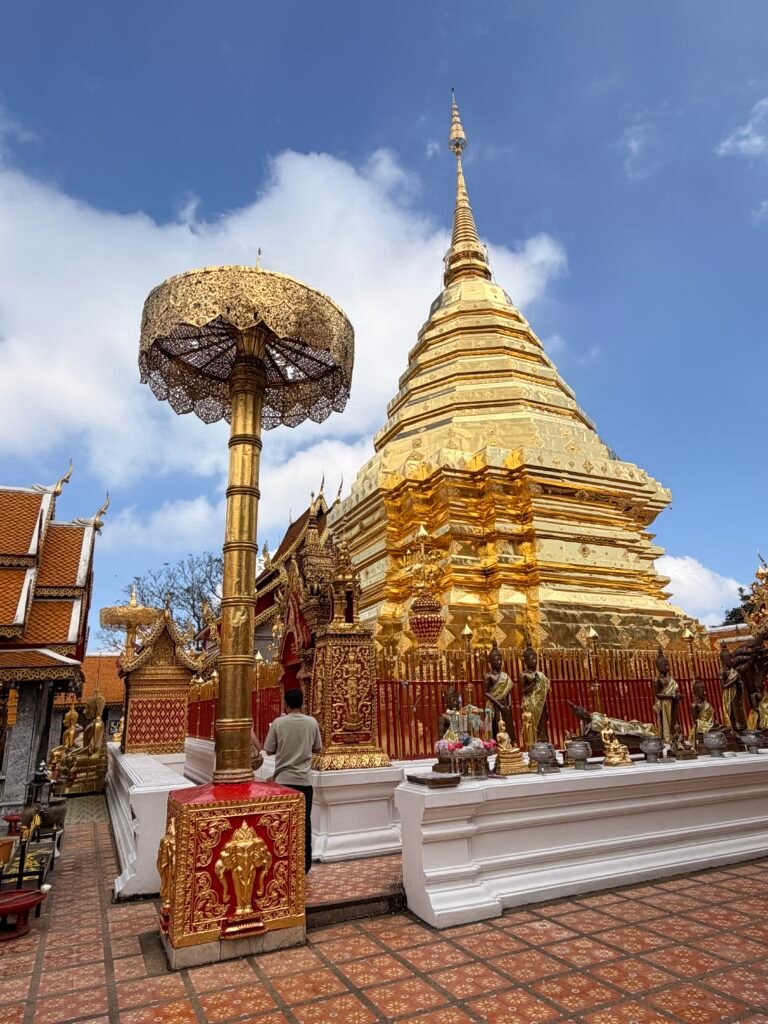
One of our highlights was visiting Doi Suthep, a stunning temple perched in the mountains overlooking the city. It was my favourite temple we visited in Chiang Mai, not only because of the beautiful golden details but also because of the incredible views across the city.
Another personal favourite was the Sunday Night Market. The streets come alive with stalls selling everything from local street food and handmade crafts to clothing and souvenirs. We loved wandering through the market, trying different foods and soaking up the atmosphere. It’s also a great budget-friendly activity, especially if you enjoy exploring local markets as much as we do.
Chiang Mai was one of those places where there was always something to do, whether we were visiting temples, browsing markets or simply enjoying the city’s relaxed atmosphere. It’s easy to see why so many travellers include it in their northern Thailand itinerary, and we’d definitely recommend allowing a few days to explore properly.
If you’re planning a visit, take a look at our guide to the 12 best things to do in Chiang Mai, where we share our favourite attractions, experiences and practical tips to help you plan your stay.
Exploring Pai and Northern Thailand’s Hidden Gems
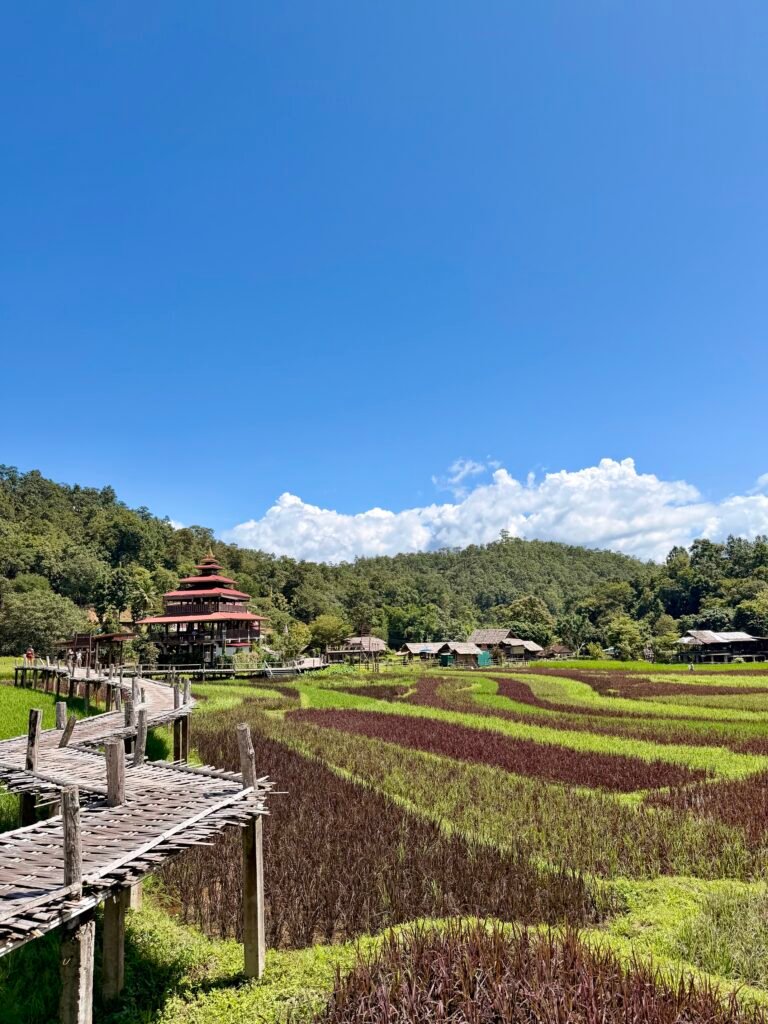
After exploring Chiang Mai, we continued further into the mountains to Pai, which ended up being my favourite place in northern Thailand. The scenery was absolutely stunning, with rolling green mountains, beautiful rice fields, waterfalls and incredible viewpoints. It was one of those places that completely exceeded my expectations, and I’m so glad we decided to include it in our itinerary.
Getting to Pai from Chiang Mai was straightforward, as we took a direct bus. However, there’s one important thing to know before you travel: the roads are extremely windy, with hundreds of bends along the way. If you’re prone to motion sickness, I’d definitely recommend considering taking a travel sickness tablet before setting off. The journey is worth it, but it’s something to prepare for!
Once we arrived, we quickly understood why Pai is such a popular stop for backpackers travelling around northern Thailand. Despite its reputation as a laid-back backpacker town, there’s so much more to discover beyond the town centre. We spent our time exploring the surrounding countryside, visiting waterfalls and taking in some of the most beautiful views of our entire trip.
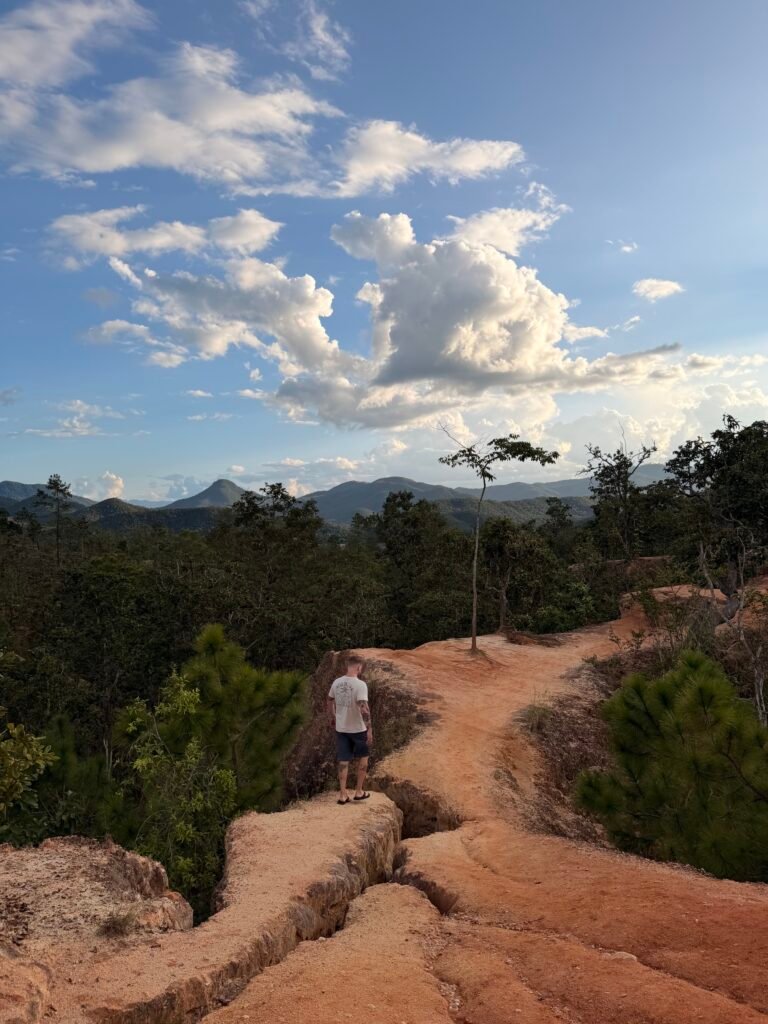
Pai Canyon was one of my absolute favourite places, not just in Pai but in Thailand as a whole. The views were incredible, especially around sunset. We also loved walking along Bamboo Bridge through the rice fields, which was such a peaceful experience and another highlight of our stay. Add in swimming beneath waterfalls, visiting temples and exploring Pai Walking Street Night Market, and there was plenty to keep us busy.
Pai was easily one of the places I’d recommend making time for if you’re travelling around Thailand for two months. It offers something completely different from the southern islands and the larger cities, and we could happily have stayed longer.
If you’re planning a visit, check out our guide to our favourite things to do in Pai, Thailand, where we cover the best attractions, viewpoints and experiences to add to your itinerary.

Discovering Chiang Rai and the Far North
After spending four nights in Pai, we continued further north to Chiang Rai, the final stop on our two-month Thailand adventure. By this point, we’d travelled from the busy streets of Bangkok all the way through the southern islands and into the mountains of northern Thailand. Chiang Rai felt like a fitting place to finish our journey, with its unique temples, beautiful scenery and more relaxed atmosphere.
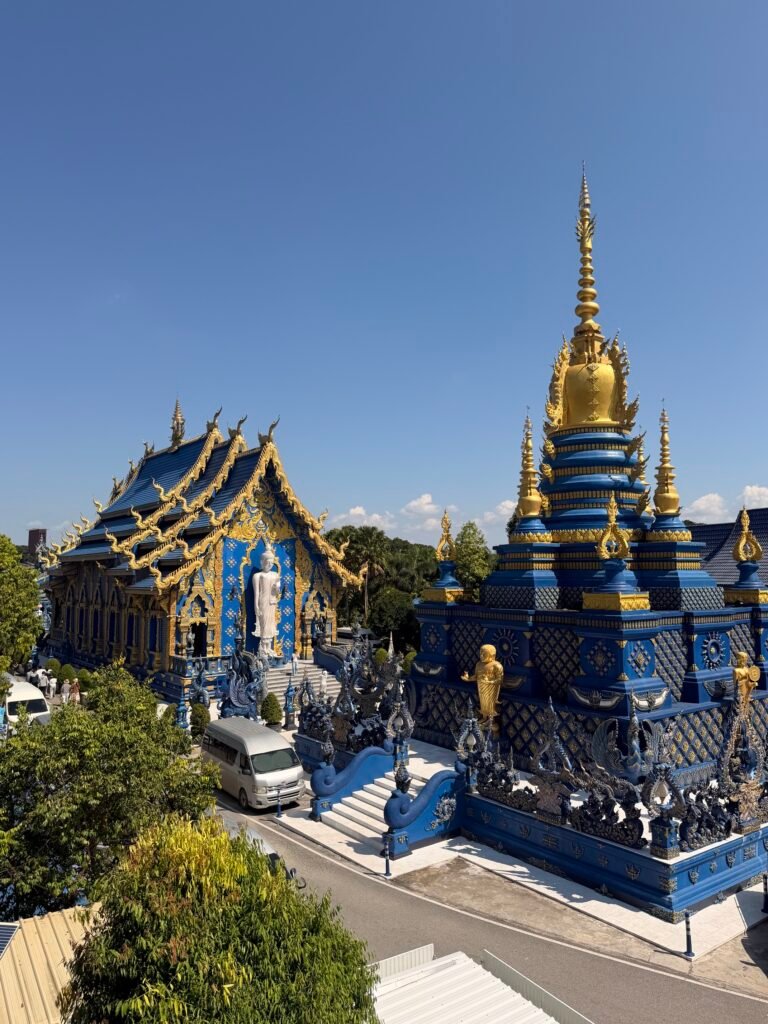
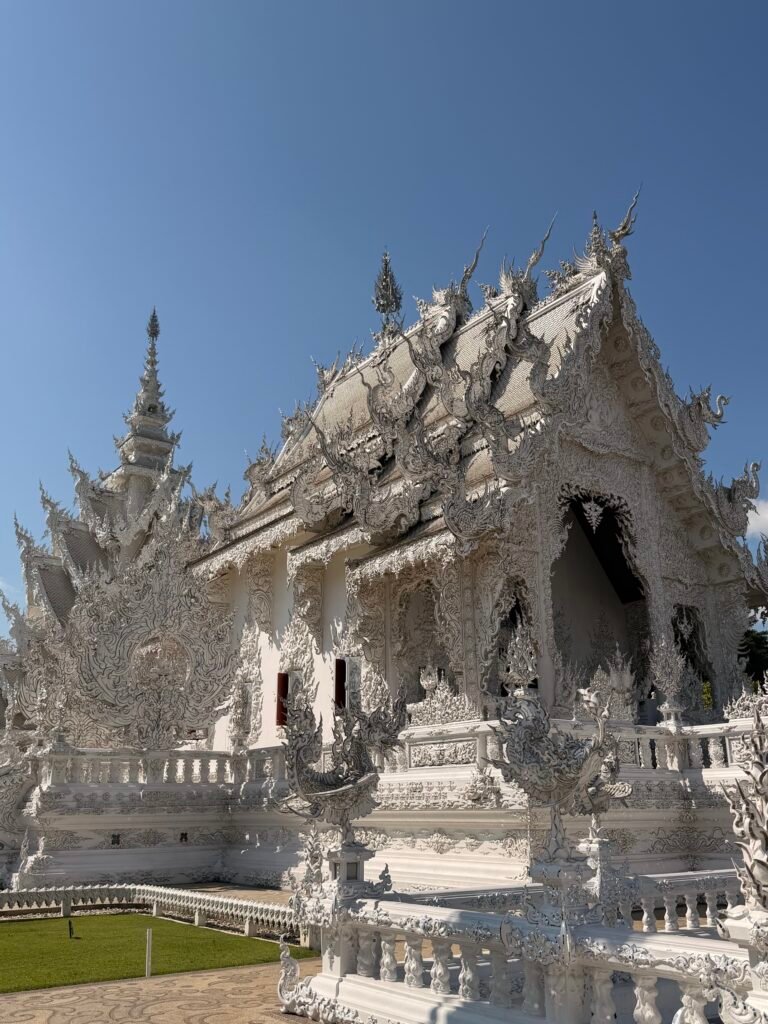
We took the bus from Pai to Chiang Rai and spent our time exploring some of the area’s best-known attractions. The White Temple (Wat Rong Khun) was an absolute highlight, with its intricate white architecture and unusual artistic details. We also visited the Blue Temple (Wat Rong Suea Ten), which was equally impressive with its vivid blue colours and elaborate decorations.
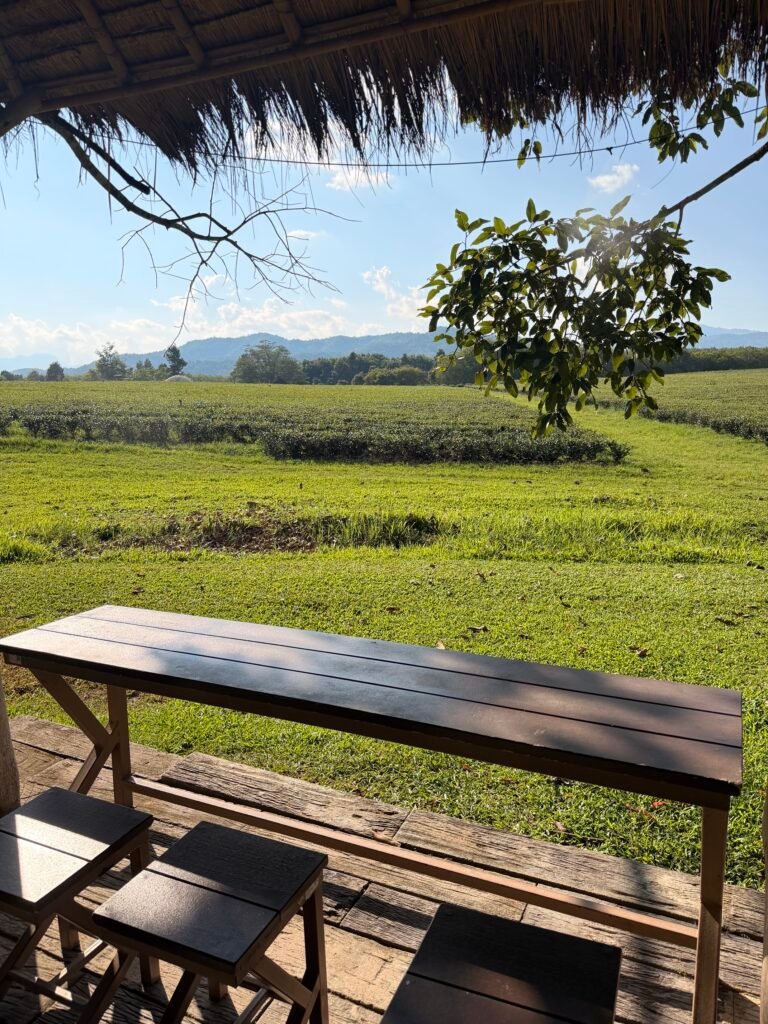
Another place we really enjoyed was Singha Park. We hired a golf cart so we could explore the large grounds at our own pace, stopping at the main attractions along the way. We particularly loved the tea fields, where we got to sample different local teas, and the petting zoo, where we could feed the animals. It was a fun change from temple hopping and would be a great option for families travelling with children, too.
Chiang Rai was a lovely final stop on our Thailand trip and gave us the chance to experience a different side of the north before moving on to our next country. After two incredible months exploring Thailand, it was time to cross the border into Laos via the nearby Thai–Lao Friendship Bridge and continue our travels through Southeast Asia.
If you’re planning to visit Chiang Rai, we’d recommend allowing enough time to explore beyond the famous temples. There is plenty more to discover, and it’s a destination that deserves more than just a quick day trip from Chiang Mai.
How to Get Around Thailand
One of the things we loved about backpacking around Thailand was how many different ways there were to get from one destination to the next. Over our two-month trip, we used a mixture of buses, trains, ferries and local transport to travel from Bangkok to the southern islands and all the way up to Chiang Rai in the north.
Getting around Thailand does take a little planning, especially when you’re combining islands with inland destinations, but we found most journeys fairly straightforward once we knew which connections to book. Here’s what we’d recommend based on our own experience.
Buses and Minivans
Buses and minivans were some of the main ways we travelled around Thailand. We used them for journeys between destinations such as Bangkok and Kanchanaburi, Sukhothai and Chiang Mai, and Chiang Mai and Pai.
For longer journeys, overnight buses can be a useful way to save on accommodation and make the most of your time. We took an overnight bus from Bangkok towards Chumphon before catching the ferry to Koh Tao, and another overnight bus when travelling back towards Bangkok from the south.
You can compare routes, journey times and prices through 12Go, which we found useful when planning transport around Thailand. I’d recommend checking departure points carefully, as some services leave from different bus stations or pick-up locations.
Trains
Trains are another option, particularly for travelling from Bangkok to destinations around central Thailand. We took the train from Bangkok to Ayutthaya, which was incredibly cheap and made for an easy day trip.
Our train journey cost just 30 baht per person each way. It was a basic service with ceiling fans rather than air conditioning, but it was a great experience and a budget-friendly way to travel.
If you’re travelling on a tight budget, local trains can be a fantastic option. Just remember that journey times and comfort levels vary depending on the service you choose.
Ferries and Boats
If you’re planning to visit Thailand’s islands, you’ll almost certainly need to use ferries or boats at some point. We used a combination of ferries, buses and local longtail boats to travel between the islands and mainland.
Some of our journeys involved several connections, such as travelling from Koh Samui to Railay Beach via Donsak and Krabi. Although this sounds complicated, it was manageable with a little planning.
We also took a direct ferry from Railay to Koh Phi Phi, which was a straightforward journey. Keep in mind that ferry schedules can change with the seasons and weather conditions, particularly during rainy season, so allow some flexibility where possible.
Local Transport
Once you arrive at your destination, you’ll usually have several options for getting around. Depending on where you are, these might include songthaews, taxis, tuk-tuks, Grab, local buses or motorbike rentals.
We used a songthaew to visit Doi Suthep from Chiang Mai, while in Ayutthaya we hired a motorbike to explore the historical sites. However, hiring a motorbike is only something we’d recommend if you’re experienced, properly licensed and comfortable riding in local conditions. There are other ways to explore if you’d prefer not to ride yourself.
In places such as Pai and Chiang Rai, having transport can make it easier to visit attractions outside the town centre. You can also arrange drivers or organised tours if you’d rather not navigate the roads yourself.
Booking Transport in Thailand
We found it useful to compare transport options before each journey rather than booking the entire two-month trip in advance. This gave us some flexibility while still allowing us to plan the longer travel days.
We recommend checking 12Go for buses, trains, ferries and combined tickets. For popular routes and overnight journeys, booking ahead can be worthwhile, especially during busy travel periods.
Overall, getting around Thailand was easier than we expected. Some journeys took longer than others, but with a little preparation, travelling between the islands, historic towns and northern mountain destinations was all part of the adventure.
How Much Does 2 Months in Thailand Cost?
One of the questions you’re probably asking when planning a two-month backpacking trip is how much you should budget. The good news is that Thailand can be a very affordable destination, even if you want a private room, eat out for every meal and enjoy plenty of activities along the way.
Of course, your total costs will depend on your travel style, the destinations you visit and how much you spend on accommodation and experiences. To give you a realistic idea, here’s what we spent during our two months travelling around Thailand.
How Much We Spent in Thailand
Between the two of us, we spent £5,262.13 over two months in Thailand, excluding international flights.
This covered everything during our time in the country, including accommodation, food, transport and activities. We didn’t need to rely on dorm rooms or skip experiences to keep our spending under control, which we think makes this a useful example of what a comfortable budget backpacking trip can cost.
For context, we always booked private rooms with our own bathrooms and aimed to spend around £20 per night or less on accommodation. We also ate out for every meal, making the most of Thailand’s affordable local food and restaurants.
Our budget included some memorable experiences, too. We took private longtail boat trips around Railay Beach, went snorkelling with blacktip reef sharks in the Phi Phi Islands and visited an elephant sanctuary on Koh Samui. We didn’t want to miss out on experiences we were excited about just to save money.
Our Thailand Budget for Two Adults
Here’s a quick summary of our overall spending:
- Total cost: £5,262.13
- Duration: Approximately two months
- Number of travellers: Two adults
- Average daily cost for both of us: Approximately £86
- Average daily cost per person: Approximately £43
- Accommodation: Private rooms with private bathrooms, aiming for £20 per night or less
- Food: Eating out for every meal
- Activities: Included, including boat trips, snorkelling and an elephant sanctuary
- International flights: Excluded
These averages are based on roughly 61 days of travel. Your daily budget may be higher or lower depending on how long you stay and the experiences you choose.
How to Keep Your Thailand Budget Down
We found that it was possible to travel comfortably around Thailand without spending a fortune. Here are a few things that helped us keep our costs manageable.
Choose affordable private accommodation. We prioritised private rooms and bathrooms but generally tried to keep accommodation at around £20 per night or less. You don’t necessarily need to stay in hostels to backpack Thailand on a budget.
Eat local food. Eating out for every meal didn’t have to be expensive. Local Thai restaurants and street food stalls made it easy to enjoy a variety of meals without spending too much.
Use public transport where possible. We travelled by buses, trains and ferries for many of our longer journeys. Booking the right combination of transport can help keep costs down, although some routes take longer than others.
Be selective with paid activities. We spent money on experiences that genuinely interested us, including boat trips and wildlife encounters, rather than feeling that we had to book every available tour.
Travel for longer if your schedule allows. Spending two months in Thailand gave us time to explore different regions without rushing through every destination. It also meant we could enjoy quieter places and take advantage of affordable accommodation.
Is Two Months in Thailand Expensive?
For us, spending just over £5,260 for two adults for approximately two months was excellent value, especially considering that it covered accommodation, food, transport and all our activities.
Thailand offers plenty of opportunities to travel on a budget without missing out on the experiences that make the country special. We had comfortable private accommodation, ate out every day and enjoyed some incredible activities, all while keeping our average spending to around £43 per person per day.
Your own budget will depend on your travel style. Staying in luxury resorts, taking domestic flights frequently, booking lots of organised tours or spending longer on expensive islands can increase your costs. However, if you’re happy to travel independently, use local transport and choose accommodation carefully, two months in Thailand can be surprisingly affordable.
Our biggest piece of advice is to budget for the experiences you really want to have. Some of our favourite memories, from exploring ancient temples to snorkelling with sharks, came from experiences we were very glad we didn’t skip.
Our Top Tips for Backpacking Thailand
After spending two months backpacking around Thailand, we picked up plenty of tips that would have made planning our trip easier. From working out transport connections to deciding where to spend longer, there are a few things we’d recommend keeping in mind if you’re planning your own adventure.
1. Don’t Try to See Everything
Thailand has so many incredible places to visit that it’s tempting to squeeze as much as possible into your itinerary. However, one of the biggest lessons we learnt was that it’s worth allowing enough time to enjoy each destination rather than constantly moving on.
We loved having time to explore places such as Koh Tao, Railay Beach and Pai without feeling like we had to rush through everything. If you’re travelling for two months, you have a great opportunity to experience a mix of famous highlights and quieter destinations.
2. Include Places Beyond the Usual Tourist Trail
While Thailand’s famous destinations are popular for good reason, some of our favourite experiences came from places that don’t always feature on shorter itineraries.
Sukhothai was one of the highlights of our entire trip. We loved its ancient temples and peaceful atmosphere, especially compared with Ayutthaya. Pai was another favourite, with its beautiful mountain scenery, waterfalls and rice fields.
If you have enough time, we’d definitely recommend looking beyond the most famous stops.
3. Plan Your Route Before Booking Everything
A little planning goes a long way when travelling around Thailand. Some journeys are straightforward, while others involve several connections between buses, ferries and local transport.
We planned our route in advance so we could work out how to get between destinations without unnecessary backtracking. However, we didn’t feel the need to book every single activity or journey months ahead.
Having a rough route gave us structure while still allowing some flexibility along the way.
4. Allow Plenty of Time for Travel Days
Distances in Thailand can be deceiving, and travelling between destinations can take longer than expected. Even journeys that look simple on a map may involve an overnight bus, a ferry crossing or a few different connections.
We found it useful to break up some of the longer journeys with overnight stops. For example, we spent a night in Krabi before travelling back to Bangkok from the southern islands.
Try not to plan too many activities for the day you arrive somewhere, particularly after an overnight journey.
5. Book Transport Through Reliable Websites
We found 12Go useful for comparing transport options around Thailand, including buses, trains, ferries and combined tickets.
For more complicated routes, being able to see the available connections in one place made planning much easier. We’d recommend checking departure points, arrival times and transfer details carefully before booking.
For popular routes and overnight services, booking ahead can also give you more choice.
6. Don’t Underestimate the Rainy Season
We travelled around Thailand during the rainy season and still had an incredible time. We experienced plenty of sunshine alongside afternoon showers and some wetter days.
However, weather conditions vary between regions and can affect ferry crossings, boat trips and outdoor activities. If you’re travelling during the wetter months, it’s worth keeping your plans flexible and allowing some room for changes.
We’d also recommend checking the seasonal conditions for each island rather than assuming the weather will be the same throughout southern Thailand.
7. You Can Travel Comfortably on a Budget
We spent £5,262.13 between the two of us over approximately two months, excluding international flights. That included accommodation, transport, food and activities.
We always booked private rooms with private bathrooms, aimed for around £20 per night or less for accommodation and ate out for every meal. We also enjoyed experiences such as private longtail boat trips, snorkelling with blacktip reef sharks and visiting an elephant sanctuary.
You don’t necessarily need to stay in dorms or skip the activities you want to do to keep your costs manageable. A little research and flexibility can make a big difference.
8. Be Selective About Where You Spend Longer
Not every destination needs the same amount of time. Some places are ideal for a quick visit, while others deserve several nights.
We spent five nights on Koh Tao and four nights in Pai, and we were glad to have enough time to explore beyond the main attractions. We also extended our stay in the Phi Phi Islands because we enjoyed them more than expected.
It’s worth leaving a little flexibility in your itinerary if you can. You might discover a destination you love and want to stay longer.
9. Prepare for the Journey to Pai
If Pai is on your itinerary, be aware that the road from Chiang Mai is extremely winding. The journey is straightforward by direct bus, but it can be uncomfortable if you’re prone to motion sickness.
We’d recommend considering a travel sickness tablet before setting off and avoiding a heavy meal immediately before the journey if that tends to make you feel worse.
Don’t let the road put you off, though. Pai ended up being one of my favourite places in northern Thailand, and the scenery was absolutely stunning.
10. Research Ethical Wildlife Experiences
Thailand offers opportunities to see elephants and marine wildlife, but it’s important to research the activities you book.
We visited an elephant sanctuary on Koh Samui and snorkelled with blacktip reef sharks in the Phi Phi Islands. Both were memorable experiences, but we’d encourage anyone booking wildlife activities to look carefully at animal welfare practices and choose operators that prioritise the animals’ wellbeing.
Avoid experiences that involve riding elephants or forcing animals into unnatural interactions, and follow local guidance when observing marine life.
11. Keep Some Cash Handy
Although cards are accepted in many hotels, restaurants and larger businesses, cash is still useful for local markets, street food, smaller shops and some transport services.
We’d recommend carrying smaller notes for everyday purchases and checking ATM fees when withdrawing money. It’s also sensible to have a backup payment method in case you run into somewhere that doesn’t accept cards.
12. Don’t Skip Northern Thailand
It’s easy to focus on Thailand’s islands and beaches, but we’d strongly recommend leaving enough time to explore the north.
Chiang Mai has beautiful temples and fantastic markets, Pai offers incredible scenery and outdoor activities, and Chiang Rai is home to some of the country’s most distinctive temples.
For us, Sukhothai and Pai were among the biggest highlights of the entire trip. Travelling north gave us a completely different perspective on Thailand and made our two-month itinerary feel much more varied.
Ultimately, our biggest tip is to plan enough to make your journey run smoothly, but leave room to enjoy the unexpected. Some of our favourite places were the ones that surprised us most, and having two months gave us the freedom to experience Thailand beyond its most famous attractions.
Is 2 Months Enough to Explore Thailand?
In our opinion, two months is a fantastic amount of time to explore Thailand. It gave us the chance to visit the famous highlights while also discovering places we might have skipped on a shorter trip. We travelled from Bangkok and the southern islands all the way to Northern Thailand, experiencing everything from turquoise beaches and ancient temples to mountain scenery and lively night markets.
What we loved most was having enough time to slow down. We could spend several nights in each destination without constantly rushing to the next place. We also had some flexibility to change our plans when we found somewhere we really enjoyed, which is exactly what happened in Phi Phi.
Of course, two months still isn’t enough to see everything Thailand has to offer. There are so many islands, national parks, cities and smaller towns that you could easily spend much longer exploring the country. We also had to make decisions about where to spend our time and which places to leave for another trip.
If you have two months available, we’d recommend making the most of it by combining the southern islands with central Thailand and the north. Places like Sukhothai and Pai were some of our personal highlights, and we’re so glad we didn’t stick only to the most popular tourist destinations.
Our biggest piece of advice is not to cram too much into your itinerary. Thailand is a large country, and travelling between destinations can take longer than expected. Allow time to enjoy each place rather than treating the trip as a checklist.
If you have less time, you can still experience a lot in two or three weeks by focusing on one or two regions. But if you can spare two months, you’ll have the opportunity to see a much wider variety of what makes Thailand such a special place to visit.
Frequently Asked Questions About Backpacking Thailand
Is Thailand good for backpacking?
Absolutely! Thailand is one of our favourite countries for backpacking. It’s relatively easy to travel around, there are accommodation options for different budgets, and you can find affordable food almost everywhere. Buses, trains, ferries and minivans connect many popular destinations, making it possible to travel around without hiring a car.
We also loved the variety. You can spend one week exploring ancient temples and bustling cities, then head to tropical islands or mountain towns for a completely different experience.
How much money do you need to backpack Thailand for two months?
We spent £5,262.13 for two people over approximately two months, excluding international flights. This worked out at around £43 per person per day.
That covered our accommodation, food, transport and activities. We stayed in private rooms with private bathrooms and ate out for every meal, so we weren’t travelling on the strictest backpacker budget.
You can spend less by choosing dorms, eating mainly at local markets and limiting paid tours. Equally, your costs can rise quickly if you choose luxury hotels, take lots of organised excursions or travel between destinations frequently.
What is the best route for backpacking Thailand for two months?
We recommend starting in Bangkok before travelling south to the islands, then heading back towards central Thailand and continuing north.
Our route included Bangkok, Ayutthaya, Koh Tao, Koh Samui, Railay, Phi Phi, Koh Lanta, Kanchanaburi, Sukhothai, Chiang Mai, Pai and Chiang Rai.
This route gave us a good mix of beaches, history, temples, nature and local culture. You can follow it in the opposite direction if that works better for your flights or onward travel plans.
Is Thailand safe for backpackers?
We felt comfortable travelling around Thailand, but it’s still important to take sensible precautions. Keep an eye on your belongings, use reputable transport providers and be careful when crossing busy roads.
If you plan to hire a motorbike, make sure you’re experienced, properly licensed and insured. Road conditions and traffic can be challenging, particularly if you’re not used to riding in Thailand.
It’s also worth taking care around the sea during rough weather and checking local advice before swimming or taking boat trips.
Is it worth visiting Thailand during the rainy season?
Yes! We spent much of our time in Thailand during the rainy season and still had an incredible trip. We experienced afternoon showers, a few wet days and plenty of sunshine in between.
However, the weather varies by region, and heavy rain can affect ferry services, boat trips and outdoor activities. Some businesses on the islands may also close or reduce their opening hours during the quieter months.
We’d still consider travelling during this time, especially if you’re looking for fewer crowds and potentially lower accommodation prices. Just keep your itinerary flexible and avoid planning every day around a specific outdoor activity.
Do you need to book everything in advance?
No. We found that a little planning went a long way, but you don’t necessarily need to book your entire two-month trip before arriving.
It’s worth arranging your first few nights in Bangkok and booking accommodation in advance for particularly popular destinations or busy travel periods. For transport, websites such as 12Go are useful for checking routes and booking buses, trains and ferries.
Leaving some flexibility in your plans also means you can stay longer somewhere you love or change your route if the weather isn’t cooperating.
How many days should you spend in each destination?
It depends on what you want to see, but we’d generally allow at least two or three nights in most places to avoid feeling rushed. Larger destinations and island stops can easily justify four or five nights.
We spent five nights on Koh Tao, four nights in Pai and four nights in Kanchanaburi. We also extended our stay in Phi Phi because we enjoyed it so much.
Remember to factor in travel time. A destination might look close on a map, but getting there can involve several buses, ferries or transfers.
Can you backpack Thailand on a budget?
Definitely. Thailand can be a very affordable destination, especially if you eat local food, use public transport and choose accommodation carefully.
We managed to travel for two months while staying in private rooms, eating out every day and enjoying plenty of activities. You don’t have to miss out on everything that costs money, but choosing a few special experiences rather than booking a tour every day can help keep your spending under control.
Should you visit Northern Thailand or focus on the islands?
If you have two months, we’d strongly recommend visiting both. The islands are beautiful, but Northern Thailand offers a completely different side of the country, with ancient temples, mountain scenery, local markets and a more relaxed pace in places like Pai.
Sukhothai was one of our favourite stops of the entire trip, and Pai surprised us more than almost anywhere else. We’d have missed some incredible experiences if we’d spent the whole two months on the coast.
What should you pack for two months in Thailand?
Pack light and choose clothes that are comfortable in hot, humid weather. Lightweight clothing, swimwear, comfortable walking shoes, sandals, sun protection and a reusable water bottle are good starting points.
A light waterproof jacket or compact umbrella is useful during the rainy season. If you’re visiting temples, bring clothing that covers your shoulders and knees, or something you can easily throw on when needed.
You can buy many everyday essentials in Thailand, so there’s no need to pack for every possible situation. Travelling with less luggage makes moving between buses, ferries and accommodation much easier.