
12 Best Things to Do in Chiang Mai, Thailand (2026 Guide)
Chiang Mai quickly became one of those places in Thailand that has a little bit of everything. From beautiful temples tucked away in the mountains to bustling night markets, incredible food and peaceful spots surrounded by nature, there’s so much more to this northern Thai city than you might expect.
Whether you’re wandering through the Old City, heading up to Doi Suthep for the views or spending your evenings sampling street food, it’s easy to fill your days here without spending a fortune. I loved how Chiang Mai offered a completely different feel to Thailand’s southern islands, with a slower pace of life and plenty of opportunities to explore beyond the usual tourist spots.
If you’re planning a trip and wondering what’s actually worth adding to your itinerary, I’ve put together this guide to the best things to do in Chiang Mai, including the highlights, places I’d recommend visiting and a few tips to help you make the most of your time here.
Looking for somewhere to stay in Chiang Mai?
💰Budget Friendly: To The Moon Guesthouse
💰💰Mid Range: Inn Oon Villa
💰💰💰Treat Yourself: Tolani Southgate Villa Chiang Mai
1. Visit Wat Phra That Doi Suthep
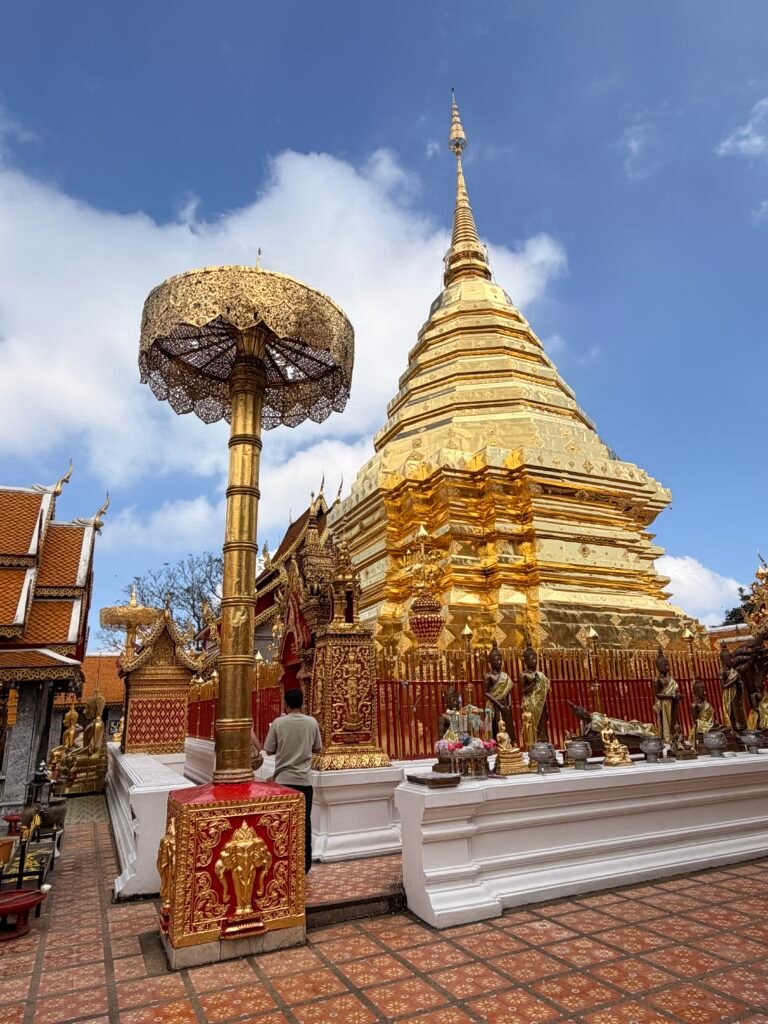
One of the most famous attractions in Chiang Mai is Wat Phra That Doi Suthep, a beautiful Buddhist temple sitting high in the mountains overlooking the city. If there’s one temple I’d recommend adding to your Chiang Mai itinerary, it’s this one.
The temple is known for its golden chedi, intricate details and panoramic views across Chiang Mai. Getting there is part of the experience, too, as the temple is located on Doi Suthep mountain, away from the busy streets of the city.
You can reach the temple by songthaew (the red shared taxis you’ll see all over Chiang Mai), hire a driver or join a guided tour. Once you arrive, you’ll need to climb the famous staircase lined with naga serpent sculptures, although alternative access may be available.
I’d recommend visiting earlier in the day if you want to avoid some of the crowds and enjoy the surroundings at a more relaxed pace. Remember to dress respectfully, with your shoulders and knees covered, as this is an important religious site.
If you’re planning a visit, I’ve put together a more detailed Doi Suthep Chiang Mai visitor guide covering what to expect and tips to help you plan your trip.
Top tip: Combine Doi Suthep with a visit to Wat Pha Lat, a peaceful forest temple tucked away on the mountainside. It makes a lovely addition to a day exploring Chiang Mai beyond the Old City.
2. Explore Chiang Mai Old City
If you’re wondering where to start your Chiang Mai adventure, the Old City is a great place to begin. Surrounded by the remains of the city’s historic moat and sections of the old city walls, this area is full of temples, little cafés, local restaurants and streets that are perfect for exploring on foot.
One of the best things about Chiang Mai Old City is that you don’t need to plan every minute of your day. You can spend the morning wandering between temples, stop for an iced coffee when you need a break, and stumble across little shops and food spots along the way.
Some of the temples worth looking out for include Wat Chedi Luang, known for its impressive ancient chedi, and Wat Phra Singh, famous for its traditional Lanna architecture. Both are great stops if you want to learn more about the city’s history and culture.
The Old City is also a convenient base for exploring Chiang Mai, with plenty of accommodation options to suit different budgets. Whether you’re backpacking around Thailand or looking for somewhere comfortable to spend a few nights, you’ll find lots of choice here.
Top tip: Give yourself time to explore without a strict itinerary. Some of the best parts of Chiang Mai are the little cafés, street food stalls and hidden corners you come across along the way.
3. Visit an Ethical Elephant Sanctuary
Visiting elephants is high on many people’s Thailand bucket lists, and Chiang Mai is one of the country’s best-known destinations for elephant experiences. However, it’s important to do your research before booking, as not every place advertising itself as an ethical sanctuary necessarily puts elephant welfare first.
Look for organisations that prioritise observation rather than entertainment. Ideally, elephants should be able to move freely, socialise naturally and choose whether to interact with visitors. Avoid experiences involving elephant riding, performances or forced bathing and close contact.
Many sanctuaries around Chiang Mai offer half-day or full-day visits, often including transport, meals and an opportunity to learn about the elephants and their individual histories.
Prices vary considerably depending on the organisation and the type of visit, so compare what’s included rather than choosing based on price alone. I’d also recommend checking recent independent reviews and looking for transparent information about how the elephants are cared for.
Top tip: You don’t need to touch or bathe an elephant to have a memorable experience. Watching these incredible animals behaving naturally can be rewarding in itself.
4. Browse Chiang Mai’s Night Markets
Chiang Mai is famous for its night markets, and they’re one of the best ways to experience the city after dark. From street food and handmade souvenirs to clothing, artwork and local crafts, there’s something for almost everyone.
Even if you’re travelling on a budget, the night markets are worth adding to your itinerary. You can wander around, soak up the atmosphere and try a few different Thai dishes without committing to an expensive restaurant meal.
You’ll find markets in different parts of the city throughout the week, so it’s worth checking which ones are running during your visit. Some are particularly good for shopping, while others are better known for their food stalls and lively atmosphere.
I’d recommend arriving hungry and taking your time browsing the food options. It’s a great opportunity to try local favourites, fresh fruit smoothies and Thai snacks that you might not have come across elsewhere.
Top tip: Bring cash, as many smaller vendors don’t accept cards. If you’re visiting during the busier months, expect crowds, particularly around the most popular stalls.
5. Don’t Miss the Sunday Night Market
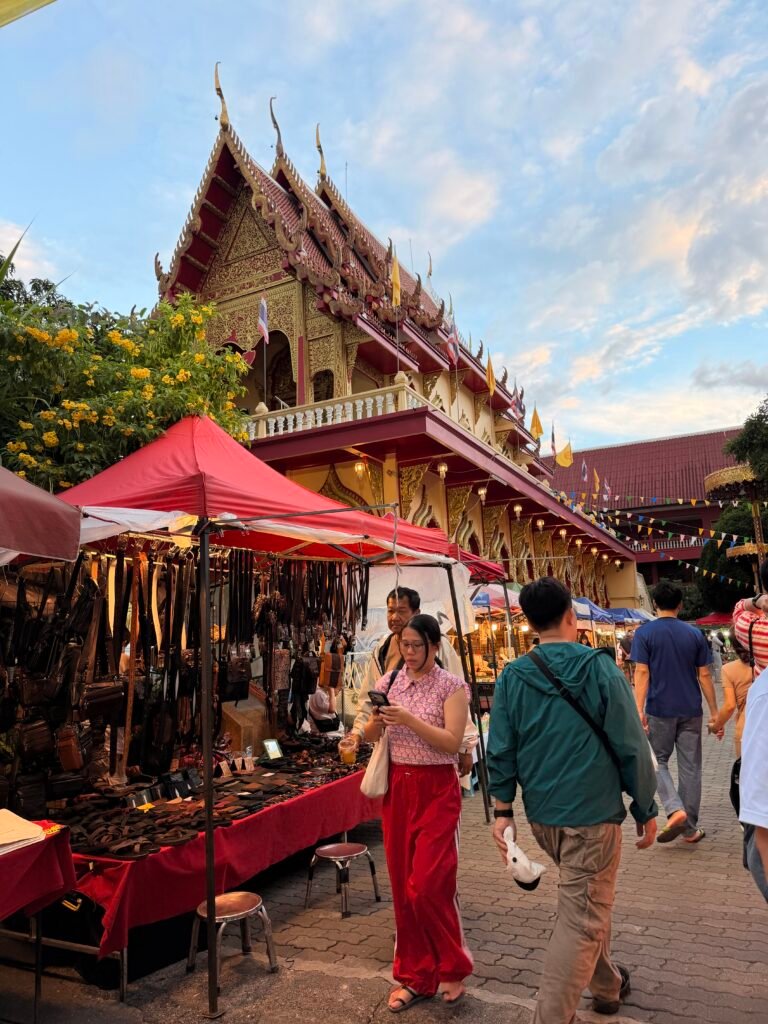
If your visit falls over a Sunday, make time for Chiang Mai’s Sunday Walking Street Market. Running along Ratchadamnoen Road through the Old City, it’s one of the city’s best-known markets and a highlight for many visitors.
The streets fill with stalls selling handmade jewellery, clothing, artwork, souvenirs and locally made crafts. You’ll also find plenty of street food, so it’s easy to turn an evening here into a relaxed dinner while you explore.
What makes the Sunday Night Market particularly enjoyable is the atmosphere. Alongside the shopping and food, you may come across street performers, musicians and small stalls selling things you won’t find in the usual souvenir shops.
It’s also a good place to pick up gifts or something a little different to remember your trip by. Just be prepared for crowds, as the market can get very busy, especially around the main walking streets.
When to visit: The market takes place on Sundays, usually from late afternoon into the evening. Exact hours and stall locations can vary, so check locally during your visit.
Top tip: Arrive earlier if you’d prefer to browse before the busiest crowds arrive, and leave plenty of time to wander. I’d avoid trying to rush through the entire market, as there’s a lot to see.
6. Chase Waterfalls Around Chiang Mai
One of the things I love about northern Thailand is how easy it is to combine city exploring with time in nature. If you fancy a break from temples, cafés and markets, visiting a waterfall around Chiang Mai is a great way to spend part of a day.
There are several waterfalls in the surrounding mountains and national parks, ranging from easy stops to places that involve a little more walking. They’re particularly appealing if you enjoy getting outdoors and seeing a different side of the region.
One of the best-known options is the Bua Tong Waterfall, often called the Sticky Waterfall. Its unusual limestone surface can provide grip underfoot, allowing visitors to climb sections of the waterfall when conditions are suitable. It’s a popular day trip from Chiang Mai and offers something a little different from a typical waterfall visit.
You could also look into the waterfalls around Doi Suthep–Pui National Park, depending on how much time you have and whether you’re hiring a driver or joining a tour.
Water levels and conditions vary with the season, so take care on wet surfaces and follow local guidance. Some waterfalls may be less impressive during dry periods, while heavy rain can make access unsafe.
Top tip: Bring comfortable shoes, drinking water and a change of clothes if you plan to get wet. Check transport options in advance, as some waterfall locations aren’t particularly convenient to reach using public transport alone.
7. Take a Day Trip Into the Mountains
While there’s plenty to keep you busy in the city itself, I’d recommend leaving some time in your Chiang Mai itinerary to explore the surrounding countryside.
The mountains around Chiang Mai offer cooler temperatures, scenic viewpoints, forest walks and small communities that feel a world away from the busy city streets. Depending on your interests, you could spend a day visiting temples, exploring national parks or stopping at cafés with views over the countryside.
Doi Suthep–Pui National Park is one of the most accessible options, particularly if you want to combine mountain scenery with a visit to Wat Phra That Doi Suthep. Further afield, Doi Inthanon National Park is another popular excursion, known for its mountain landscapes, waterfalls and nature trails.
Doi Inthanon is a longer trip, so I’d set aside most of the day rather than trying to squeeze it into a packed itinerary. You can visit independently with suitable transport or book a guided excursion from Chiang Mai.
Top tip: If you only have two or three days in Chiang Mai, prioritise the Old City, Doi Suthep and the night markets first. Add a mountain day trip if you have more time or particularly enjoy nature.
8. Try the Local Food in Chiang Mai
One of the best things to do in Chiang Mai is to try as much of the local food as you can. Northern Thailand has its own food specialities, and you’ll find plenty of opportunities to try something new, whether you’re eating at a small local restaurant, grabbing street food at a night market or stopping for lunch in the Old City.
If there’s one dish I’d recommend looking out for, it’s khao soi. This northern Thai curry noodle soup is made with a rich, creamy coconut curry broth, soft noodles and crispy noodles on top, usually served with chicken or beef alongside pickled mustard greens, shallots and lime. It’s one of the region’s signature dishes and well worth trying while you’re in Chiang Mai.
You’ll also find plenty of other Thai favourites, from pad Thai and mango sticky rice to grilled skewers, fresh fruit smoothies and spicy salads. Food markets are particularly good if you want to sample a few different dishes without spending too much.
One of the things that makes eating in Chiang Mai so appealing is that you don’t need to spend a fortune to enjoy a good meal. There are plenty of affordable local restaurants and street food stalls, making it easy to eat well even if you’re travelling around Thailand on a backpacker’s budget.
Top tip: If you’re unsure what to order, look around to see what the locals are eating or ask for a recommendation. And if you have any food allergies, make sure you explain them clearly before ordering, as sauces and curry pastes can contain unexpected ingredients.
If you want to take your foodie experience a step further, why not book a Thai cooking class in Chiang Mai? It’s a great way to learn more about the ingredients and flavours used in northern Thai cuisine, pick up some new cooking skills and enjoy making traditional dishes yourself.
You can browse Thai cooking classes in Chiang Mai on Viator and find an experience to fit your itinerary.
9. Visit Chiang Mai’s Cute Cafés
If there’s one thing Chiang Mai isn’t short of, it’s cafés. Whether you’re looking for somewhere to grab your morning coffee, a pretty spot for brunch or a café surrounded by greenery, you’ll find plenty of options dotted around the city.
Chiang Mai has a particularly good café culture, with everything from minimalist coffee shops in the Old City to creative cafés and garden hideaways in the surrounding neighbourhoods. It’s a lovely way to slow down between sightseeing, especially if you’re travelling around Thailand for a longer period and fancy a break from being constantly on the go.
The Nimman area is worth exploring if you enjoy speciality coffee, brunch spots and more modern cafés. Meanwhile, the Old City has plenty of places where you can stop for an iced latte after visiting the temples.
You’ll also find cafés that put just as much effort into their surroundings as their coffee, with tropical gardens, creative interiors and scenic backdrops that make them popular with photographers.
One of my favourite things about travelling in Thailand is how easy it is to find somewhere to sit down with a cold drink when the heat gets too much. Chiang Mai is no exception, and a café stop can be a welcome addition to a busy day of exploring.
Top tip: If visiting a particular café is high on your list, check its current opening hours before setting off. Some smaller cafés have limited opening days, and the most popular spots can get busy around brunch time.
10. Explore Nimman Road and the Nimmanhaemin Area
If you want to experience a more modern side of Chiang Mai, spend some time exploring Nimmanhaemin, usually shortened to Nimman. Located west of the Old City, this neighbourhood is known for its cafés, independent shops, restaurants and contemporary atmosphere.
Nimman has a slightly different feel from the historic centre. Instead of spending your day wandering between ancient temples, you can browse boutiques, stop for speciality coffee, enjoy brunch or explore the area’s creative spaces.
It’s particularly popular with digital nomads and longer-term travellers, so you’ll find plenty of cafés where people settle down with laptops alongside restaurants and shops catering to a mix of locals and visitors.
One of the easiest ways to enjoy Nimman is to leave yourself a few hours without a strict plan. Wander along the side streets, look for somewhere that catches your eye and take a break from the more traditional sightseeing spots.
The area is also a good option for an evening meal if you’re looking for something different from the street food stalls around the Old City.
Top tip: Combine Nimman with a café stop or a visit to nearby shopping centres if you want to escape the midday heat. It’s easy to spend half a day here without needing a packed itinerary.
11. Take a Trip to Doi Inthanon National Park
If you have a little longer in Chiang Mai, consider setting aside a day to visit Doi Inthanon National Park. Home to Thailand’s highest mountain, the park is known for its cooler climate, forest scenery, waterfalls and impressive mountain viewpoints.
It’s a great way to see a different side of northern Thailand beyond the city, particularly if you enjoy nature and scenic drives. Depending on your chosen route, a day trip can include stops at the famous King and Queen Pagodas, nature trails and waterfalls.
The park’s higher elevation means temperatures can be noticeably cooler than in Chiang Mai, especially early in the morning and during the cooler months. If you’re visiting around sunrise, take an extra layer rather than assuming Thailand’s tropical weather will be warm everywhere.
Doi Inthanon is a longer excursion, with the drive typically taking around 1.5–2 hours each way depending on traffic and your destination within the park. I’d recommend booking a tour or arranging suitable transport rather than trying to squeeze the trip into an already busy sightseeing day.
It’s particularly worthwhile if you’re spending four or more days in Chiang Mai and want to explore beyond the Old City.
Top tip: Start early to make the most of your day. Check trail access and weather conditions before travelling, and remember that mountain temperatures can be surprisingly chilly compared with the city.
12. Watch the Sunset Over Chiang Mai
After a busy day exploring Chiang Mai’s temples, markets and cafés, take some time to slow down and enjoy the city as the day comes to an end.
There are several places around Chiang Mai where you can enjoy an evening view, whether you prefer a mountain backdrop, a peaceful temple setting or somewhere to sit down with a drink.
Doi Suthep is a popular choice for panoramic views across the city, although you’ll need to plan your transport carefully if you’re heading up the mountain later in the day. You could also look for rooftop bars and restaurants around the city if you’d prefer to enjoy the evening without travelling far.
Another option is to spend sunset somewhere around the quieter edges of the city, where you can take a break from the crowds and enjoy the surrounding scenery.
One of the best things about travelling is remembering that you don’t have to fill every minute with activities. After a day of sightseeing, sometimes the nicest thing to do is find somewhere comfortable, watch the light change and enjoy a slower evening.
Top tip: Check sunset times during your visit and arrange your return transport in advance if you’re heading outside the city centre. If you’re visiting a temple, remember that it remains a religious site rather than simply a viewpoint.
Frequently Asked Questions About Chiang Mai
What are the best things to do in Chiang Mai?
Some of the best things to do in Chiang Mai include visiting Wat Phra That Doi Suthep, exploring the Old City temples, browsing the Sunday Walking Street Market, trying traditional northern Thai food and visiting an ethical elephant sanctuary. If you have time, I’d also recommend exploring the surrounding mountains and visiting the Sticky Waterfall.
How many days do you need in Chiang Mai?
I’d recommend spending at least three days in Chiang Mai to experience the main attractions without feeling too rushed. This gives you time to explore the Old City, visit Doi Suthep, enjoy the night markets and try some of the local food. If you want to visit Doi Inthanon National Park or take a cooking class, four or five days would give you more flexibility.
Is Chiang Mai worth visiting?
Absolutely! Chiang Mai offers a completely different experience from Thailand’s southern islands, with historic temples, mountain scenery, vibrant markets and an incredible food scene. It’s also a popular destination for backpackers thanks to its range of affordable accommodation, inexpensive food and activities to suit different budgets.
What is the best time to visit Chiang Mai?
The cooler, drier months from November to February are generally considered one of the best times to visit Chiang Mai, with more comfortable temperatures for sightseeing. March and April can be particularly affected by the burning season, when air quality may deteriorate significantly. The rainy season typically brings heavier showers, but you can still enjoy the city between downpours.
It’s worth checking air quality forecasts as well as the weather before travelling, particularly if you’re visiting in late winter or spring.
Is Chiang Mai cheap to visit?
Chiang Mai can be a very affordable destination, especially for backpackers. Street food, local restaurants and budget guesthouses can help keep costs down, while many temples and neighbourhoods can be explored without spending much. Paid activities such as elephant sanctuary visits, guided tours and day trips will increase your budget, so it’s worth deciding which experiences matter most to you.
What is Chiang Mai famous for?
Chiang Mai is famous for its historic Buddhist temples, northern Thai cuisine, night markets, mountain scenery and traditional Lanna culture. It’s also well known for its surrounding national parks, elephant sanctuaries and annual Yi Peng and Loy Krathong lantern celebrations.
Is Chiang Mai walkable?
The Old City is relatively easy to explore on foot, particularly if you want to visit its temples, cafés and restaurants. However, some attractions are further apart, and places such as Doi Suthep and the Sticky Waterfall require additional transport. Songthaews, ride-hailing services, taxis and organised tours can help you get around.
What should you not miss in Chiang Mai?
If you’re short on time, prioritise Wat Phra That Doi Suthep, Chiang Mai Old City, the Sunday Walking Street Market if you’re visiting on a Sunday, and trying khao soi, the region’s famous northern Thai curry noodle soup. If you have an extra day, consider a nature trip to the Sticky Waterfall or Doi Inthanon National Park.
Is Chiang Mai safe for tourists?
Chiang Mai is generally considered a welcoming destination for visitors, but it’s still important to take normal travel precautions. Keep an eye on your belongings in crowded markets, use reputable transport providers, take care when crossing roads and follow local advice when visiting mountains or waterfalls. If you’re renting a scooter, make sure you have the appropriate licence, insurance and safety equipment.
Where should you stay in Chiang Mai?
The Old City is a great choice for first-time visitors who want to be close to temples, cafés, restaurants and cultural attractions. Nimman is popular for modern cafés, shopping and nightlife, while the Night Bazaar area can be convenient for evening food markets and shopping. The best area depends on your budget and whether you prefer sightseeing, nightlife or a quieter base.