
Best Things to Do in Vientiane, Laos: The Ultimate Travel Guide
Before visiting Vientiane, we had heard so many travellers say that they felt there wasn’t enough to do and that they quickly got bored. Well, we can absolutely say that wasn’t our experience! We had so much fun exploring Vientiane and discovering everything the city had to offer. From beautiful temples and interesting cultural attractions to bustling markets and riverside sunsets, we found plenty to keep us busy.
One thing we particularly loved was the change of pace. Having spent time exploring other parts of Laos, Vientiane felt much more like a proper city. It had a completely different atmosphere, with busy streets, plenty of places to eat and a real buzz about it. We really enjoyed experiencing this side of Laos and think Vientiane deserves more attention than it often gets.
Whether you’re visiting for a couple of days or simply passing through on your Laos travels, there is more to Vientiane than you might expect. In this guide, we’re sharing the best things to do in Vientiane, along with our tips to help you make the most of your visit.
The Best Things to Do in Vientiane, Laos
There are more things to do in Vientiane than you might initially expect. While it may not have the same famous attractions or tourist hotspots as somewhere like Luang Prabang, we found plenty to keep us entertained during our visit. From exploring golden temples and impressive monuments to wandering through local markets and enjoying beautiful sunsets along the Mekong River, there is a great mix of history, culture and everyday city life to discover.
Whether you enjoy visiting cultural sights, learning about Laos’ history, trying local food or simply exploring somewhere new at your own pace, Vientiane has something to offer. Here are the best things to do in Vientiane that we think are worth adding to your itinerary.
Looking for somewhere to stay in Vientiane?
💰Budget Friendly: Khampiane Hotel
💰💰Mid Range: The Green Hotel Vientiane
💰💰💰Treat Yourself: Amari Vientiane
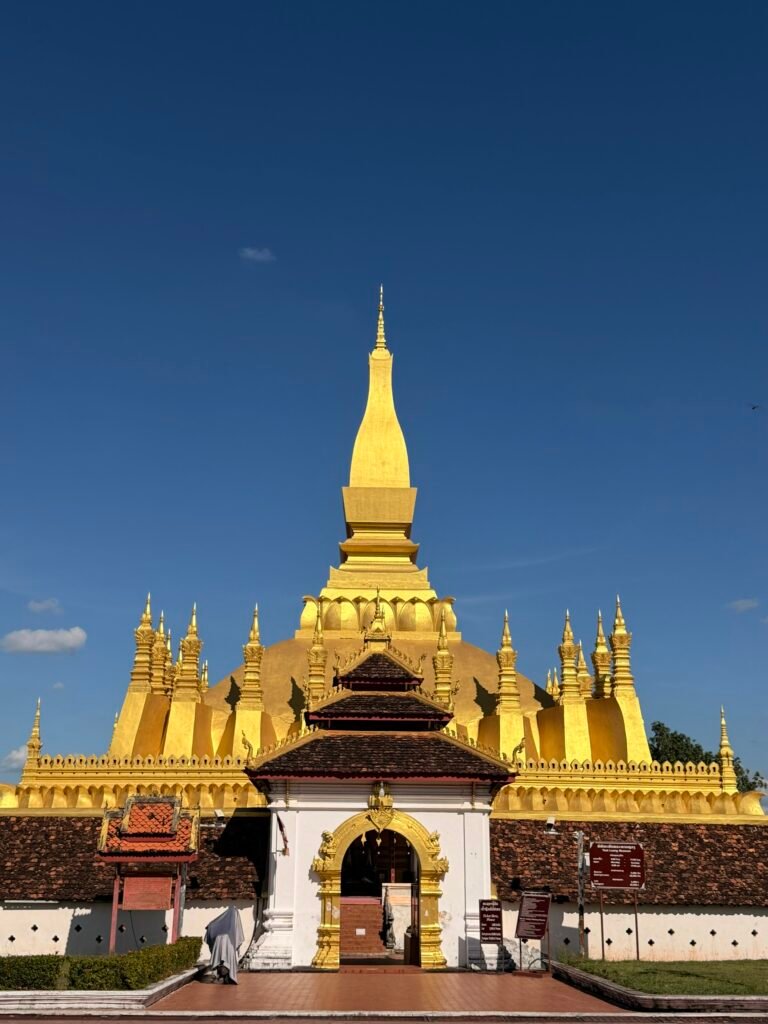
1. Visit Pha That Luang, Vientiane’s Most Important Buddhist Monument
No visit to Vientiane would be complete without seeing Pha That Luang. Often considered the most important national monument in Laos, this impressive golden stupa is one of the city’s most recognisable landmarks. It is also an important symbol of Lao Buddhism and national identity.
The monument dates back centuries, although it has been rebuilt and restored several times throughout its history. Its striking golden exterior really stands out, particularly on a sunny day when the whole structure seems to glow. We loved taking our time wandering around the complex, admiring the architecture and enjoying the peaceful atmosphere.
Pha That Luang is located slightly outside the main city centre, so you will probably want to take a tuk-tuk or taxi to get there. Make sure you allow some time to explore the surrounding grounds rather than simply stopping for a quick photograph.
Visitor information:
- Location: Approximately 4 km from central Vientiane.
- Entrance fee: Check the current admission price locally.
- Time needed: Around 30–60 minutes.
- Tip: Dress respectfully, covering your shoulders and knees.
2. Explore Patuxai Victory Monument
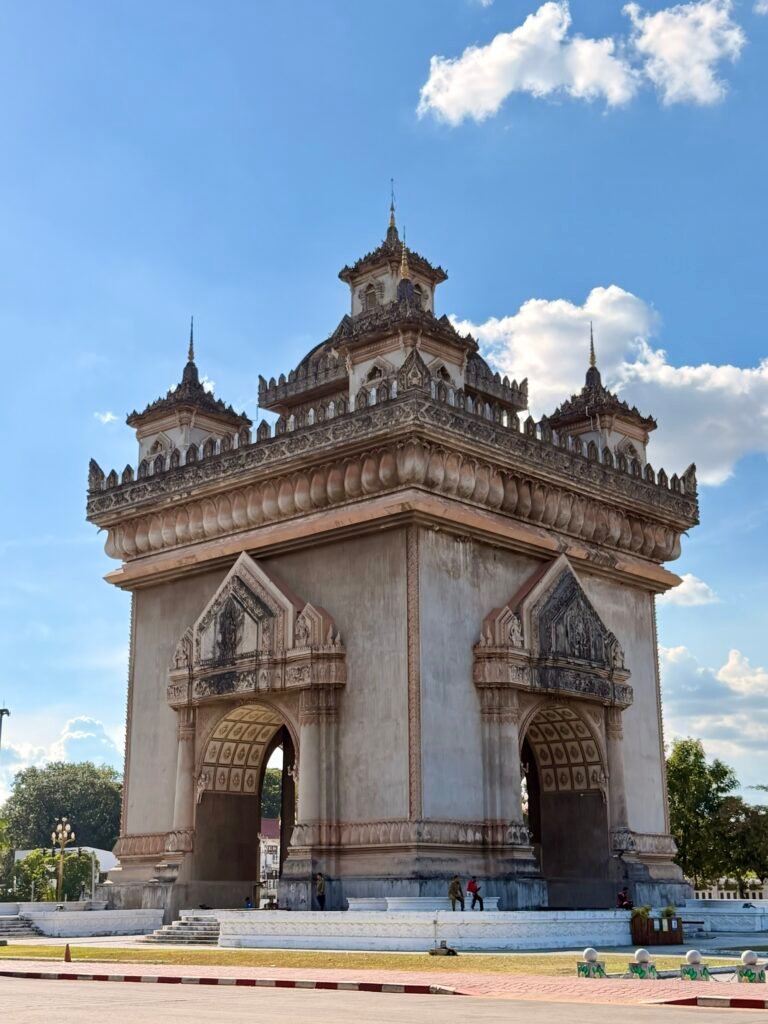
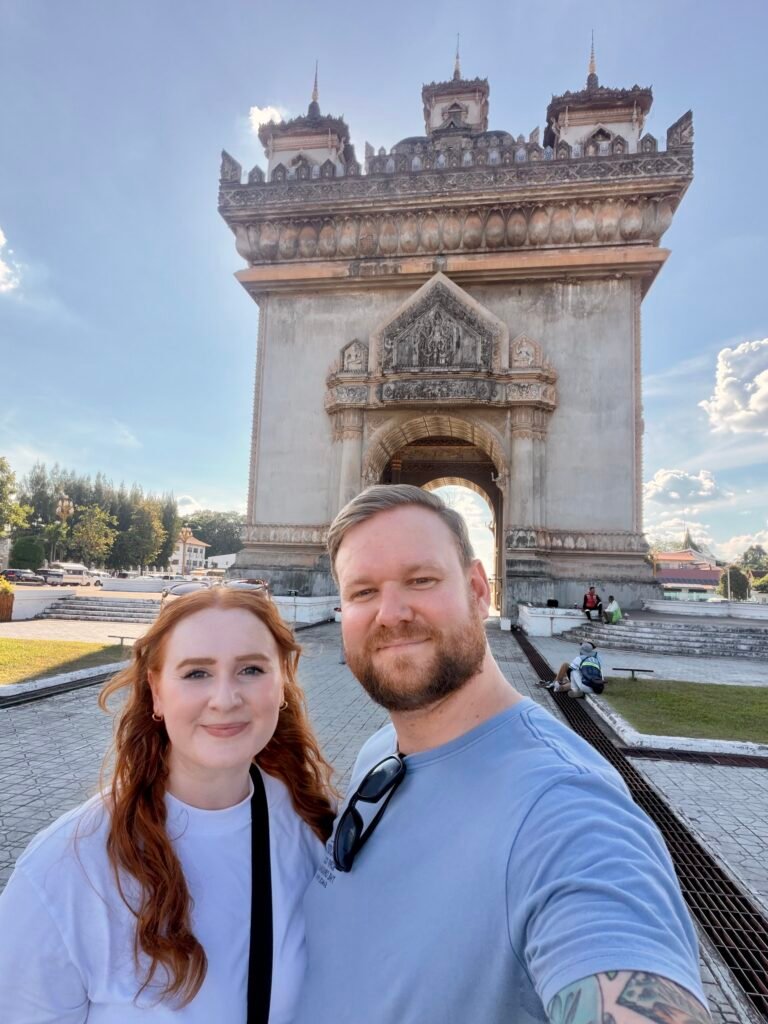
Another of Vientiane’s most recognisable landmarks is Patuxai Victory Monument. Often nicknamed the Arc de Triomphe of Vientiane, this impressive structure was built to commemorate those who lost their lives fighting for independence from France.
Although it might look familiar from the outside, Patuxai has a distinctly Lao design. Look closely and you will notice traditional Buddhist-inspired details, intricate carvings and decorative motifs covering the monument. We found this a much bigger highlight than we first thought! Make sure to look up above on the ceiling!
One of the best things to do here is climb to the upper levels for panoramic views across Vientiane. From the top, you can look out over the city’s streets and surrounding neighbourhoods. It is a particularly nice spot to appreciate just how much of a city atmosphere Vientiane has compared with some of the other places we visited in Laos.
The monument sits at the end of a large boulevard with landscaped gardens and fountains surrounding it. Even if you don’t fancy climbing to the top, it is worth stopping by to admire the architecture and take a few photographs.
Visitor information:
- Location: Patuxai Park, central Vientiane.
- Entrance fee: There may be a small fee to access the upper levels.
- Time needed: Around 30–45 minutes.
- Tip: Visit earlier in the day to avoid the strongest afternoon heat.
3. Discover the Beautiful Wat Si Saket
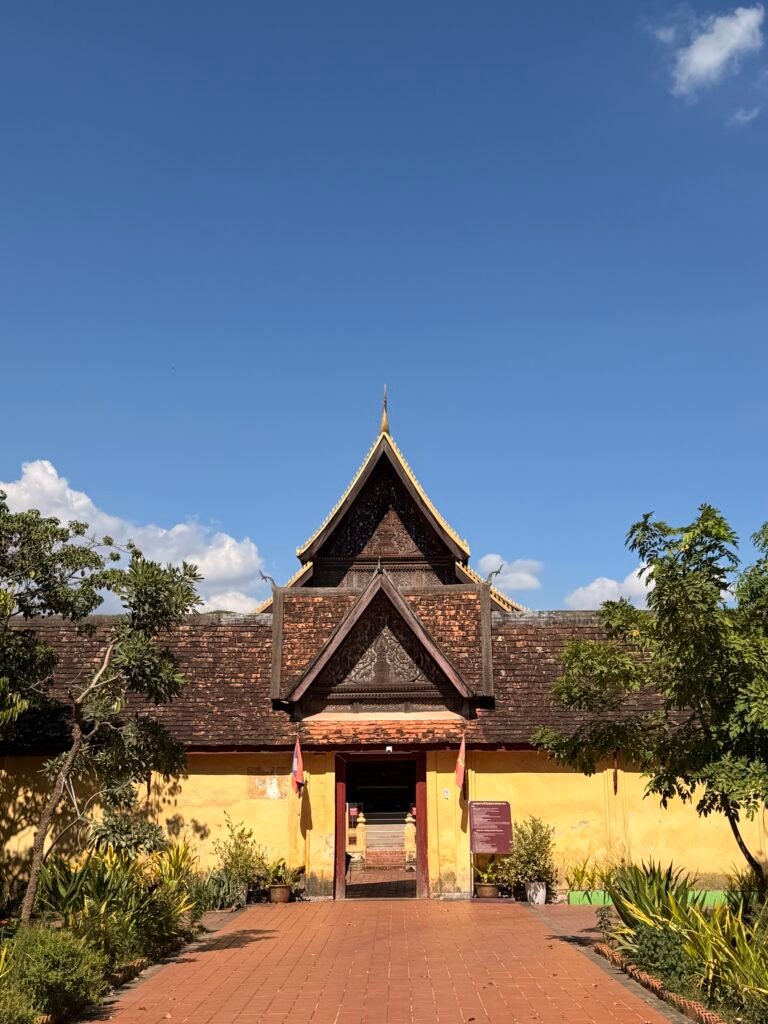
If you enjoy visiting temples, Wat Si Saket is another attraction worth adding to your Vientiane itinerary. Built in the early 19th century, it is widely regarded as one of the oldest surviving temples in the city and is particularly interesting because of its architecture and thousands of Buddha images.
What makes Wat Si Saket stand out is the collection of small niches lining its cloister walls. These contain thousands of miniature Buddha statues, alongside larger seated Buddha images. Walking around the covered galleries and seeing so many figures arranged together is quite something.
The temple also has a beautiful central courtyard and traditional architecture, making it a lovely place to explore at a slower pace. We would recommend taking your time here and looking at some of the smaller details rather than rushing through.
Wat Si Saket is conveniently located in the city centre, making it easy to combine with several other attractions nearby. It is also directly across from Haw Phra Kaew, so you can easily visit both during the same outing.
Visitor information:
- Location: Lan Xang Avenue, central Vientiane.
- Entrance fee: Check locally for the latest ticket price.
- Time needed: Around 30–45 minutes.
- Tip: Dress modestly and remember to remove your shoes where required.
4. Visit Haw Phra Kaew (Ho Phra Keo)
Located directly opposite Wat Si Saket, Haw Phra Kaew is another important cultural attraction in Vientiane. Originally built in the 16th century as a royal temple, it once housed the famous Emerald Buddha, which is now kept in Bangkok’s Wat Phra Kaew.
Although the original building was destroyed during the Siamese invasion in the 19th century, it was later reconstructed and now operates as a museum. Inside, you can find a collection of Buddhist artefacts, religious artwork and traditional Lao sculptures.
We would recommend combining a visit to Haw Phra Kaew with Wat Si Saket, as the two attractions are just across the road from one another. Both offer a fascinating insight into Laos’ religious and cultural history.
The building itself is also worth admiring, with its traditional Lao architecture, ornate details and peaceful gardens. Even if you aren’t particularly interested in museums, it is a lovely place to spend a little time while exploring the city centre.
Visitor information:
- Location: Setthathirath Road, central Vientiane.
- Entrance fee: Check locally for the latest admission price.
- Time needed: Around 30–45 minutes.
- Tip: Combine it with Wat Si Saket to make the most of your visit.
5. Take a Trip to Buddha Park (Xieng Khuan)
One of the most unusual attractions in Vientiane is Buddha Park, also known locally as Xieng Khuan. Located around 25 km outside the city centre, this fascinating sculpture park is home to more than 200 Buddhist and Hindu statues.
Unlike the traditional temples you will find around Vientiane, Buddha Park is a little different. The grounds are filled with enormous concrete sculptures depicting Buddhist and Hindu deities, mythical creatures and religious figures. Some are incredibly detailed, while others are quite unusual and even slightly surreal.
One of the most recognisable structures is a large pumpkin-shaped sculpture that you can climb inside. There are different levels representing heaven, earth and hell, with various sculptures and figures to discover as you make your way through it. You can also climb to the top for a different perspective across the park.
Buddha Park is a little further out than most of Vientiane’s attractions, but we think it is well worth including if you have enough time. It offers something completely different from the city’s temples and monuments and makes for an interesting half-day trip.
Visitor information:
- Location: Around 25 km southeast of central Vientiane.
- Entrance fee: A small admission fee applies.
- Time needed: Around 1–2 hours.
- Tip: Take water with you and try to visit earlier in the day, as there is limited shade throughout the park.
6. Learn About Laos at the COPE Visitor Centre
A visit to the COPE Visitor Centre is one of the most educational and thought-provoking things to do in Vientiane. It offers an insight into one of the most difficult periods in Laos’ history and the lasting impact it continues to have on local communities.
Laos is one of the most heavily bombed countries in the world per capita. During the Vietnam War era, millions of unexploded bombs were dropped across the country. Many of these never detonated and remain buried in the ground, creating a serious danger for people living in affected areas today.
COPE stands for the Cooperative Orthotic and Prosthetic Enterprise. The organisation supports people who have been injured by unexploded ordnance and other causes, providing prosthetic limbs, rehabilitation services and other essential care.
At the visitor centre, you can learn about the history of unexploded ordnance in Laos, hear personal stories and understand the work being done to support survivors. There are also displays showing the different types of bombs and the impact they have had on communities.
It is not necessarily the most light-hearted attraction in Vientiane, but it is an incredibly worthwhile visit. We think understanding this part of Laos’ history gives you a much greater appreciation of the country and the challenges many people still face.
Visitor information:
- Location: Near the city centre, close to the main hospital area.
- Entrance fee: The visitor centre is free to enter, although donations are welcome.
- Time needed: Around 1 hour.
- Tip: Consider making a donation to support COPE’s ongoing work.
7. Wander Around the Mekong Riverside Night Market
If you enjoy exploring local markets, make sure you leave an evening free to visit the Mekong Riverside Night Market. Set along the riverfront, this is one of the liveliest places in Vientiane after the sun goes down.
The market has rows of stalls selling everything from clothing and souvenirs to accessories, household items and local snacks. It is a fun place to wander around, browse the different stalls and get a feel for everyday life in the city.
There are also plenty of food options nearby, making it a good place to grab something inexpensive for dinner. You can find local Lao dishes, grilled food, fresh fruit and various street food snacks.
One of the things we particularly enjoyed about Vientiane was how much more of a city atmosphere it had compared with other places we had visited in Laos. The night market is a great example of this, with plenty of people out enjoying the evening and a real buzz along the riverfront.
Even if you aren’t planning to buy anything, it is worth visiting just to soak up the atmosphere and enjoy a relaxed evening by the Mekong.
Visitor information:
- Location: Along the Mekong River waterfront.
- Opening hours: Generally operates in the late afternoon and evening.
- Entrance fee: Free.
- Time needed: Around 1 hour.
- Tip: Bring some cash in Lao kip, as many stalls do not accept cards.
8. Watch the Sunset Along the Mekong River
Watching the sunset over the Mekong River is one of the simplest but loveliest experiences in Vientiane. After spending the day exploring temples and monuments, the riverfront is the perfect place to slow down and enjoy a more relaxed side of the city.
As the afternoon turns into evening, the riverside becomes a popular gathering spot. Locals and visitors head out for walks, exercise, socialising and, of course, watching the sun disappear over the river.
There are plenty of places to sit and enjoy the views, as well as restaurants and bars where you can grab a drink or something to eat. The riverside promenade is particularly lively around sunset, and it is easy to spend longer here than you originally planned.
We would recommend arriving a little before sunset so you have time to find a good spot and watch the colours change across the sky. You can then continue your evening at the nearby night market, which makes the two activities easy to combine.
If you’re looking for something enjoyable to do in Vientiane that doesn’t cost anything, this is definitely worth adding to your itinerary.
Visitor information:
- Location: Mekong River waterfront, central Vientiane.
- Entrance fee: Free.
- Time needed: Around 30–60 minutes.
- Tip: Arrive shortly before sunset and stay afterwards to explore the night market.
9. Explore the Vientiane Morning Market (Talat Sao)
If you fancy seeing a different side of Vientiane, Talat Sao Morning Market is worth a visit. Located in the heart of the city, this large indoor market is a popular shopping spot for locals and visitors alike.
Despite its name, the market is generally open throughout the day, so you don’t necessarily need to get up early to explore it. Inside, you’ll find a huge variety of stalls selling clothing, shoes, bags, jewellery, electronics, household goods and traditional Lao products.
It is a very different experience from the Mekong Riverside Night Market. Rather than being focused on evening food stalls and souvenirs, Talat Sao feels much more like a traditional shopping market where locals come to pick up everyday essentials.
Even if you’re not planning on buying anything, it is an interesting place to wander around and get a glimpse of everyday life in the city. There is also an indoor shopping mall nearby, making this a good stop if you need a break from the heat.
Visitor information:
- Location: Near the Patuxai end of Lan Xang Avenue, central Vientiane.
- Opening hours: Generally open daily, although individual stalls may have different hours.
- Entrance fee: Free.
- Time needed: Around 30–60 minutes.
- Tip: Bring cash and don’t be afraid to politely negotiate prices when shopping.
10. Visit Wat Si Luang
Wat Si Luang is another beautiful temple worth visiting while exploring Vientiane. Although it might not be as famous as Pha That Luang or Wat Si Saket, it is one of the city’s most important religious sites and has a particularly special place in local culture.
The temple is believed to be home to the city’s protective spirit and is an important place of worship for local residents. As a result, it often feels much busier with people coming to pray, make offerings and take part in religious ceremonies.
Inside, you can admire the colourful decorations, golden Buddha images and traditional Lao architecture. There is also an interesting local legend surrounding the temple’s origins, which adds another layer of history to a visit.
One of the things that makes Wat Si Luang interesting is the opportunity to see local religious traditions taking place rather than simply viewing a historic building. If you visit respectfully and take your time, you may get a glimpse of how important the temple remains to everyday life in Vientiane.
It is a relatively easy attraction to include in your itinerary and can be combined with other temples and sights around the city.
Visitor information:
- Location: Setthathirath Road, central Vientiane.
- Entrance fee: Free, although donations are appreciated.
- Time needed: Around 20–30 minutes.
- Tip: Dress modestly and be respectful if people are praying or making offerings.
How Many Days Do You Need in Vientiane?
We would recommend spending 2–3 days in Vientiane to make the most of your visit. This gives you enough time to explore the city’s main attractions, visit some of its beautiful temples, discover the local markets and take a trip out to Buddha Park without feeling like you need to cram everything into one day.
Although Vientiane is often overlooked by travellers heading to other parts of Laos, we found there was plenty to keep us entertained. Having a couple of days also means you can enjoy the city at a more relaxed pace, stopping for local food, wandering along the Mekong waterfront and taking in the atmosphere rather than rushing between attractions.
If you only have one day, you can still see some of the main highlights, including Pha That Luang, Patuxai Victory Monument, Wat Si Saket and the riverside night market. However, we would ideally allow an extra day if you want to visit Buddha Park, explore more of the city’s temples and experience Vientiane beyond its main tourist sights.
For us, 2–3 days is the sweet spot. It gives you enough time to appreciate what the city has to offer without feeling like you have to rush through everything.
Is Vientiane Worth Visiting?
Absolutely! We really loved our time in Vientiane and honestly found there was far more to see and do than we had been led to believe. Before arriving, we had heard plenty of travellers say they found the city boring or struggled to fill their time, but that certainly wasn’t our experience. Between the beautiful temples, interesting cultural attractions, local markets and lively Mekong waterfront, we had plenty to keep us busy.
We also really enjoyed the change of atmosphere. Having explored other parts of Laos, Vientiane felt much more like a traditional city, with busy streets, plenty of restaurants and a completely different pace of life. It was nice to experience another side of the country rather than simply moving between smaller towns and tourist hotspots.
Vientiane was also a convenient final stop on our Laos travels, as we were flying home from the airport here. This made it a practical place to finish our trip while still giving us the opportunity to explore somewhere new.
If you’re planning a trip around Laos, we would definitely recommend including Vientiane in your itinerary. Give yourself 2–3 days, keep an open mind and don’t let other travellers convince you that there is nothing to do. We think the city deserves far more attention than it gets!
Frequently Asked Questions About Visiting Vientiane
Is Vientiane worth visiting?
Absolutely! Vientiane has plenty to offer, from beautiful Buddhist temples and historic monuments to interesting museums, local markets and riverside sunsets. We would recommend spending 2–3 days exploring the city.
How many days do you need in Vientiane?
We recommend spending 2–3 days in Vientiane. This gives you enough time to visit the main attractions, explore the temples, enjoy the night market and take a trip to Buddha Park without rushing.
What is Vientiane famous for?
Vientiane is best known for its golden Pha That Luang stupa, Patuxai Victory Monument, beautiful Buddhist temples and its location along the Mekong River. It is also the capital and largest city of Laos.
Is Vientiane expensive to visit?
No, Vientiane is generally an affordable destination, particularly compared with many capital cities elsewhere in Southeast Asia. You can find budget-friendly accommodation, inexpensive local restaurants and plenty of attractions that are free or cost very little to visit.
Is Vientiane safe for tourists?
Vientiane is generally considered a safe city for tourists. As with anywhere, it is sensible to take normal precautions, keep an eye on your belongings in busy markets and avoid walking alone in poorly lit areas late at night.
Can you explore Vientiane on foot?
Yes, many of the main attractions in central Vientiane are within walking distance of one another. However, some sights, particularly Pha That Luang and Buddha Park, are further away. You will likely need a tuk-tuk, taxi or other transport to reach these.
What is the best time to visit Vientiane?
The best time to visit Vientiane is generally during the dry season, from November to February. Temperatures are usually more comfortable and there is less rainfall, making it easier to explore the city and visit outdoor attractions.
Is Buddha Park worth visiting?
Yes! Buddha Park is one of the most unusual attractions in Vientiane and is well worth visiting if you have enough time. It is home to more than 200 Buddhist and Hindu sculptures and offers something quite different from the city’s traditional temples.
How do you get from Vientiane Airport to the city centre?
Wattay International Airport is located just a few kilometres from central Vientiane. You can reach the city centre by airport taxi, shuttle bus or pre-arranged hotel transfer. The journey is relatively short, depending on traffic.
Can you visit Vientiane as a day trip?
You can see some of Vientiane’s main attractions in one day, but we wouldn’t recommend it if you have more time available. Spending 2–3 days gives you a much better opportunity to explore the city at a relaxed pace and visit places such as Buddha Park.