
Is Bangkok Worth Visiting in 2026? An Honest Guide
Short answer: yes, Bangkok is worth visiting — but not for the reasons most guides tell you, and not if you’re expecting a clean, easy trip. It’s loud, hot, and occasionally overwhelming. It’s also one of the best cities in the world for the price of a plane ticket, if you know what you’re walking into. I spent one week there in 2026, and this is the honest version — what’s actually great, what’s overrated, and who should probably skip it.
Who Bangkok Is For and Who Should Skip
You’ll probably love it if:
- You want incredible food without a fine-dining budget — street stalls and Michelin-listed spots sit blocks apart, sometimes the same price.
- You can handle heat, noise, and a little chaos without needing everything to feel curated.
- You’re using Bangkok as a base — cheap flights to Chiang Mai, the islands, or Cambodia make it a genuinely useful hub, not just a destination.
- You like cities that don’t perform “authenticity” for tourists — Bangkok isn’t precious about itself, and that’s part of the appeal.
- You want a lot of value per dollar: hotels, massages, transport, and meals all punch above what you’d pay elsewhere for the same quality.
You should probably skip it if:
- You’re heat-sensitive or traveling with someone who is — March through May is brutal, and even “cool season” isn’t cool.
- You want a slow, quiet trip. Bangkok rewards people who can move with the chaos, not fight it.
- You’ve already done Bangkok twice and are chasing something new — there are better second-and-third-trip cities in Southeast Asia.
- You’re hoping for a clean, walkable, first-world-infrastructure kind of city. It’s not that, and pretending otherwise sets you up to be annoyed the whole trip.
- Traffic genuinely ruins your mood. It will eat real hours of your day if you don’t plan around it.
The Real Downsides (and How to Beat Them)
The heat will wreck your first day if you let it.
Bangkok isn’t just hot — it’s the kind of humid that makes 9am feel like a mistake. Most first-timers try to sightsee like they’re in Europe: full days, lots of walking, back-to-back stops. That’s how you end up wrecked by noon. Fix: front-load outdoor stuff for early morning or after 4pm, and build a genuine midday break into every single day — not a “maybe I’ll rest,” an actual planned stop, ideally somewhere air-conditioned with food.
Traffic eats hours you didn’t budget for.
A 20-minute Google Maps estimate can turn into 50 minutes of gridlock, especially during rush hour or rain. Fix: use the BTS Skytrain and MRT for anything along their routes — they’re fast, cheap, and immune to traffic. Save cars and taxis for places the trains don’t reach, and never schedule anything tight against a taxi ride.
Tourist-trap fatigue is real, and it’s not paranoia.
Certain temples, markets, and “cultural experiences” exist almost entirely to extract money from people on their first trip — inflated prices, staged photo ops, aggressive upselling. Fix: it’s fine to do a couple of the big-name spots (they’re famous for a reason), just go in knowing which ones and cap your time there. Don’t build an entire itinerary around them.
Scams target exactly the moment you’re most vulnerable.
Tuk-tuk drivers offering suspiciously cheap “tours,” gem shop detours, closed-temple scams — they cluster around major tourist sites and prey on jet-lagged, disoriented first days. Fix: know the two or three most common scams before you land (a five-minute search covers it), and treat any unprompted “helpful” stranger near a major landmark with default skepticism.
Pollution and air quality dip hard in burning season.
Roughly January through April, air quality can get genuinely bad — not just hazy-photo bad, but affecting-your-lungs bad. Fix: check the AQI before you go, and if you’re sensitive to air quality, shift your trip outside that window rather than gambling on it. We visited in August and found the air quality to be ok overall.
What Actually Makes It Worth It
Now for the reason I’m writing this in the first place – what makes Bangkok worth the visit in my opinion.
The food is worth the trip on its own.
This isn’t hyperbole — Bangkok might be the best food city on the planet for the money. Street stalls that have been perfecting one dish for decades sit next to Michelin-starred restaurants, and the gap in price is bigger than the gap in quality. You can eat incredibly well for a few pounds a meal, and the ceiling — when you want to splurge — is still cheap by Western standards. This is the thing that makes people come back.
The temples earn the hype, if you pick the right ones.
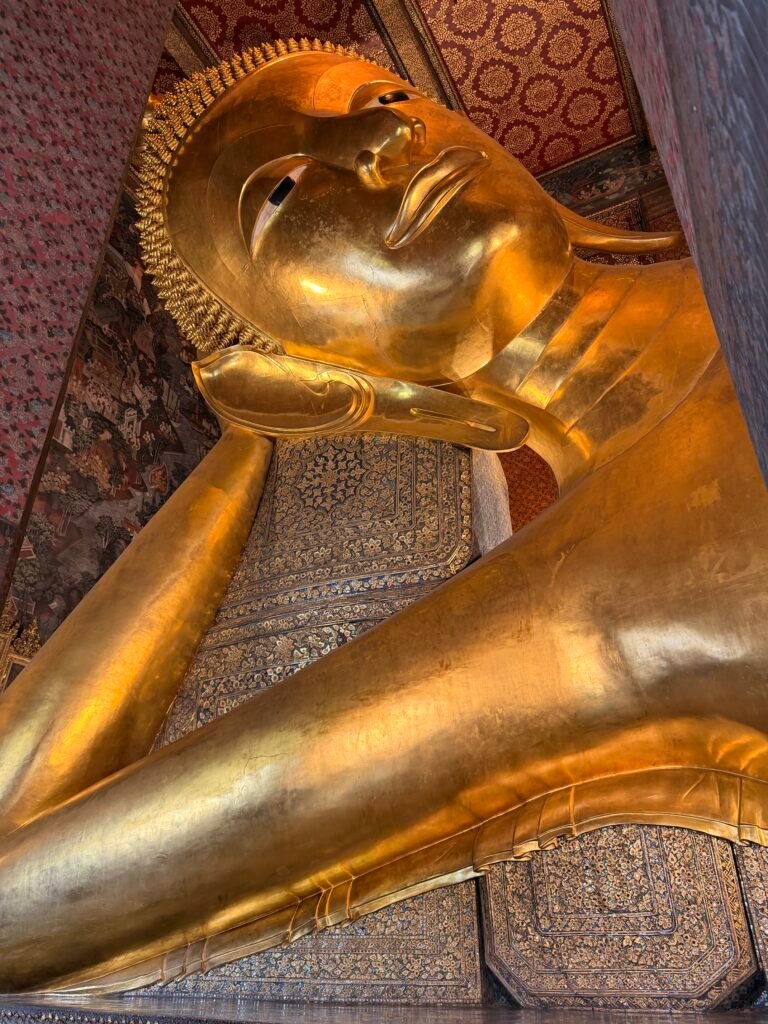
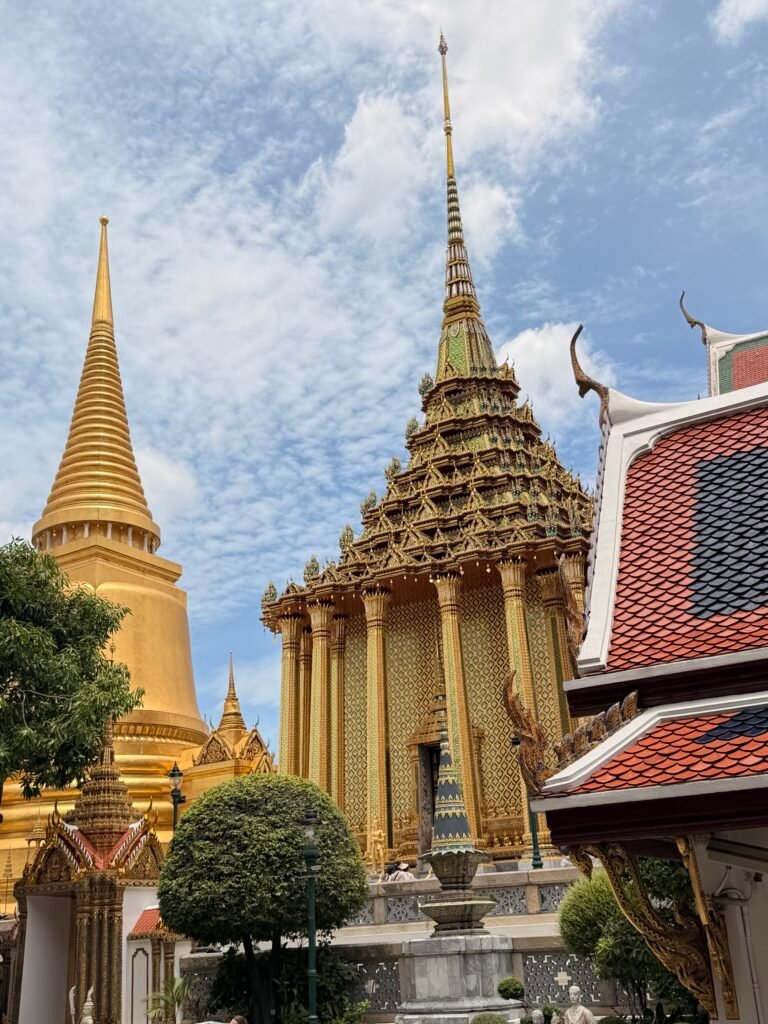
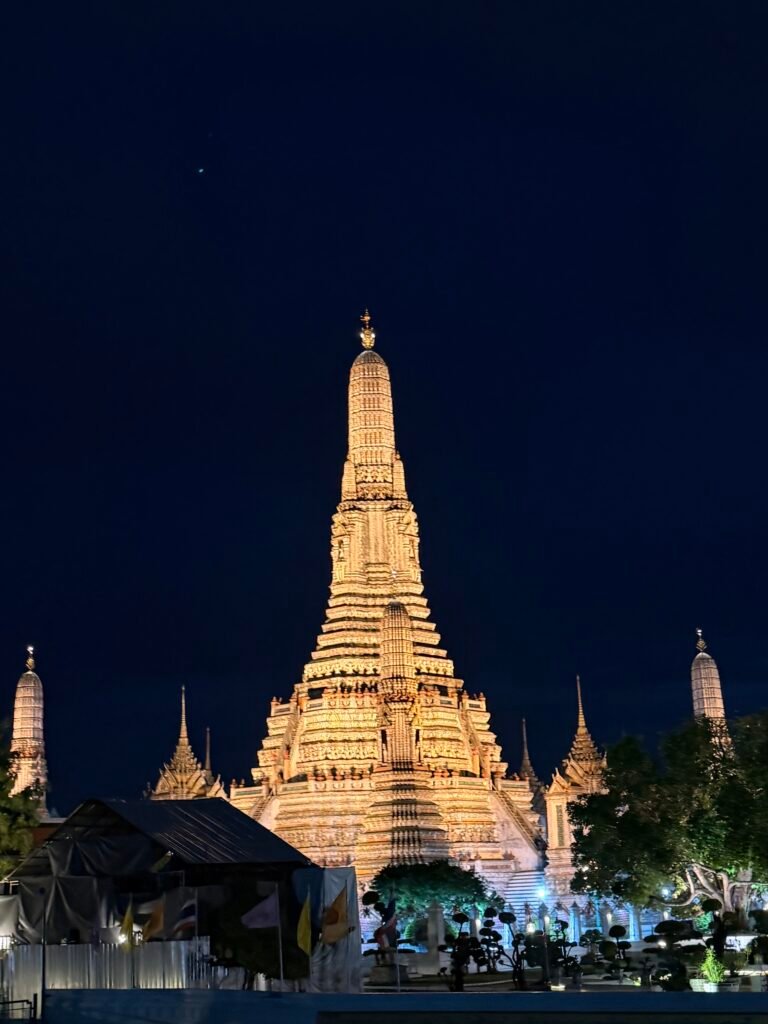
Wat Arun at sunset, the Grand Palace, Wat Pho’s reclining Buddha — these aren’t tourist traps despite being on every list. They’re genuinely stunning, and no photo really prepares you for standing in front of them. The trick is going early (before 9am) to beat both the crowds and the heat, and not trying to cram all of them into one day.
Top Tip: Take the water taxi boat at sunset which passes Wat Arun. This is a cheap and affordable way to see the temple lit up at night as well as enjoy the sunset. The water taxi costs 40 Thai Baht.
The affordability changes what kind of trip you can have.
This isn’t just “it’s cheap” — it’s that the cheapness buys you a better trip, not just a budget one. Massages, private drivers, boutique hotel upgrades, extra meals out — things that would be splurges elsewhere are just normal choices here. That changes the texture of the trip: less rationing, more saying yes. From 60p boat noodles and 30p train journeys it really is an affordable city.
It’s a hub, not just a destination.
Bangkok’s real value for a lot of trips isn’t just what’s in the city — it’s what it makes possible around it. Cheap regional flights put you within a couple hours of the islands, Chiang Mai’s mountains, Cambodia’s temples, or Vietnam. That turns a single-destination trip into a multi-country one without blowing the budget on long-haul flights between each stop. Even if you never leave the city, Suvarnabhumi and Don Mueang airports are two of the best-connected in Southeast Asia — which matters more than people think when they’re planning a longer trip.
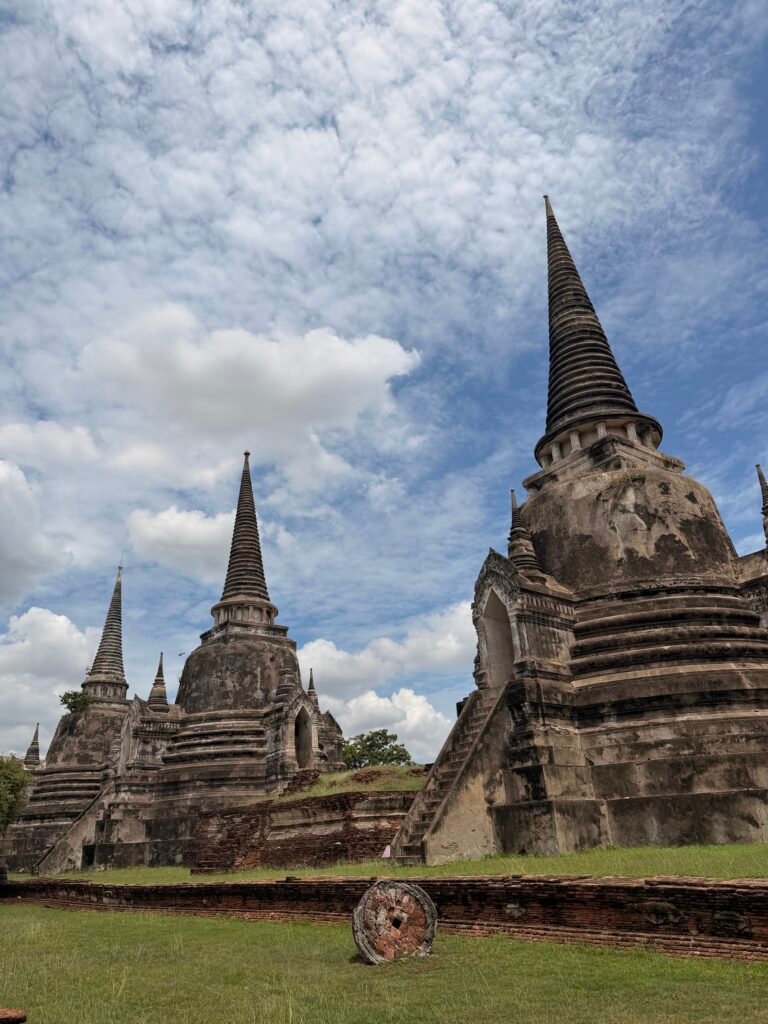
Easy day trips make Bangkok stretch further than most cities its size. You don’t need to leave the region to get variety — Ayutthaya, the old capital, is a straightforward train ride away and shows you a completely different side of Thailand: crumbling temple ruins instead of glass towers. We paid 30p each for the train there, which tells you everything about how low the barrier is to doing this. No tour booking, no negotiating a driver, no real planning — just show up at the station. It’s the kind of trip that makes “one city” feel like at least two.
Practical Logistics
As with any trip some forward planning goes a long way. Here are some practical logistics to consider when planning your trip to Bangkok.
Best time to visit
November through February is the sweet spot — cooler (relatively), drier, and outside burning season. March through May is brutal heat; June through October is rainy season, which means short, heavy downpours more than washed-out days, but still worth planning around if you’re heat-sensitive. We visited in August and experienced some heavy rain showers however these only tended to last an hour or so in the evenings.
Rough daily budget
Budget travelers can comfortably do $30-40/day — hostel or budget hotel, street food, BTS/MRT transport, a couple of paid attractions. Mid-range comfortably lands $70-100/day with nicer hotels, some restaurant meals, and the occasional taxi. Both ranges buy noticeably more than the same money would in most Western cities — which loops back to the affordability point from earlier.
Where to stay
Sukhumvit is the easiest first-timer base — BTS access, tons of food options, central to most things. Old Town (Rattanakosin) puts you closer to the temples but with less nightlife/food density and worse train access. Don’t split your stay across neighborhoods on a short trip; it costs more time than it’s worth.
Getting around
BTS Skytrain and MRT for anything on their routes — fast, cheap, air-conditioned, immune to traffic. Grab (the regional Uber) for anywhere the trains don’t reach. Save tuk-tuks for the experience, not as actual transport — they’re slower and pricier than people expect. For day trips like Ayutthaya, the train from Bangkok’s main station is dirt cheap (we paid 30 baht each way) and needs zero advance planning.
The Verdict
Yes — book it. Bangkok is loud, hot, occasionally chaotic, and absolutely worth it. The food alone justifies the flight; the temples, the affordability, and how easy it is to turn one trip into three or four using it as a base push it from “worth it” to “one of the best value trips you can take.”
Book it if: you can handle heat and a little chaos, you care about food, and you want a trip where your money buys more experience than it would almost anywhere else.
Reconsider if: you’re heat-sensitive, you want quiet and order over energy, or you’ve already done Bangkok twice and are chasing something new.
Either way — go in with your eyes open. That’s the whole point of this guide.
Frequently Asked Questions
Is Bangkok safe in 2026?
Yes, for the vast majority of travelers — violent crime against tourists is rare. The real risks are scams (see the downsides section above), traffic, and pickpocketing in dense tourist areas. Normal city-travel awareness covers most of it.
Is 3 days enough for Bangkok?
It’s enough to hit the highlights — a couple of temples, a food crawl, maybe one day trip — but it’ll feel rushed if you also want downtime. 4-5 days lets you actually settle into the pace instead of sprinting through a checklist.
Is Bangkok worth visiting if I don’t like big cities?
Probably not as a standalone destination — but it still might be worth 2-3 days as a base before heading to the islands or mountains, where the hub advantage (see above) does the work for you.
How many days do you need to see Ayutthaya?
One day is plenty — it’s a day trip, not an overnight, unless you specifically want to slow down and explore beyond the main temple complex.
Is Bangkok expensive compared to the rest of Thailand?
Slightly, yes — it’s the most developed city in the country, so prices run a bit higher than rural areas or smaller towns. It’s still cheap by Western standards; “more expensive than Chiang Mai” and “expensive” are very different claims.