
25 Best Things to Do in Hanoi, Vietnam: Must-See Attractions & Hidden Gems
Hanoi was our first stop on our Vietnam adventure, and what an introduction it was! From the moment we arrived, we were thrown straight into the hustle and bustle of Vietnamese city life. Hanoi is well and truly a feast for the senses. Think bright neon lights, endless streams of motorbikes whizzing past, busy streets packed with people and the constant buzz of city life.
At first, it can all feel a little overwhelming, but that’s part of Hanoi’s charm. There’s something happening around every corner, whether it’s stumbling across a hidden temple, wandering through the lively Old Quarter or stopping for a bowl of steaming pho at a tiny street-side restaurant.
We quickly fell in love with Hanoi’s energy and character. It’s a city of contrasts, where centuries-old traditions sit alongside modern cafés, bustling markets and chaotic traffic. Whether you’re visiting Vietnam for the first time or returning for another adventure, there’s so much to see, do and experience here.
In this guide, we’re sharing the best things to do in Hanoi, including the must-see attractions, unique experiences and a few of our favourite discoveries to help you make the most of your visit.
The Best Things to Do in Hanoi, Vietnam
Hanoi is one of those cities where you could spend days wandering around and still find something new around every corner. From exploring the historic Old Quarter and visiting beautiful temples to sampling some of the best street food in Vietnam, there’s no shortage of things to keep you busy.
What we loved most about Hanoi was the mix of experiences. One minute you’re navigating the chaotic streets filled with motorbikes, and the next you’re enjoying a much quieter moment beside a lake or discovering a hidden café tucked away down a little alleyway.
Whether you’re interested in history and culture, want to dive into Vietnam’s incredible food scene or simply soak up the atmosphere, Hanoi has something for everyone. Here are the best things to do in Hanoi to help you plan your visit!
Looking for somewhere to stay in Hanoi?
💰Budget Friendly: Mia Casa Hanoi Homestay
💰💰Mid Range: Infinity Hanoi Hotel
💰💰💰Treat Yourself: Hoan Kiem Legend Hanoi Hotel
1. Explore Hanoi’s Old Quarter
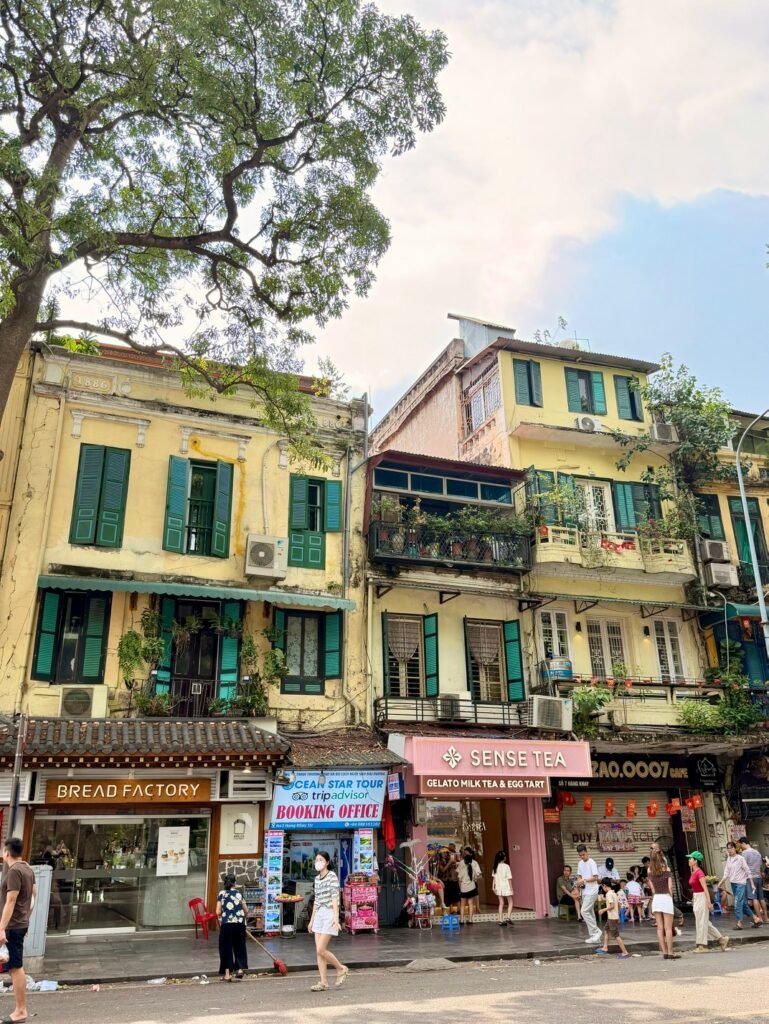
If there’s one place you absolutely shouldn’t miss during your time in Hanoi, it’s the Old Quarter. This is the beating heart of the city and, for us, one of the best places to get a feel for what Hanoi is all about.
The streets here are wonderfully chaotic, with motorbikes weaving between pedestrians, tiny shops spilling out onto the pavements and street food vendors serving up delicious Vietnamese dishes from little plastic stools. There’s so much going on that you almost don’t know where to look!
One of our favourite things to do was simply wander without much of a plan. The Old Quarter is made up of narrow streets, each with its own character, and you’ll find everything from traditional markets and souvenir shops to coffee houses and local eateries tucked away in the backstreets.
It’s also a great place to try some authentic Vietnamese street food. Keep an eye out for steaming bowls of pho, banh mi sandwiches and bun cha, or stop for a traditional Vietnamese egg coffee at one of the many little cafés.
We’d recommend visiting during the day to explore the shops and soak up the atmosphere, then returning in the evening when the streets really come alive with food stalls, bars and night market activity.
Our tip: Don’t worry too much about following a route around the Old Quarter. Some of the best discoveries come from getting a little lost and seeing where the streets take you!
2. Visit Hoan Kiem Lake
Hoan Kiem Lake is one of Hanoi’s most recognisable landmarks and a lovely place to escape the chaos of the surrounding streets for a little while. Located right in the heart of the city, it’s an easy stop when exploring the Old Quarter and well worth adding to your Hanoi itinerary.
The lake is particularly beautiful, with its calm green water, tree-lined pathways and the iconic Turtle Tower sitting on a small island in the middle. You’ll also spot the striking red Huc Bridge, which leads across to Ngoc Son Temple. The temple sits on a small island and is well worth visiting if you fancy exploring a little more of Hanoi’s history and culture.
One thing we really enjoyed was seeing a different side of Hanoi here. Away from the constant streams of motorbikes and busy streets, the lake feels much more relaxed. It’s a popular gathering spot for locals, particularly in the mornings when people come out to exercise, practise tai chi and enjoy a walk before the city gets busy.
We’d recommend visiting both during the day and after dark if you have time. In the evening, the surrounding area is beautifully lit up, and the atmosphere is particularly lively at weekends when some of the nearby streets become pedestrian-only.
Our tip: Combine a visit to Hoan Kiem Lake with exploring the Old Quarter. They’re right next to each other, making it easy to see both without needing to organise any transport.
Allow: 30 minutes to an hour, longer if you plan to visit Ngoc Son Temple.
3. Watch the Train Pass Through Hanoi Train Street
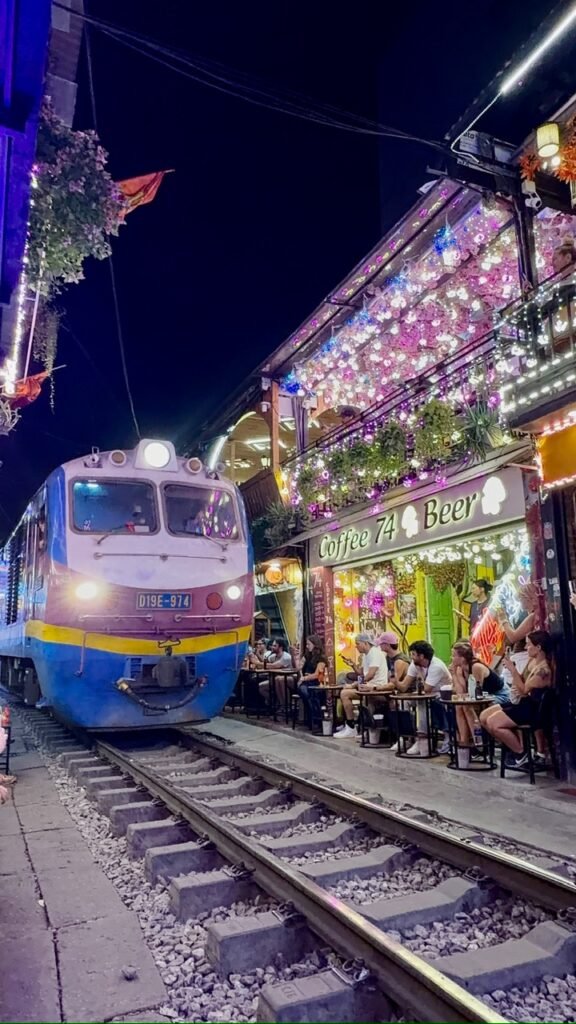
Watching a train squeeze through the incredibly narrow streets of Hanoi Train Street has to be one of the most unusual experiences in the city. It’s one of Hanoi’s most famous attractions and something we’d definitely recommend experiencing during your visit.
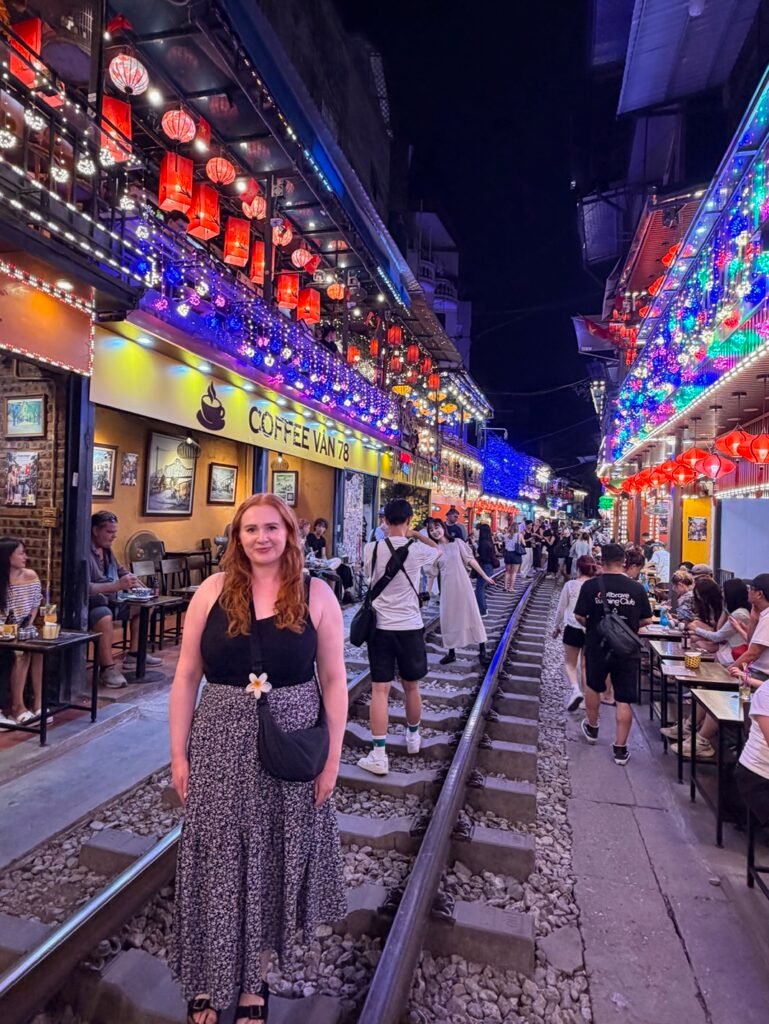
As the name suggests, this is a narrow residential street with an active railway line running straight through it. What makes it so fascinating is just how close the surrounding buildings, cafés and homes are to the tracks. There is barely any room to spare when a train comes through!
The street has become a popular tourist attraction, with little cafés lining the railway and offering front-row seats for the passing trains. You can grab a Vietnamese coffee, find a spot and wait for the train to rumble through just metres away.
It’s quite an experience watching everyone move their tables and chairs back before the train arrives, particularly when you see just how little space there is between the train and the buildings.
Be Aware of Train Street Scams
One thing we’d recommend being aware of when visiting Hanoi Train Street is the number of locals who may approach you claiming that you cannot enter without paying them or buying something from their café.
Walking along Train Street itself is free, and you shouldn’t feel pressured into paying someone simply to access the street. You’ll likely find locals trying to direct you towards particular cafés or insisting that you need to go with them to get past barriers. Be polite but firm if you’re not interested.
That said, access restrictions can change, and there may be genuine safety controls in place. Always follow official instructions and never try to bypass barriers or enter restricted areas. If you do want to sit and watch a train pass, choosing a café that is operating legitimately is a good option.
Our tip: Don’t feel pressured into following the first person who approaches you. Take your time, be aware of your surroundings and don’t hand over money just because someone tells you that you have to pay to enter.
Allow: Around 30–60 minutes, depending on whether you stop for a drink and how long you wait for a train.
4. Visit the Temple of Literature
The Temple of Literature is one of Hanoi’s most beautiful historical attractions and well worth visiting if you want to learn a little more about Vietnam’s past. Dating back to 1070, it was originally built as a temple dedicated to Confucius and later became home to Vietnam’s first national university.
As you wander through the complex, you’ll discover a series of peaceful courtyards, traditional Vietnamese architecture, ornate gates and beautiful gardens. It’s quite a contrast to the busy streets outside, and we loved the idea of having somewhere so peaceful tucked away in the middle of such a hectic city.
One of the most interesting areas is the collection of stone stelae, which sit on the backs of stone turtles. These record the names of scholars who passed the royal examinations, making them an important part of Vietnam’s educational history.
The Temple of Literature is also a popular spot for Vietnamese students, particularly around exam season, when some visit to pray for good luck and success in their studies.
We’d recommend taking your time as you explore the different courtyards rather than rushing through. There’s plenty of history to discover, and it’s a lovely place to appreciate some traditional Vietnamese architecture.
Our tip: Visit earlier in the day if you can. It’s a popular attraction, and arriving in the morning can make for a more peaceful experience.
Allow: Around 1–1.5 hours.

5. Explore the Ho Chi Minh Mausoleum Complex
No visit to Hanoi would be complete without exploring the Ho Chi Minh Mausoleum Complex. This is one of the most historically significant areas of the city and offers a fascinating insight into the life and legacy of Ho Chi Minh, the revolutionary leader who played a major role in Vietnam’s independence.
The main attraction is the impressive Ho Chi Minh Mausoleum, where the embalmed body of Ho Chi Minh lies in state. The imposing granite building dominates Ba Dinh Square, where Ho Chi Minh famously declared Vietnam’s independence in 1945.
Even if you don’t plan to enter the mausoleum itself, it’s worth visiting the surrounding complex. Other highlights include the Presidential Palace, the traditional wooden Stilt House where Ho Chi Minh lived and worked, and the One Pillar Pagoda, which is one of Hanoi’s most distinctive religious landmarks.
The complex is quite spread out, so allow yourself enough time to explore the different sights. It’s also an interesting area to visit if you want to understand more about Vietnam’s modern history and the country’s political identity.
A few things to know before visiting: The mausoleum has strict rules regarding visitor behaviour and dress. Shoulders and knees should be covered, and visitors are expected to remain quiet and respectful. Opening days and times can vary, and the mausoleum periodically closes for maintenance, so check the latest arrangements before making a special trip.
Our tip: Combine your visit with the One Pillar Pagoda, which is located within the wider complex. This saves you having to make a separate journey to see one of Hanoi’s most recognisable landmarks.
Allow: Around 1.5–2 hours to explore the wider complex.

6. Discover the Imperial Citadel of Thang Long
If you’re interested in Vietnamese history, the Imperial Citadel of Thang Long is another attraction worth adding to your Hanoi itinerary. This UNESCO World Heritage Site was once the political centre of Vietnam for more than 1,000 years, making it one of the most historically important places in the country.
The citadel dates back to the 11th century, when it was established by the Ly Dynasty. Over the centuries, it was expanded and used by several Vietnamese dynasties, with each leaving behind traces of their time here.
Today, you can wander through the remaining structures, explore archaeological discoveries and learn more about the different periods of Vietnamese history. Highlights include the impressive Doan Mon Gate, the archaeological site at 18 Hoang Dieu and the D67 House and Tunnel, which played a role during the Vietnam War.
We’d recommend visiting with an open mind, particularly if you’re interested in history. Unlike some of Hanoi’s more visually impressive attractions, much of the appeal here comes from understanding the stories behind the buildings and archaeological remains.
It’s also a relatively peaceful place to explore compared with the busy streets of the Old Quarter, giving you a chance to slow down and take in a different side of the city.
Our tip: Consider picking up an audio guide or reading a little about the citadel’s history before visiting. Some of the archaeological remains are easier to appreciate when you understand their significance.
Allow: Around 1–2 hours.
7. Visit the One Pillar Pagoda
The One Pillar Pagoda is one of Hanoi’s most distinctive religious landmarks and definitely worth a quick stop while exploring the city. As the name suggests, this unusual little pagoda is built on a single stone pillar rising out of a small pond, giving it the appearance of a lotus flower floating on the water.
The original structure dates back to 1049 and was built during the reign of Emperor Ly Thai Tong. According to legend, the emperor dreamt of a Buddhist deity sitting on a lotus flower and was inspired to build the pagoda in its honour.
Although the original structure was destroyed during the First Indochina War, it was later rebuilt and remains an important symbol of Vietnamese Buddhism today.
The pagoda itself is quite small, so you won’t need long to explore it. However, its unusual architecture and peaceful surroundings make it a lovely place to visit, particularly if you’re already exploring the nearby Ho Chi Minh Mausoleum Complex.
Our tip: Don’t make a separate journey just to visit the One Pillar Pagoda. It’s located within the Ho Chi Minh Mausoleum Complex, so it’s easy to combine the two attractions in one visit.
Allow: Around 15–30 minutes.
8. Wander Around the Hoa Lo Prison Museum
For something a little different, we’d highly recommend adding the Hoa Lo Prison Museum to your Hanoi itinerary. It’s one of the most fascinating historical attractions in the city, although it’s certainly not the most cheerful place to visit.
The prison was originally built by French colonial authorities in the late 19th century to hold Vietnamese political prisoners fighting against French rule. It later became notorious during the Vietnam War, when it was used to hold American prisoners of war, who nicknamed it the ‘Hanoi Hilton’.
Today, the remaining sections of the prison have been turned into a museum, offering visitors an insight into the conditions prisoners experienced and the complex history of Vietnam during French colonial rule and the Vietnam War.
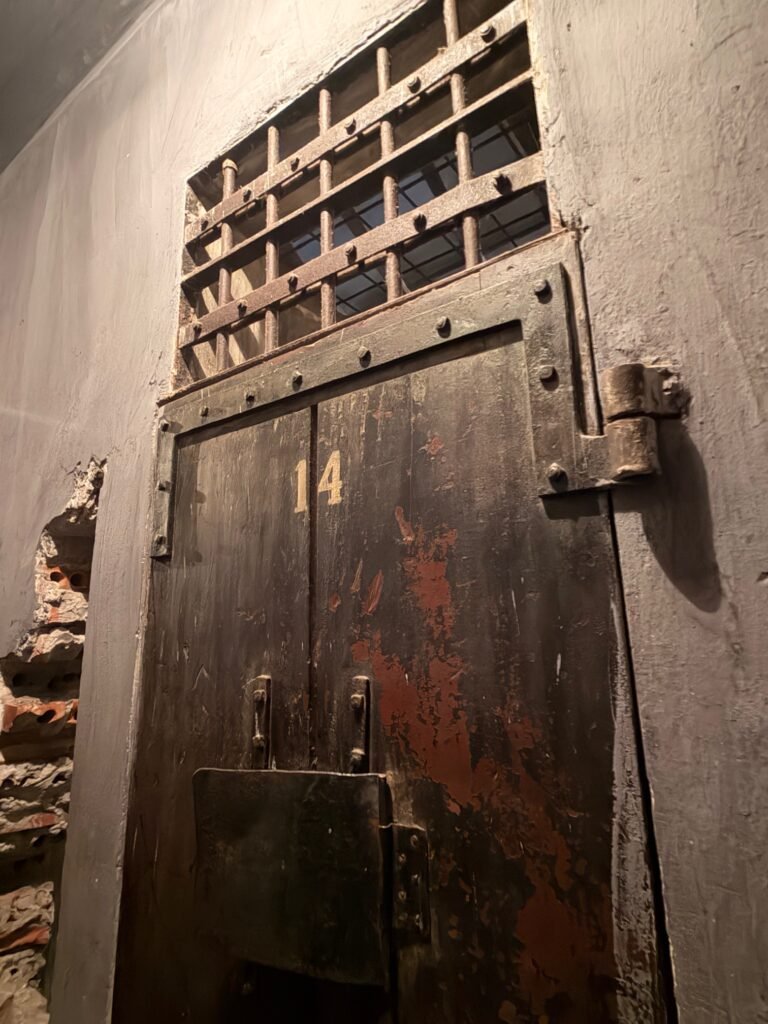
As you walk through the different rooms, you’ll see original prison cells, displays of historical photographs, personal belongings and exhibits explaining the experiences of those held here. Some of the displays are particularly sobering, with reconstructions showing the harsh conditions and treatment prisoners faced.
We’d recommend allowing enough time to read the information rather than simply wandering through. It’s one of those attractions where understanding the history really adds to the experience.
The museum also offers an audio guide, which is worth considering if you want a deeper understanding of the stories behind the exhibits.
Our tip: This isn’t exactly a light-hearted attraction, but it’s an important one. We’d recommend visiting even if you’re only spending a couple of days in Hanoi, particularly if you’re interested in understanding more about Vietnam’s history.
Allow: Around 1–1.5 hours.
9. Experience Hanoi’s Famous Street Food Scene
If there’s one thing you absolutely have to do in Hanoi, it’s eat! Vietnam has an incredible food scene, and Hanoi is one of the best places to experience it. From steaming bowls of noodle soup to freshly baked baguettes and delicious grilled meat, there’s something tempting around practically every corner.
One of the things we loved most about Hanoi was how much of the food scene happens right on the streets. You’ll find tiny restaurants and food stalls with plastic tables and stools spilling out onto the pavements, often serving just a handful of dishes. Don’t let the basic appearance put you off. Some of the best Vietnamese food can be found in these little local spots.
There are a few dishes we’d definitely recommend trying while you’re in the city:
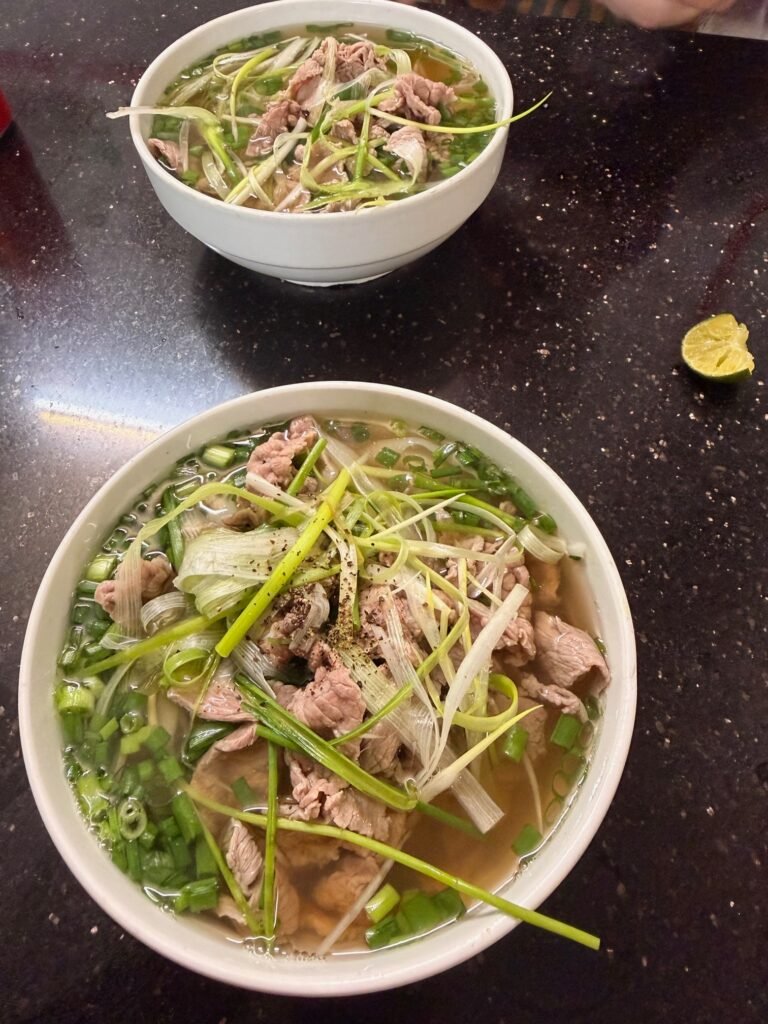
- Pho: Vietnam’s famous noodle soup, usually served with beef or chicken in a fragrant broth. It’s a classic breakfast choice but can be enjoyed throughout the day.
- Bun Cha: A Hanoi speciality consisting of grilled pork served with rice noodles, fresh herbs and a dipping sauce. It’s an absolute must-try while visiting the capital.
- Banh Mi: A crispy Vietnamese baguette filled with ingredients such as grilled meat, pâté, pickled vegetables and fresh herbs. Perfect for a quick and inexpensive lunch.
- Banh Cuon: Delicate steamed rice rolls filled with minced pork and mushrooms, usually served with dipping sauce and fresh herbs.
- Nem Ran: Vietnamese fried spring rolls filled with a mixture of meat, vegetables and noodles.
We’d also recommend being adventurous and trying some dishes you might not have heard of before. Part of the fun of exploring Hanoi’s food scene is discovering little places you would probably never have found otherwise.
If you’re not sure where to start, consider joining a street food tour. It’s a great way to sample several local dishes while learning more about Vietnamese food culture from someone who knows the city well. Alternatively, simply follow the crowds and look for busy local eateries.
Our tip: Don’t overlook the little restaurants with tiny plastic stools. They might not look particularly fancy, but they’re often where you’ll find some of the most authentic and affordable food in Hanoi.
Allow: As much time as your appetite allows! We’d recommend trying different dishes throughout your stay rather than squeezing everything into one meal.


10. Try a Traditional Vietnamese Egg Coffee
You can’t visit Hanoi without trying its famous egg coffee! This unusual-sounding drink is one of the city’s best-known specialities and something we’d definitely recommend adding to your food and drink list.
Egg coffee, or ca phe trung, was first created in Hanoi in the 1940s when milk was difficult to come by. A local bartender came up with the idea of whisking egg yolks with sugar and condensed milk to create a thick, creamy topping for strong Vietnamese coffee.
The result is a drink that almost resembles a dessert. The rich coffee sits underneath a layer of sweet, fluffy egg cream, creating a combination that’s surprisingly delicious. If you’re expecting something that tastes like scrambled eggs, don’t worry! The topping is much more like a sweet custard or creamy mousse.
You’ll find egg coffee served in cafés all over Hanoi, particularly around the Old Quarter. Some places serve it hot in a small cup, while others offer an iced version, which can be particularly refreshing when exploring the city in the heat.
It’s also a lovely excuse to take a break from the busy streets and experience Hanoi’s famous café culture. Many of the traditional coffee shops are tucked away down narrow alleyways or hidden above street-level shops, making finding them part of the fun.
Our tip: If you’ve never tried egg coffee before, we’d recommend starting with the traditional hot version. It’s the classic Hanoi experience and a must-try while you’re in the city.
Allow: Around 30–45 minutes for a coffee stop.
11. Browse Dong Xuan Market
If you enjoy exploring local markets, make sure you add Dong Xuan Market to your Hanoi itinerary. Located in the northern part of the Old Quarter, this is one of the city’s largest and most famous traditional markets.
The market is spread across several floors inside a large building, with stalls selling everything from clothing and accessories to household goods, fabrics, souvenirs and everyday essentials. It’s a fascinating place to wander around, even if you aren’t particularly interested in shopping.
Inside, you’ll find narrow aisles packed with colourful merchandise and local traders going about their day. It can feel a little chaotic, but that’s all part of the experience and gives you a glimpse into everyday life in Hanoi.
There’s also a lively market scene surrounding the main building, with plenty of smaller stalls and street food vendors to discover. If you’re feeling hungry, this is a good opportunity to try some inexpensive local snacks.
Dong Xuan Market is particularly worth visiting if you want to pick up a few souvenirs or simply experience a more traditional side of Hanoi beyond the main tourist streets.
Our tip: Don’t be afraid to have a browse, but remember that some stalls are primarily aimed at wholesale buyers. If you’re shopping, it’s worth comparing prices before committing to a purchase.
Allow: Around 30–60 minutes.
12. Watch a Water Puppet Show
Watching a traditional Vietnamese water puppet show is a fun way to experience a little of the country’s culture and something quite different from the usual sightseeing activities in Hanoi.
Water puppetry, known locally as mua roi nuoc, dates back around 1,000 years and originated in the rice paddies of northern Vietnam. Traditionally, performances took place in flooded fields, with puppeteers standing waist-deep in water and controlling wooden puppets using long bamboo rods hidden beneath the surface.
Today, you can watch these performances in purpose-built theatres in Hanoi, with the Thang Long Water Puppet Theatre near Hoan Kiem Lake being one of the most popular places to go.
The shows feature colourful wooden puppets acting out traditional Vietnamese stories, village life, farming scenes and historical legends. There’s also live traditional music accompanying the performance, with musicians playing instruments and singing throughout.
Even if you don’t understand Vietnamese, the visual storytelling makes the show relatively easy to follow. It’s a little quirky, entertaining and offers an interesting insight into a tradition you might not come across elsewhere.
Our tip: Book your tickets in advance if you’re visiting during a busy period, as popular evening performances can sell out. Try to arrive a little early to get settled before the show begins.
Allow: Around 50 minutes for the performance, plus time to arrive and collect your tickets.
13. Visit St Joseph’s Cathedral
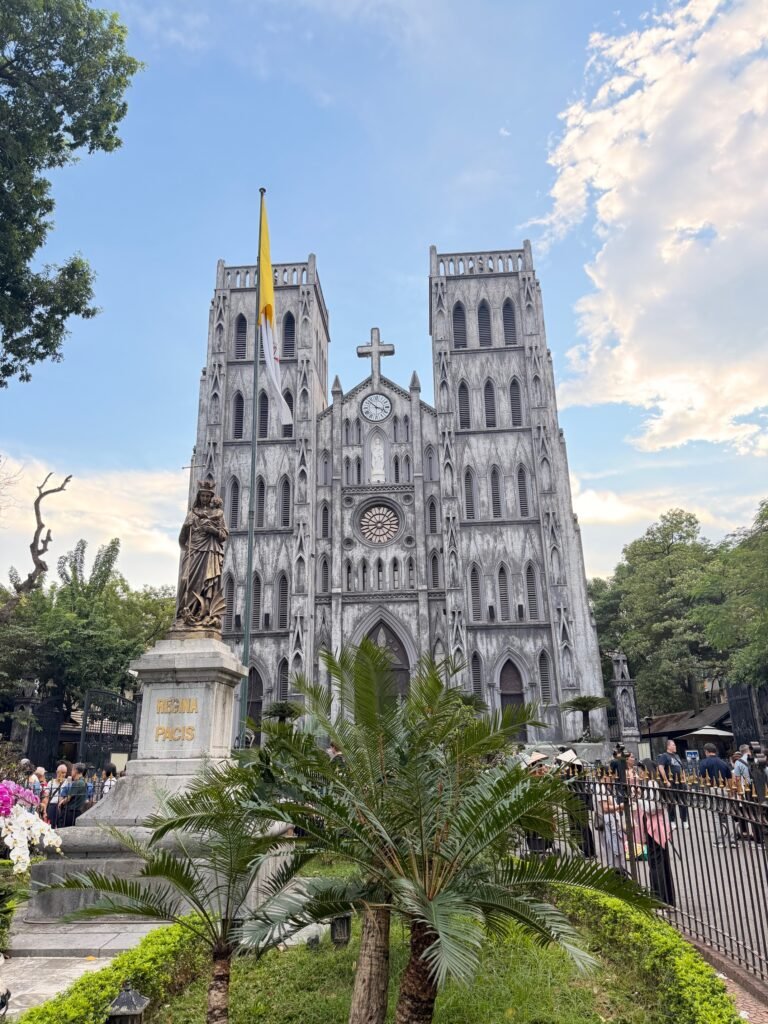
St Joseph’s Cathedral is one of Hanoi’s most recognisable landmarks and well worth a stop while exploring the city. Located just a short walk from Hoan Kiem Lake, this impressive cathedral stands out quite dramatically against the surrounding streets.
Built in the late 19th century during French colonial rule, the cathedral has a striking neo-Gothic design, with tall twin bell towers, pointed arches and beautiful stained-glass windows. Its dark, weathered exterior gives it a slightly European feel, which is quite different from much of the traditional Vietnamese architecture you’ll see around Hanoi.
The square outside the cathedral is particularly lively, with plenty of little cafés and restaurants nearby. It’s a lovely spot to grab a Vietnamese coffee, sit back and watch the world go by. You’ll often find locals and tourists gathering around the steps, taking photos and enjoying the atmosphere.
If you time your visit right, you may also be able to see inside the cathedral. It’s still an active place of worship, so opening times can vary depending on services and religious events.
We’d recommend combining a visit with a wander around the surrounding streets. There are plenty of interesting little shops and cafés nearby, making it an easy addition to a day exploring the Old Quarter.
Our tip: Visit in the evening if you can. The cathedral looks particularly impressive when illuminated after dark, and the surrounding area has a lovely atmosphere.
Allow: Around 20–30 minutes, plus extra time if you want to stop at one of the nearby cafés.
14. Explore the French Quarter
While Hanoi’s Old Quarter is famous for its narrow streets and chaotic atmosphere, the French Quarter offers a completely different side of the city. Located just south of Hoan Kiem Lake, this area is known for its grand colonial buildings, tree-lined streets and more spacious feel.
The French influence is easy to spot as you wander around. You’ll find beautiful old villas, impressive government buildings, elegant hotels and wide boulevards that feel quite different from the busy streets elsewhere in Hanoi.
One of the main highlights is the Hanoi Opera House, an impressive building inspired by the Palais Garnier in Paris. Even if you don’t go inside, it’s worth stopping to admire the architecture and take a few photos.
Other interesting sights include the historic Trang Tien Street, the National Museum of Vietnamese History and the grand Sofitel Legend Metropole Hanoi hotel, which has a fascinating history dating back to the French colonial period.
We’d recommend exploring the French Quarter on foot rather than rushing between individual attractions. It’s a lovely area for a slower wander, particularly if you’ve spent most of your time navigating the hectic streets of the Old Quarter.
There are also some excellent cafés, restaurants and boutique shops dotted throughout the neighbourhood, making it a good place to stop for a drink or something to eat.
Our tip: Combine the French Quarter with a visit to Hoan Kiem Lake. The two areas are right next to each other, and you can easily explore both in half a day.
Allow: Around 1–2 hours, depending on how many stops you make.
15. Take a Walk Around West Lake
If you fancy escaping the hustle and bustle of Hanoi’s city centre, head over to West Lake, also known as Ho Tay. This is the largest freshwater lake in Hanoi and offers a much more relaxed atmosphere than the busy streets of the Old Quarter.
The lake is surrounded by residential neighbourhoods, cafés, restaurants and leafy streets, making it a lovely area to explore if you want to see a different side of the city. There are plenty of places to stop for a coffee or something to eat while enjoying the views across the water.
One of the nicest things about visiting West Lake is simply having a change of pace. Hanoi can feel incredibly hectic, particularly when you’re constantly navigating traffic and crowded pavements. The area around the lake feels much more spacious, and it’s a popular spot with locals looking to exercise, cycle or enjoy an evening stroll.
There are also a couple of interesting attractions nearby, including Tran Quoc Pagoda, which sits on a small peninsula jutting out into the lake. It’s one of the oldest Buddhist temples in Vietnam and definitely worth visiting while you’re in the area.
We’d particularly recommend visiting West Lake around sunset. The light across the water can be beautiful, and there are plenty of lakeside cafés where you can settle down and watch the day come to an end.
Our tip: West Lake is quite large, so don’t feel that you need to walk around the entire thing. Pick a section to explore and combine it with a visit to Tran Quoc Pagoda.
Allow: Around 1–2 hours, depending on how much of the area you want to explore.
16. Visit Tran Quoc Pagoda
Tran Quoc Pagoda is one of the most beautiful temples in Hanoi and well worth visiting if you’re exploring the West Lake area. Sitting on a small peninsula extending into the water, this peaceful Buddhist temple is thought to be the oldest pagoda in Vietnam, with a history dating back more than 1,500 years.
One of the first things you’ll notice is its striking red pagoda tower, which stands out beautifully against the surrounding greenery and water. The complex also features traditional Vietnamese architecture, intricate Buddhist statues, incense-filled altars and several peaceful courtyards.
It’s a lovely place to escape the noise of the city for a little while. The setting feels particularly special, with the lake surrounding the temple and plenty of opportunities to stop and appreciate the architecture.
Tran Quoc Pagoda remains an active place of worship, so you’ll often see locals visiting to pray and make offerings. It’s worth taking a little time to observe the surroundings and appreciate the spiritual significance of the site rather than simply rushing around taking photographs.
We’d recommend combining your visit with a walk around West Lake, as the pagoda is one of the area’s main highlights.
Our tip: Visit around sunset if you can. The setting is particularly beautiful as the light reflects across the lake, making it a lovely spot for photographs.
Allow: Around 30–45 minutes.

17. Discover the Vietnam Military History Museum
If you’re interested in learning more about Vietnam’s military history, the Vietnam Military History Museum is well worth considering during your time in Hanoi.
The museum offers a fascinating insight into the country’s long history of conflict, resistance and independence. Through a collection of military equipment, photographs, historical documents and personal accounts, you’ll learn about some of the most significant events that have shaped modern Vietnam.
One of the biggest highlights is the outdoor exhibition area, where you’ll find an impressive collection of military vehicles, aircraft, tanks and artillery. There are also indoor displays covering different periods of Vietnamese history, including the struggles against French colonial rule and the Vietnam War.
The museum is particularly interesting if you’ve already visited places such as the Hoa Lo Prison Museum and want to build a broader understanding of Vietnam’s past.
It’s worth noting that the museum relocated to a much larger site in Hanoi’s Nam Tu Liem district in 2024. This means it’s further away from the main Old Quarter attractions, so you’ll need to factor in some extra travel time.
Our tip: Check the opening days and latest admission information before visiting, as these can change. Allow enough time to explore the outdoor displays as well as the indoor exhibitions.
Allow: Around 2–3 hours.
18. Enjoy the Views from Lotte Observation Deck
For a completely different perspective of Hanoi, head up to the Lotte Observation Deck. Located on the 65th floor of the Lotte Center Hanoi, this attraction offers panoramic views across the city from one of its tallest buildings.
After spending so much time navigating Hanoi’s busy streets, it’s quite interesting to see the city from above. From the observation deck, you can look out across the sprawling cityscape, spot the lakes and green spaces dotted throughout Hanoi and appreciate just how enormous the Vietnamese capital really is.
One of the main highlights is the glass-floored Sky Walk, where you can look directly down towards the streets below. It’s not for anyone with a fear of heights, but it’s a fun experience if you’re feeling brave!
The Lotte Center also has plenty of other facilities, including shops, restaurants and cafés, so you can easily combine your visit with a little shopping or something to eat.
We’d recommend visiting on a clear day if possible, as Hanoi can sometimes be quite hazy, which can affect visibility from the observation deck.
Our tip: Consider visiting later in the afternoon so you can enjoy the views in daylight and watch the city lights come on as evening approaches. Just check the weather beforehand to avoid paying for a view hidden behind clouds or pollution.
Allow: Around 1 hour, longer if you plan to explore the shopping centre or stop for food.
19. Shop at Hanoi Weekend Night Market
If you’re visiting Hanoi over a weekend, make sure you leave some time to explore the Hanoi Weekend Night Market. Running through the heart of the Old Quarter, this lively night market is one of the best places to experience the city’s evening atmosphere while browsing for souvenirs and picking up a few bargains.
The market usually takes place from Friday to Sunday, with stalls stretching along several streets between Hang Dao Street and the Dong Xuan Market area. You’ll find all sorts of things for sale, including clothing, accessories, jewellery, souvenirs, handmade items and plenty of little trinkets.
Even if you’re not particularly interested in shopping, it’s worth wandering through just to soak up the atmosphere. The streets become packed with locals and tourists, street food vendors set up their stalls and there’s a real buzz about the place.
It’s also a great opportunity to try some more Vietnamese street food. You’ll find plenty of snacks and local dishes to tempt you as you make your way around the stalls.
One thing we particularly like about markets when travelling is that you never quite know what you’re going to find. Whether you’re looking for a little souvenir to take home or simply fancy an evening wander, the Hanoi Weekend Night Market is a fun addition to your itinerary.
Our tip: Bargaining is generally expected at many of the market stalls, so don’t be afraid to negotiate politely if you’re interested in buying something. It’s also worth keeping an eye on your belongings, as the market can get very crowded.
Allow: Around 1–2 hours, depending on how much shopping and eating you plan to do.
20. Relax in Hanoi’s Local Cafes
After spending your days exploring Hanoi’s busy streets, visiting temples and navigating the endless streams of motorbikes, there’s nothing better than finding a little café and taking some time to slow down.
Hanoi has a fantastic café culture, and discovering its many independent coffee shops is an experience in itself. You’ll find everything from tiny traditional cafés tucked away down narrow alleyways to stylish modern coffee shops with beautiful interiors and rooftop terraces.
Vietnamese coffee is famous for a reason, and there are plenty of different varieties worth trying during your visit. We’ve already mentioned the city’s famous egg coffee, but don’t miss the chance to try traditional Vietnamese iced coffee with condensed milk, known as ca phe sua da. It’s strong, sweet and particularly refreshing on a hot day.
One of the things we love about café culture in Vietnam is how much of it happens outside. You’ll often see locals sitting on little plastic stools along the pavement, chatting over coffee and watching the world go by. It’s a simple experience, but one that gives you a real feel for everyday life in the city.
If you fancy something a little different, keep an eye out for coconut coffee, salted coffee and other creative variations popping up on café menus.
We’d recommend making time for a few coffee stops during your stay rather than treating them as something to squeeze in between attractions. Sometimes the best way to experience a city is simply to sit back, enjoy a drink and watch the world go by.
Our tip: Don’t judge a café by its entrance! Some of Hanoi’s best coffee shops are hidden upstairs in old apartment buildings or tucked away down narrow alleyways. Keep an eye out for signs pointing towards cafés above street level.
Allow: As much time as you like. We’d happily make time for a coffee stop every day!
More Unique Things to Do in Hanoi
Beyond the famous landmarks, temples and museums, Hanoi has plenty of experiences that let you get a little closer to Vietnamese culture and everyday life. If you have a bit more time in the city, or simply fancy doing something different, these are some extra activities worth considering.
From learning how to cook traditional Vietnamese dishes to exploring hidden alleyways and escaping the city on a day trip, here are a few more unique things to do in Hanoi.
21. Take a Vietnamese Cooking Class
If, like us, you love discovering a destination through its food, taking a Vietnamese cooking class is a brilliant experience to add to your Hanoi itinerary.
Vietnamese cuisine is one of the highlights of travelling through the country, and a cooking class gives you the chance to learn more about the ingredients, flavours and techniques that make it so special.
Most classes begin with a visit to a local market, where you’ll learn about traditional Vietnamese ingredients and have the chance to pick up fresh produce. You’ll then head to the kitchen to prepare a selection of classic dishes under the guidance of a local instructor.
Depending on the class you choose, you might learn to make dishes such as fresh spring rolls, pho, bun cha or banh xeo. The best part is that you get to enjoy everything you’ve prepared at the end!
We think cooking classes are particularly worthwhile when travelling because you come away with more than just another sightseeing experience. You learn something about the local culture and pick up a few skills you can hopefully recreate when you get home.
Our tip: Look for a class that includes a local market visit. It’s a great way to learn about Vietnamese ingredients and gives you a little more insight into everyday life in Hanoi.
Allow: Around 3–4 hours.
22. Join a Hanoi Street Food Tour
Hanoi’s street food scene is incredible, but knowing where to find the best local dishes can sometimes be a little overwhelming, especially if it’s your first time in Vietnam. That’s where a street food tour comes in.
Joining a guided food tour is a great way to discover some of the city’s best local eateries while learning more about Vietnamese food culture from someone who knows the area.
You’ll typically visit several small restaurants, street food stalls and hidden local spots, sampling a variety of traditional dishes along the way. Depending on the tour, you might try everything from pho and bun cha to banh mi, fresh spring rolls and Hanoi’s famous egg coffee.
One of the biggest advantages is that your guide can explain what you’re eating, how it’s traditionally prepared and which dishes are particularly popular with locals. They can also take you to places you might never have found by yourself.
If you’re only spending a couple of days in Hanoi, a food tour can be a really good way to sample lots of different dishes in one afternoon or evening.
Our tip: Look for smaller group tours if you prefer a more personal experience. Evening food tours are particularly popular, as you’ll get to experience Hanoi’s lively street food scene when the city really comes alive.
Allow: Around 3–4 hours.
23. Get a Traditional Vietnamese Massage
After a few busy days exploring Hanoi, a traditional Vietnamese massage is a lovely way to relax and give your feet a well-deserved break.
Hanoi has plenty of massage and spa establishments, ranging from simple local massage shops to more luxurious spas offering a whole range of treatments. You’ll find everything from traditional Vietnamese massages and foot reflexology to aromatherapy and hot stone treatments.
A foot massage is particularly appealing after spending hours wandering around the Old Quarter and exploring the city’s many attractions. It’s a chance to sit back, relax and recharge before heading out to enjoy another evening in Hanoi.
Prices vary depending on the type of treatment and the establishment you choose, but there are plenty of affordable options compared with what you might pay back home.
Our tip: Check recent reviews before choosing a massage shop and make sure the treatment and price are clearly agreed beforehand. Some establishments may offer additional treatments, so don’t feel pressured into paying for anything you haven’t requested.
Allow: Around 60–90 minutes.
24. Explore Hanoi’s Hidden Alleyways
While Hanoi’s main streets are full of energy and activity, some of the city’s most interesting discoveries are tucked away down its little alleyways.
One of our favourite things about exploring a new city is wandering away from the main tourist areas and seeing what you stumble across. Hanoi is perfect for this, with countless narrow passageways hiding everything from tiny family-run restaurants and traditional homes to independent coffee shops and little local businesses.
Some alleyways are barely wide enough for a motorbike, while others open up into surprisingly peaceful residential courtyards. You’ll get a glimpse of everyday Hanoi life that you might otherwise miss if you stick to the main attractions.
The Old Quarter is a particularly good place to start, but don’t be afraid to explore beyond it. Some of the smaller streets around the French Quarter and West Lake also offer interesting little discoveries.
You might stumble across a café serving excellent Vietnamese coffee, a local food stall with no English menu or a little shop selling handmade souvenirs. These are often the moments that make travelling so memorable.
Our tip: Put your map away occasionally and allow yourself to explore at your own pace. Just remember that many alleyways are residential areas, so be respectful of local homes and people’s privacy.
Allow: As long as you like! Even an hour of wandering can lead to some interesting discoveries.
25. Take a Day Trip to the Perfume Pagoda
If you have a little extra time in Hanoi and fancy escaping the busy city for a day, consider taking a trip to the Perfume Pagoda.
Located around 60 kilometres southwest of Hanoi, the Perfume Pagoda is an important Buddhist pilgrimage site set among a beautiful landscape of limestone mountains, forests and rivers.
Despite its name, the Perfume Pagoda isn’t actually a single temple. It’s a large complex of Buddhist temples and shrines spread across the Huong Son mountain area. The main attraction is Huong Tich Cave, which houses a collection of Buddhist shrines and statues inside a spectacular limestone cavern.
Getting there is part of the experience. Most visitors travel from Hanoi by road before taking a traditional rowing boat along the Yen River. The boat journey is particularly scenic, passing through beautiful countryside and limestone scenery before reaching the temple complex.
Once you arrive, you can either hike uphill towards the main cave or take the cable car for an easier journey. If you enjoy walking, the route offers some lovely views, although it can be quite steep in places.
The Perfume Pagoda is particularly busy during the annual pilgrimage festival, which usually takes place during the first few months of the lunar year. Outside this period, it’s generally a more peaceful experience.
Our tip: This is a fairly long day trip, so we’d recommend allowing a full day rather than trying to squeeze it in around other Hanoi attractions. You can visit independently, but an organised tour can make transport and logistics much easier.
Allow: A full day, usually around 7–9 hours including travel.
Practical Tips for Visiting Hanoi
Hanoi is an incredible city to explore, but it’s fair to say that it can take a little getting used to! Between the seemingly endless motorbikes, busy streets and sheer number of things to see and do, having a rough plan before you arrive can make your visit much easier.
We found Hanoi relatively easy to explore once we’d got our bearings, and many of the main attractions are within walking distance of each other. However, there are a few things worth knowing before you visit, particularly when it comes to getting around, choosing where to stay and deciding how long to spend in the city.
Here are some practical tips to help you plan your Hanoi adventure.
How to Get Around Hanoi
Getting around Hanoi can feel a little chaotic at first, particularly if you’re not used to the traffic in Vietnamese cities. Motorbikes seem to come from every direction, pavements are often used for parking and crossing the road can feel like an adventure in itself!
Fortunately, there are several ways to get around, depending on where you’re going and how comfortable you feel navigating the city.
Walking
Walking is one of the best ways to explore Hanoi, particularly if you’re staying in or around the Old Quarter. Many of the main attractions, including Hoan Kiem Lake, Train Street and St Joseph’s Cathedral, are relatively close together.
We’d recommend exploring as much as possible on foot, as you’ll often stumble across interesting cafés, little shops and local food stalls along the way.
Just be prepared for busy pavements and take extra care when crossing roads. Walk at a steady, predictable pace rather than suddenly stopping or darting backwards when motorbikes approach.
Grab
Grab is one of the easiest ways to get around Hanoi if you don’t fancy walking or need to travel further across the city. You can book both cars and motorbike taxis through the app, with the fare shown before you confirm your journey.
It’s particularly useful for travelling between attractions that are further apart, such as the Old Quarter and West Lake, or getting to and from the airport.
Local Buses
Hanoi also has a public bus network connecting different parts of the city. Buses are generally an inexpensive way to travel, although working out the correct routes can take a little more effort if you’re unfamiliar with the area.
They’re worth considering if you’re travelling on a tight budget and have a little extra time.
Taxis
Traditional taxis are another option, although we’d recommend using reputable companies and checking that the meter is running. Alternatively, booking through Grab removes much of the uncertainty around fares.
Our tip: We’d recommend using a combination of walking and Grab during your stay. Most central attractions are easy enough to reach on foot, while Grab is convenient for longer journeys and saves you having to navigate the traffic yourself.
How Many Days Do You Need in Hanoi?
We’d recommend spending at least 3 days in Hanoi if you want to experience the city’s main attractions without feeling like you’re constantly rushing around.
Two days is possible if you’re short on time, and you can cover many of the highlights, including the Old Quarter, Hoan Kiem Lake, Train Street and some of the main historical attractions. However, you’ll need to be a little more selective about what you visit.
With 3 days, you’ll have a much better opportunity to explore at a relaxed pace. You can spend time discovering the Old Quarter, visiting museums and temples, sampling the incredible street food and enjoying Hanoi’s café culture.
If you have 4–5 days, you can take things even slower and include some of the more unusual experiences, such as a Vietnamese cooking class, a street food tour or a day trip to the Perfume Pagoda.
Of course, Hanoi is also a popular starting point for exploring northern Vietnam, so you may want to factor in additional time for trips to places such as Ninh Binh, Ha Long Bay and Sapa.
Our recommendation: We’d aim for 3 full days in Hanoi for a first visit. This gives you enough time to experience the city’s highlights while still leaving room to enjoy the atmosphere rather than simply ticking attractions off a list.
The Best Time to Visit Hanoi
The best time to visit Hanoi is generally during spring (March to April) and autumn (September to November), when temperatures are usually more comfortable for sightseeing.
Hanoi experiences four distinct seasons, so the weather can vary quite significantly depending on when you visit.
- Spring (March–April): Temperatures are generally mild, making this a lovely time for exploring the city. You can expect some humidity and occasional rain, but conditions are usually pleasant for sightseeing.
- Summer (May–August): This is one of the hottest and wettest periods, with high humidity, heavy rain showers and occasional storms. It can be quite uncomfortable walking around during the middle of the day.
- Autumn (September–November): Often considered the best time to visit, autumn brings more comfortable temperatures and generally drier conditions. It’s a particularly good time for exploring Hanoi on foot.
- Winter (December–February): Temperatures can be surprisingly cool, particularly in January and February. You may experience grey skies, drizzle and chilly mornings, so bring a few warmer layers.
Ultimately, Hanoi is a year-round destination, and there’s plenty to enjoy whenever you visit. We’d simply recommend planning your sightseeing around the weather, particularly during the hotter and wetter months.
Is Hanoi Expensive to Visit?
One of the great things about travelling in Vietnam is that it’s generally a very affordable destination, and Hanoi is no exception. Whether you’re travelling on a tight backpacking budget or have a little more to spend, you can enjoy plenty of what the city has to offer without breaking the bank.
Food is particularly good value. You can pick up a bowl of pho or a banh mi from a local street food stall for very little, while eating at local restaurants is generally inexpensive too. Vietnamese coffee is another affordable treat, so there’s no excuse not to make plenty of café stops!
Accommodation is also available across a wide range of budgets. You’ll find everything from cheap hostel dorms and simple guesthouses to boutique hotels and more luxurious stays.
Many of Hanoi’s best experiences are also free or very inexpensive. Wandering around the Old Quarter, visiting Hoan Kiem Lake and exploring the city’s different neighbourhoods won’t cost you anything, although some museums, temples and attractions do charge admission.
Transport is affordable too, particularly if you use Grab for longer journeys and explore the central areas on foot.
Our tip: If you’re travelling on a budget, make the most of Hanoi’s street food scene and stay somewhere central. You’ll save money on meals and transport while being within easy reach of many of the city’s main attractions.
Where to Stay in Hanoi
Choosing the right area to stay in Hanoi can make a big difference to your experience, particularly if it’s your first visit. The city is fairly spread out, but staying somewhere central means you can explore many of the main attractions on foot and spend less time navigating the traffic.
There are several neighbourhoods worth considering, depending on the kind of experience you’re looking for.
1. Hanoi Old Quarter: Best for First-Time Visitors
The Old Quarter is our top recommendation for first-time visitors. This is the heart of Hanoi’s tourist scene, with narrow streets packed with restaurants, cafés, shops, bars and street food stalls.
You’ll also be within easy walking distance of Hoan Kiem Lake, Train Street and many of the city’s main attractions. It’s a lively area, so don’t expect complete peace and quiet, but it’s a brilliant base for making the most of your time in Hanoi.
2. French Quarter: Best for a Quieter Stay
Located just south of Hoan Kiem Lake, the French Quarter offers a slightly calmer alternative to the Old Quarter. The streets are wider, the architecture is beautiful and there are plenty of excellent cafés, restaurants and hotels.
It’s still very central, meaning you can easily walk to many of Hanoi’s main attractions without being right in the middle of the busiest streets.
3. West Lake: Best for Relaxation and Longer Stays
If you’d prefer somewhere a little further away from the tourist crowds, consider staying around West Lake. This area has a more relaxed, residential atmosphere, with plenty of lakeside cafés, restaurants and green spaces.
It’s particularly popular with longer-term travellers and those looking for a quieter base. Just bear in mind that you’ll need to rely more on Grab to reach the main attractions around the Old Quarter.
Our recommendation: For a first visit to Hanoi, we’d choose somewhere in or around the Old Quarter. Being able to walk to so many attractions, restaurants and cafés makes exploring the city much easier.
If you’re still deciding where to stay, we’ve put together a more detailed guide covering the best areas and accommodation options in Hanoi.
A couple of useful planning notes: Most visitors will find 2–3 full days enough for Hanoi, although 3 days is our preferred recommendation. October and November are particularly good months for sightseeing, while winter can be surprisingly chilly and summer is hot and humid.
Frequently Asked Questions About Visiting Hanoi
1. Is Hanoi Worth Visiting?
Absolutely! Hanoi was our first stop in Vietnam, and we couldn’t have asked for a better introduction to the country. It’s a city full of character, with fascinating history, beautiful temples, incredible street food and a buzzing atmosphere. It can feel a little overwhelming at first, but that’s all part of its charm. We’d definitely recommend adding Hanoi to your Vietnam itinerary.
2. How Many Days Should I Spend in Hanoi?
We recommend spending 3 days in Hanoi if it’s your first visit. This gives you enough time to explore the Old Quarter, visit the main attractions, try plenty of Vietnamese food and enjoy the city’s famous coffee culture. If you’re short on time, you can see some of the highlights in 2 days, but 3–4 days will allow you to explore at a more relaxed pace.
3. What Is Hanoi Famous For?
Hanoi is famous for its fascinating history, traditional Vietnamese architecture, bustling Old Quarter and incredible street food scene. It’s also known for its unique train street, beautiful lakes, ancient temples and famous egg coffee. The city’s chaotic traffic and endless streams of motorbikes are also part of what makes Hanoi so distinctive!
4. What Are the Best Things to Do in Hanoi?
Some of the best things to do in Hanoi include exploring the Old Quarter, visiting Hoan Kiem Lake, watching the train pass through Train Street and discovering the city’s historical temples and museums. We’d also recommend trying traditional Vietnamese street food, sampling egg coffee and watching a water puppet show.
5. Is Hanoi Safe for Tourists?
Generally, yes. Hanoi is considered a relatively safe city for tourists, and most visitors explore without any major problems. However, as with any busy city, it’s worth taking sensible precautions. Keep an eye on your belongings in crowded areas, be careful when crossing roads and use reputable transport services. We’d also recommend being aware of common tourist scams, particularly around popular attractions such as Train Street.
6. Is Hanoi Expensive to Visit?
No, Hanoi is generally a very affordable city, particularly compared with many European destinations. Street food, local restaurants and public transport are inexpensive, and there are plenty of budget-friendly accommodation options. Many attractions, including wandering around the Old Quarter and visiting Hoan Kiem Lake, are also free.
7. What Is the Best Time to Visit Hanoi?
The best time to visit Hanoi is generally during spring (March and April) or autumn (September to November). These months tend to offer more comfortable temperatures for exploring the city. Summer can be extremely hot and humid, with frequent rainfall, while winter can be surprisingly chilly.
8. Can You Explore Hanoi on Foot?
Yes! Walking is one of the best ways to explore Hanoi, particularly if you’re staying in the Old Quarter. Many popular attractions, including Hoan Kiem Lake, St Joseph’s Cathedral and Train Street, are within walking distance of each other. Just be prepared for busy pavements and take extra care when crossing roads due to the sheer volume of motorbikes.
9. What Food Should I Try in Hanoi?
Hanoi is one of the best places in Vietnam to experience traditional Vietnamese cuisine. We’d recommend trying pho, bun cha, banh mi, banh cuon and fresh spring rolls. Don’t forget to try the city’s famous egg coffee and traditional Vietnamese iced coffee while you’re there!
10. Is Hanoi a Good Starting Point for Exploring Vietnam?
Absolutely! Hanoi is one of the most popular starting points for a Vietnam trip, particularly if you’re planning to explore the north of the country. From here, you can easily organise trips to Ninh Binh, Ha Long Bay, Cat Ba Island and Sapa. It’s also well connected to other destinations across Vietnam, making it a convenient place to begin a longer backpacking adventure.
11. Is Hanoi Train Street Free to Visit?
Walking along Hanoi Train Street is free, and you shouldn’t feel pressured into paying someone simply to enter the street. However, access restrictions can change, and safety barriers may be in place. If access is permitted, you can choose to stop at one of the cafés along the railway to watch a train pass. Always follow official safety instructions and never enter restricted areas.
12. What Is the Best Area to Stay in Hanoi?
For first-time visitors, we’d recommend staying in or around the Old Quarter. You’ll be within walking distance of many of Hanoi’s main attractions, as well as countless restaurants, cafés and shops. The French Quarter is another great option if you’d prefer somewhere a little quieter while still being centrally located.
13. Can You Visit Hanoi on a Budget?
Definitely! Hanoi is a fantastic destination for backpackers and budget travellers. You can find affordable guesthouses, eat delicious local food for very little and explore plenty of attractions without spending much money. Walking around the Old Quarter, visiting Hoan Kiem Lake and discovering the city’s hidden alleyways are all great free activities.
14. Do People Speak English in Hanoi?
English is spoken in many hotels, tourist restaurants, cafés and attractions, particularly in the main tourist areas. However, you’ll find that English is less widely spoken in smaller local businesses and residential neighbourhoods. Having Google Translate downloaded on your phone can be really helpful, particularly when ordering food or communicating with taxi drivers.