
First Time in Taipei? Complete Travel Guide to Food, Sights & Day Trips
The first time I landed in Taipei, I didn’t fall in love at the big sights. It happened in the vibrant and insanely colourful temples , the chaos of the night market stalls, and the quiet moment at the top of Taipei 101. This guide comes straight from those first-timer mistakes, little surprises, and “wow” moments, so you can skip the confusion and dive straight into the good parts of Taipei.
Essential Things To Do in Taipei for First-Time Visitors
On my first trip to Taipei, a few experiences stood out so much that they instantly became “must-do” moments in my memory. From seeing the skyline from Taipei 101, gliding over lush hills on the Maokong Gondola, and getting lost in the buzz of night markets, to standing in the wide open space of Chiang Kai-shek Memorial Hall and breathing in incense at Longshan Temple, these are the core experiences that really capture Taipei’s spirit for a first-time visitor.
Visit Taipei 101 for Iconic City Views
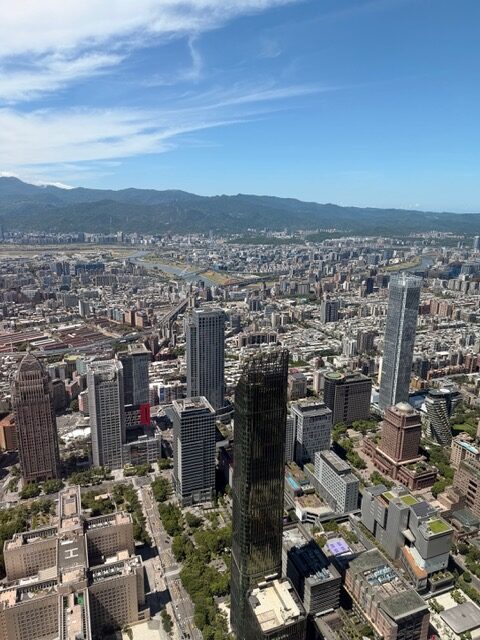
Standing at 508 metres, Taipei 101 dominates the skyline and quickly became the “wow” moment of my first trip to Taipei. From the high‑speed elevator ride to the 89th‑floor observatory and the sweeping 360° views of the city, it’s the one place where you really feel just how big and bright Taipei is. Whether you go in the day for clear mountain views or at night for glittering city lights, a visit to Taipei 101 is an easy, unforgettable highlight for first‑time visitors.
I visited in the daytime and the views were incredible – a carpet of grey and pastel buildings stretching out to the green hills that surround the city. Seeing Taipei laid out beneath me made it much easier to understand how the neighbourhoods connect, and it gave me a completely different perspective compared to walking at street level.
We bought our tickets at the door without any issues, but if you’re visiting in peak season or don’t want to risk missing out, it’s safer to book in advance through popular ticket apps such as Klook.
Ride the Maokong Gondola for Tea and Mountain Views
If you want to see a greener, calmer side of Taipei, riding the Maokong Gondola is a beautiful escape from the city streets. The cable car glides over thick green hills with Taipei fading into the distance, and by the time you reach Maokong you’re surrounded by tea fields, cool air, and slower pace local life.
I loved watching the city gradually disappear below me and the mountains take over – it felt like a mini retreat without leaving Taipei. We used our transport card to tap in at the station, so the whole process was easy, and once we reached the top we took our time just enjoying the views and a simple tea break.
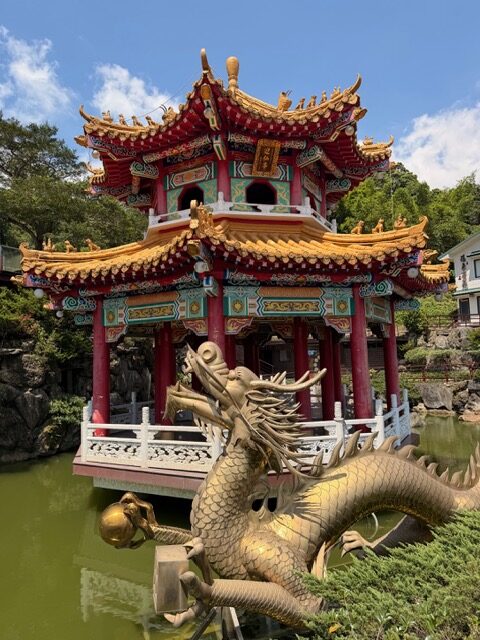
Getting there is straightforward: I took the MRT Brown Line to Taipei Zoo, which is the last stop, and from there it was just a short walk to the gondola station. The signs are clear, so even as a first-time visitor it felt easy and stress-free to find my way.
If you’re staying near Taipei Main Station or Ximending like we did, you’ll just need one simple transfer onto the Brown Line, and the whole journey from the city to the gondola feels smooth and intuitive.
Dive into Taipei’s Night Markets for Street Food and Local Life
Taipei really comes alive at night, and the best way to feel that energy is to dive straight into its night markets. Under the glow of neon signs and hanging lanterns, you’ll find endless rows of street food stalls, bubbling woks, sizzling grills, and families, students, and tourists all weaving through the crowd with snacks in hand. For a first-time visitor, wandering through markets like Shilin, Raohe, or Ningxia turns dinner into an adventure and gives you a real taste of local life beyond the usual sightseeing spots.
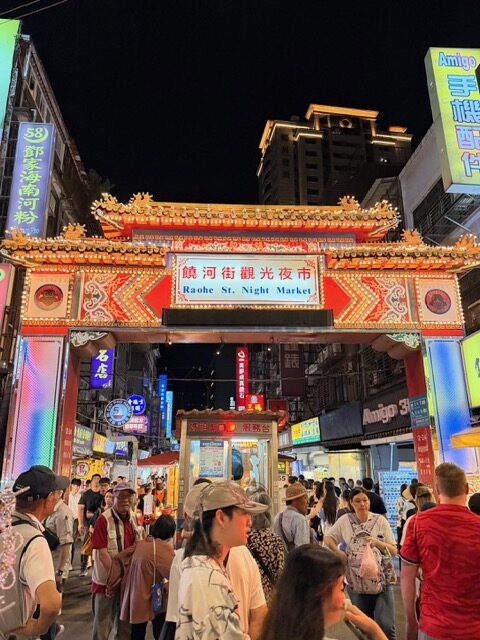
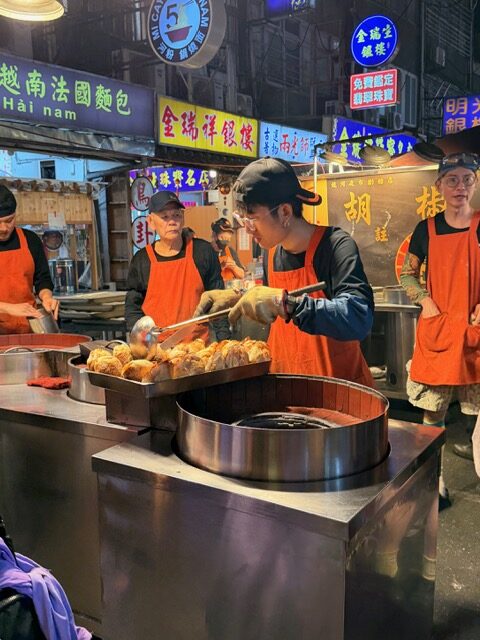
Out of the markets I visited, Raohe Street Night Market was my favourite because it still felt very local and authentic. The narrow street was packed with food stalls and signs, but what really made it special was the huge temple right next door – stepping from the busy, noisy market into the glow of the temple courtyard felt like seeing two sides of Taipei in one stop.
Experience the Atmosphere at Longshan Temple in Old Taipei
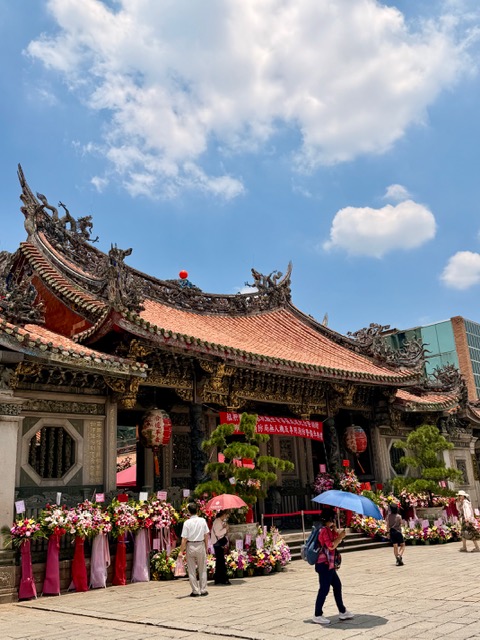
Longshan Temple was the place where Taipei felt most spiritual to me. As soon as I stepped through the gates, the city noise softened and I was surrounded by carved dragons, red lanterns, and the smell of incense drifting across the courtyard.
Locals moved quietly between altars, lighting incense, bowing, and chanting, and even as a visitor just passing through, it was easy to feel that this temple is still a living part of everyday life in Old Taipei.
One of the most memorable parts of my visit was learning how the traditional “moon blocks” worked. Watching locals gently drop the two wooden crescent-shaped pieces onto the ground to ask questions and interpret the way they landed was both fun and fascinating, and it added an interactive, human element to the temple visit that I hadn’t experienced before.
Explore Chiang Kai-shek Memorial Hall and Liberty Square
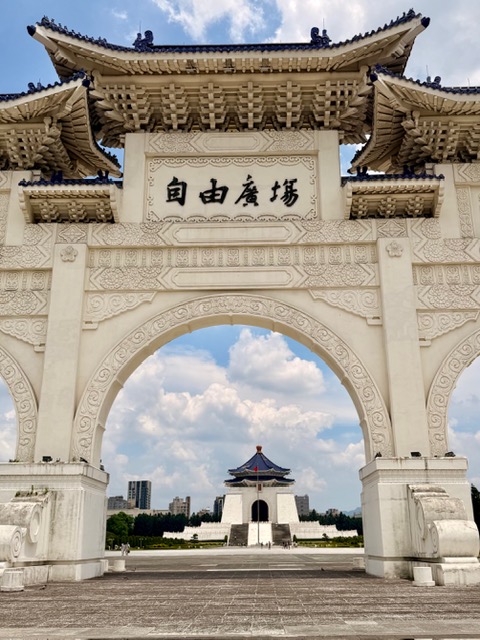
If you want to feel the scale of Taipei’s history and public life in one place, head to Chiang Kai-shek Memorial Hall and the wide open space of Liberty Square. The grand white hall with its blue roof, the huge archway at the entrance, and the twin National Theater and Concert Hall facing each other across the plaza make this area feel both formal and surprisingly peaceful. As a first-time visitor, walking across the square and climbing the steps to the hall gives you time to take in the city’s past, while watching families, students, and tour groups using the space like a giant public park.
After climbing the stairs, don’t forget to pause and take in the view back across Liberty Square before going inside. From the top, you can see the huge archway, the square laid out like a giant courtyard, and the National Theater and Concert Hall on either side – it’s one of those moments where you really feel the scale of Taipei.
If you have time, try to plan your visit so you can catch the changing of the guard inside the memorial hall – it happens every hour on the hour. Watching the guards march and switch places in such a precise, ceremonial way adds another layer to the experience and gives you a glimpse of the formal side of Taiwan’s history.
What to Eat in Taipei as a First-Time Visitor
Taipei is a dream city for food lovers, and on my first visit I quickly realised that eating here is just as important as sightseeing. From comforting bowls of beef noodle soup and fluffy soup dumplings to crispy scallion pancakes, street‑side fried chicken and endless bubble tea, every neighbourhood and night market offers something new to try. In this section, I’ll share the dishes I enjoyed most on my own trip, plus a few ideas on where to find them, so you can plan your meals as carefully as your itinerary.
Xiao Long Bao (Soup Dumplings): My Favourite Bite in Taipei
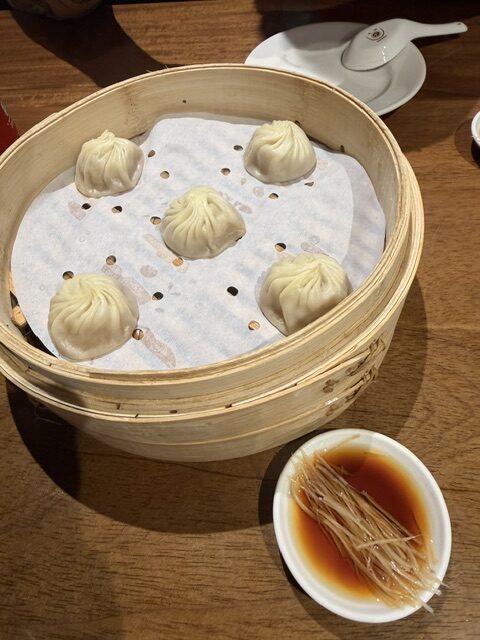
Out of everything I ate in Taipei, xiao long bao – the famous soup dumplings – were my absolute favourite. There’s something addictive about that thin, delicate skin holding hot, savoury soup and tender meat inside, and the ritual of picking one up carefully, letting it cool for a second, and then getting that burst of flavour in one bite. I ended up ordering them more than once because they became my “comfort food” after long days of exploring.
The best place to try these, in my opinion, is the world-famous Din Tai Fung. Their soup dumplings are consistently delicate and flavourful, and visiting one of their Taipei branches feels like a little foodie pilgrimage – you can watch the chefs folding each dumpling with incredible precision before a steaming basket arrives at your table. Be prepared to wait in line at peak times, but the service is efficient and the dumplings are worth the wait, especially if it’s your first time in Taipei.
Beef Noodle Soup: Taipei’s Comfort Bowl
One dish you really shouldn’t skip in Taipei is beef noodle soup. A good bowl comes with rich, slow‑cooked broth, tender chunks of beef and chewy noodles that feel like the perfect comfort food after a long day of sightseeing. I loved how satisfying it was – simple at first glance, but full of depth and warmth once you start eating.
Even if you’re not usually a big soup person, I’d recommend trying at least one proper beef noodle spot while you’re in the city – it’s one of those dishes that locals are proud of, and it gives you a taste of everyday Taiwanese flavours that you might miss if you only eat at night markets.
Night Market Snacks: Eat Your Way Through Taipei After Dark
Taipei’s night markets are basically outdoor snack buffets, and wandering from stall to stall quickly became one of my favourite evening rituals. You’ll see everything from pepper pork buns and crispy scallion pancakes to fried chicken, grilled squid, stinky tofu, colourful desserts and endless bubble tea, so it’s easy to build your own tasting menu as you walk. My best advice is to arrive a little hungry, buy small portions, and share if you’re travelling with someone, so you can try as many different snacks as possible in one night.
At Raohe, I loved starting with a savoury snack like a pepper bun, then slowly working my way along the street with drinks and smaller bites – it felt less like ticking off a food list and more like joining in with Taipei’s everyday night-time routine.
Out of all the things I tried, the pepper buns were my favourite street food snack. Biting into that crisp, slightly chewy baked bun and getting a hit of hot, peppery pork and green onion inside was the perfect mix of comfort and excitement, especially when eaten fresh from the oven in the middle of the busy night market.
Where to Stay in Taipei for Your First Trip
If you’re planning your first trip to Taipei, choosing where to stay mostly comes down to which neighbourhood feels right for your style and how much time you have. In this section I’ll share a quick overview of the areas I considered and where I based myself, plus a link to a more detailed guide that breaks down specific hotels, hostels and apartments by budget and location.
Ximending: Best for First-Timers Who Want to Be in the Middle of It All
Ximending is often called the “Harajuku of Taipei” because of its youthful energy, neon lights, street food and non‑stop shopping. As a first-time visitor, it’s hard to beat the convenience: you’re on two MRT lines, surrounded by places to eat, and just a short ride from major sights like Longshan Temple and Taipei 101. I loved being able to step outside my hotel and immediately be in the middle of the action, whether that was grabbing a late-night snack, browsing quirky shops, or just soaking up the buzz.
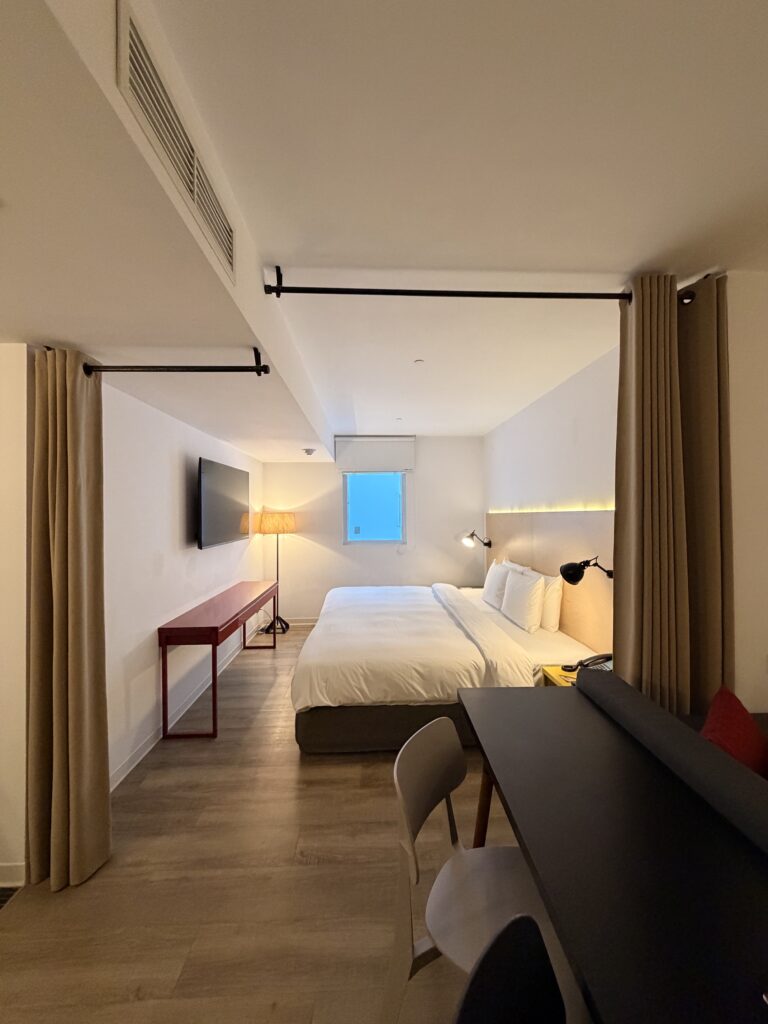
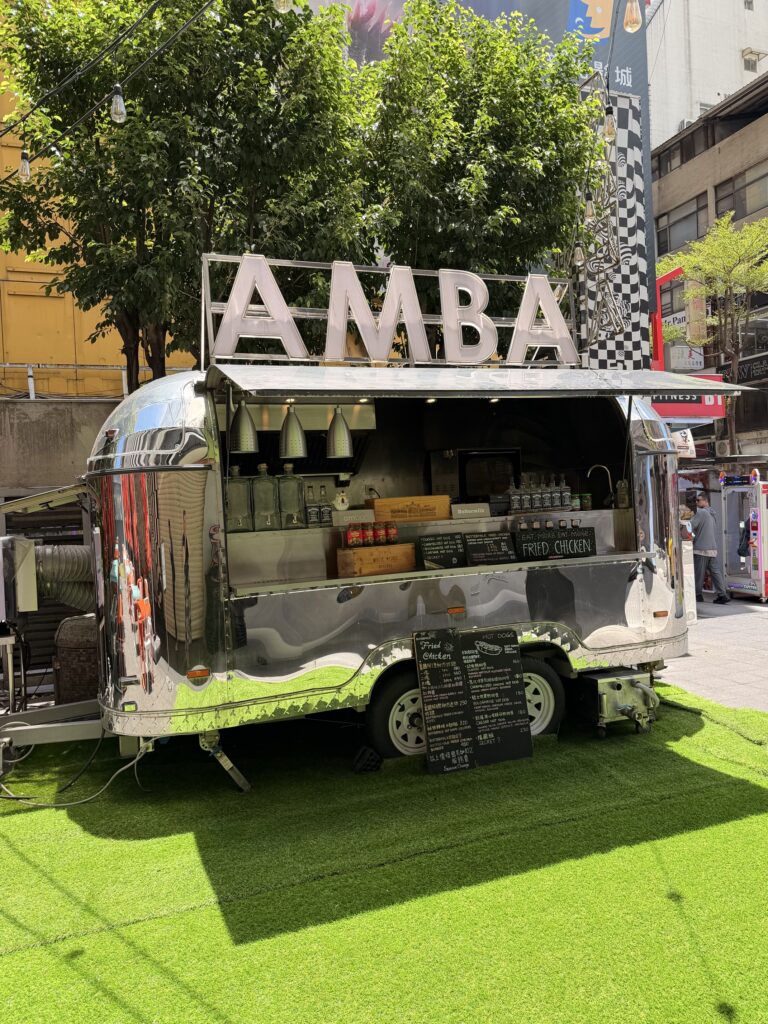
We stayed at Amba Hotel Ximending as part of a UGC collaboration. Even though my room was provided, I’d still happily recommend this place for first-timers who want to be right in the middle of the action. The location is steps from the MRT and surrounded by street food, shops and nightlife, and the rooms felt modern and quiet despite how busy the area is. For me this was the perfect location for exploring Taipei as a first time visitor.
Zhongshan & Daan: Cool Cafes, Easy MRT and a Local Vibe
If you’d prefer a neighbourhood that feels more like everyday Taipei, Zhongshan and Daan are great options. Zhongshan has a laid‑back, slightly artsy atmosphere with stylish cafes, vintage shops and some of the city’s best Japanese restaurants, while Daan is known for its wide tree‑lined streets, Da’an Forest Park and a strong cafe and brunch scene. Both areas are well connected by MRT, making it easy to reach major sights like Taipei 101, Chiang Kai-shek Memorial Hall and the night markets without feeling like you’re in the middle of the tourist rush.
Xinyi / Taipei 101 Area: Modern, Upscale and Close to Major Sights
If you prefer a more modern, polished feel, the Xinyi district around Taipei 101 is a great base. This is Taipei’s most contemporary neighbourhood, with luxury malls, rooftop bars, wide sidewalks and some of the city’s best skyline views. It’s ideal if you want to be within walking distance of Taipei 101, Elephant Mountain, and high‑end shopping, while still having excellent MRT access to the rest of the city.
Wanhua / Longshan Temple: Old Taipei with Markets and Nightlife Nearby
If you’re drawn to the more traditional, historic side of Taipei, Wanhua around Longshan Temple is a great base. This is one of the oldest parts of the city, with narrow streets, old‑school shops, herbal medicine stores and the beautiful Longshan Temple at its heart. It’s ideal if you want to wake up close to “Old Taipei” and still be within easy reach of Ximending’s shopping and nightlife, as well as Raohe and other night markets via a short MRT ride.
Best Day Trips from Taipei for First-Time Visitors
If you have more than two or three days in Taipei, a day trip is a great way to see Taiwan’s coast, mountains and old mining towns without changing hotels. Most of the best day trips are under two hours by train or bus from Taipei, making them easy to fit into your itinerary. In this section I’ll share the top day trips I’d recommend for a first visit, plus quick notes on how to get there and what makes each one special.
Shifen: Sky Lanterns, Waterfalls and a Working Railway Street
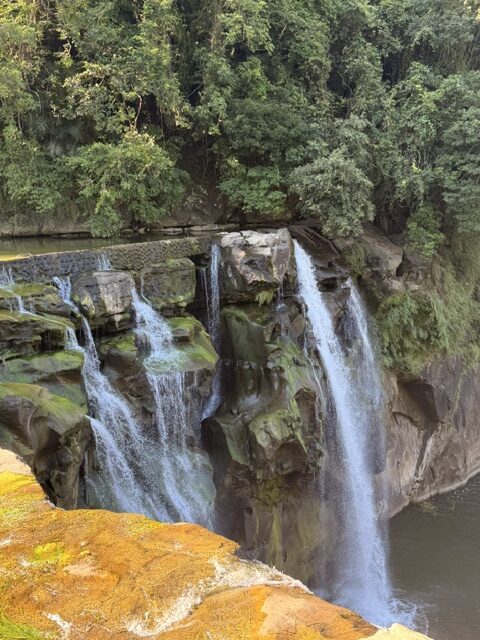
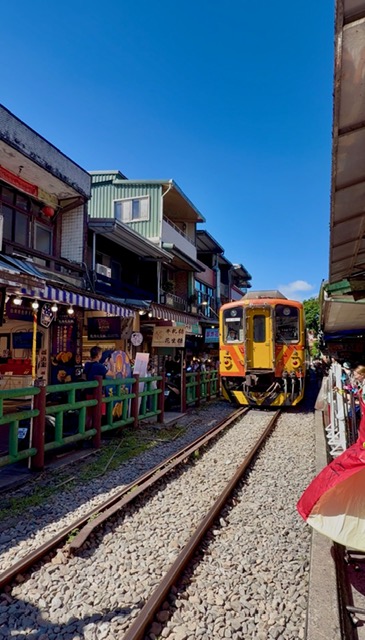
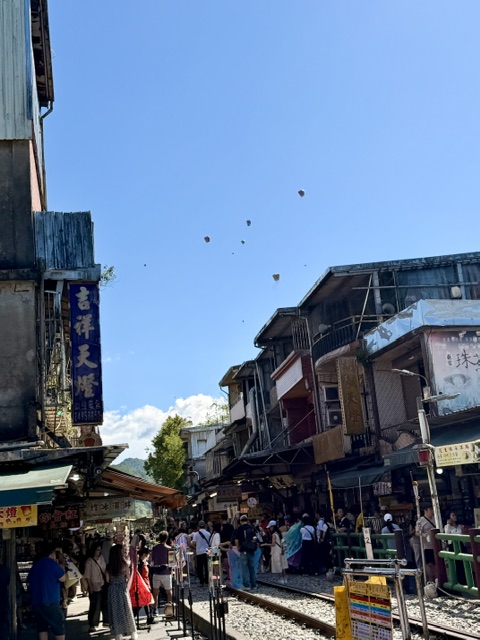
Shifen feels like a small town built around a single, unforgettable experience: writing your wishes on a giant paper lantern and releasing it into the sky from the middle of an old railway street. The Pingxi Line train still runs right through the town, so as you paint your lantern on the tracks, you can watch locals and tourists step aside when the horn sounds and the train slowly passes between the stalls. Just beyond the main street, a short walk leads to Shifen Waterfall, a wide curtain of water that locals call the “Little Niagara of Taiwan” and makes the whole day trip feel more than just a photo opportunity.
Getting there is straightforward: take the train from Taipei to Ruifang, then switch to the Pingxi Line to Shifen. I’d recommend arriving in the afternoon so you can see the waterfall in daylight and release your lantern as it starts to get dark, when the sky fills with colour.
Jiufen Old Street: Hillside Tea Houses, Lanterns and Ocean Views
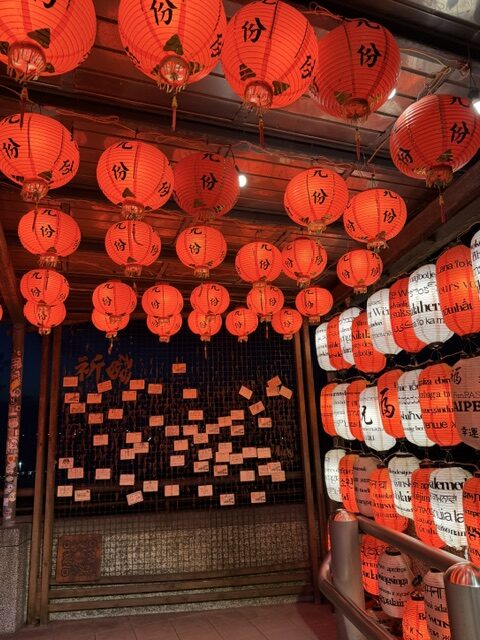
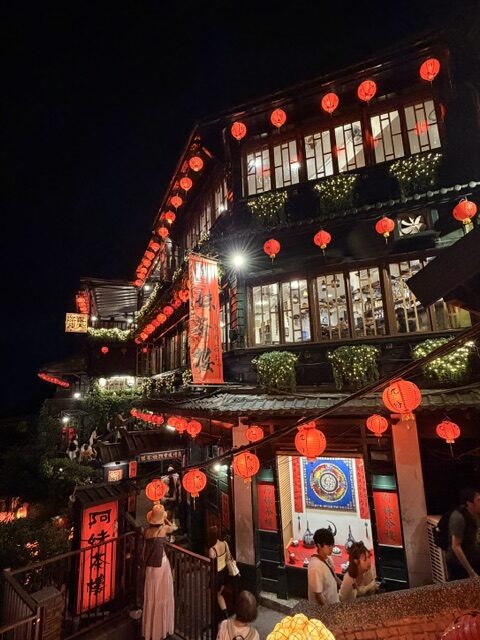
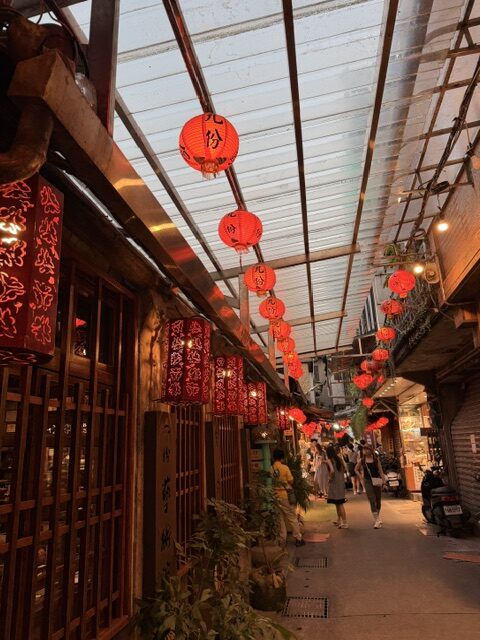
Jiufen Old Street feels like a village built into the side of a mountain, with narrow stone alleys, red lanterns and traditional tea houses overlooking the Pacific. Once a gold‑mining town, it’s now best known for its atmospheric streets, famous teahouses like A‑Mei (often linked to Spirited Away), and views that stretch from the harbour to the coastline. Walking up and down the steep lanes, stopping for oolong tea on a balcony and watching the lanterns glow at dusk is the kind of experience that makes Jiufen feel more like a step back in time than a typical day trip.
Getting there is easy: take the train from Taipei to Ruifang, then switch to a local bus up to Jiufen. I’d recommend arriving in the late afternoon so you can explore the old street, settle into a teahouse for sunset, and watch the lanterns light up as the sky darkens.
Yangmingshan National Park: Volcanic Landscapes and Hot Springs
I didn’t have time to visit Yangmingshan on this trip, but it’s firmly on my list for next time and comes up again and again as one of the best nature day trips from Taipei. The park is built around a dormant volcanic range, with steaming fumaroles, sulfur vents and dramatic post‑volcanic landscapes at spots like Xiaoyoukeng, plus hiking trails that lead up to viewpoints over the Taipei Basin. After a walk among the volcanic formations, many visitors head to the hot spring areas around Lengshuikeng or nearby Beitou to soak in thermal pools, making it a great choice if you want a mix of hiking, geology and relaxation in one day.
Getting there is straightforward by bus from central Taipei, and most guides recommend a half‑day to full‑day depending on how much hiking you want to do. I’ve noted a few sample itineraries and transport options in my full day‑trip guide.
Taipei Travel FAQs for First-Time Visitors
How many days do I need in Taipei?
For a first visit, I’d recommend 3 full days in Taipei itself. That’s enough time to see the main sights (Taipei 101, Chiang Kai-shek Memorial Hall, Longshan Temple), explore a couple of night markets and try the key foods. If you want to add day trips like Jiufen and Shifen, aim for 4–5 days so you don’t feel rushed.
Do UK citizens need a visa for Taipei?
No, UK passport holders (British Citizen) can enter Taiwan visa‑free for up to 90 days for tourism or short business trips. You just need a passport valid for at least 6 months, a return or onward ticket, and you must complete the Taiwan Arrival Card (TWAC) online within 3 days before your flight. boca.gov
Is Taipei safe for solo and female travellers?
Yes, Taipei is one of the safest cities I’ve visited as a solo traveller. Crime rates are very low, the MRT feels safe late into the evening, and locals are generally very helpful. As anywhere, use normal common sense with your belongings, but I never felt uneasy walking around at night in the main tourist areas.
Do I need cash in Taipei?
Yes, it’s worth carrying some cash (NTD). Night markets, small food stalls, older shops and some temples mostly take cash only. Bigger restaurants, malls and hotels usually accept cards, and ATMs are widely available, so I’d suggest withdrawing a decent amount on arrival and topping up as needed.
What is an EasyCard and do I need one?
An EasyCard is a rechargeable transit card for the MRT, buses, YouBike and even convenience stores. I’d highly recommend getting one as soon as you land — you can buy and top it up at any MRT station. It makes getting around Taipei and paying for small things much smoother than fumbling for coins every time.
Where should first-time visitors stay in Taipei?
For a first trip, I’d suggest:
- Ximending if you want to be right in the middle of the action with shops, street food and nightlife.
- Zhongshan / Daan for a more local, cafe‑focused vibe with easy MRT access.
- Xinyi / Taipei 101 if you prefer a modern, upscale feel and don’t mind slightly higher prices.
I break down specific hotels and areas in my full Where to Stay in Taipei guide.
What’s the best time of year to visit Taipei?
The most comfortable weather is in spring (March–May) and autumn (September–November), when it’s warm but not too humid. Winter is mild and great for hot springs and NYE fireworks, while summer is very hot and humid with more rain and occasional typhoons.
Is the tap water in Taipei safe to drink?
Technically, Taipei’s tap water meets standards, but most locals and visitors prefer bottled or boiled water for drinking. It’s fine for brushing your teeth, but I’d suggest buying bottled water or using a refill station, especially if you have a sensitive stomach.
Full disclosure: I stayed at Amba Hotel Xiemding as part of a UGC/content collaboration, which means my accommodation was provided in exchange for creating content. This recommendation is based on my own experience, and I’m sharing my honest opinion – positive and negative – as I would for any hotel I paid for myself.